How I Found the Right MVP Company to Build My Startup Dream
Olivia Harris – Startup Founder – Fluto (Seed Funding Stage) As our journey continues, we’ve been focusing on MVP development for our startup to ensure we build a product that meets market needs efficiently.
May 30, 2025 | 10 Minute Read
Getting a Grip on MVP for Startups
When you dream of launching a successful startup, wrapping your head around the concept of a Minimum Viable Product (MVP) is a game-changer. An MVP lets you test ideas fast without sinking a ton of resources.
An MVP is a basic version of your product that does just enough to solve a problem for your users. You are not aiming for bells and whistles, just the stuff you need to test if your business idea holds water! The goal: Learn fast, tweak fast, and see if there is really a market for your idea (Wikipedia).
Lean Startup Methodology: What is the Deal?
The Lean Startup methodology is all about using MVPs to test business ideas on the cheap. It’s a process where you learn what works by getting real user feedback, then fine-tuning your product.
Here is a break-down of how it works:
- Build-Measure-Learn: Build something, measure how it does, and learn from the results!
- Validated Learning: Prove your assumptions about your business with real-world data.
- Pivot or Persevere: Decide if you need to change direction (pivot) or keep going (persevere) based on what you have learned.
Using the Lean Startup approach along with creating an MVP helps you figure out what strategies work without burning through your budget. Dive into our minimum viable product template and agile mvp development for step-by-step guides. These resources can skyrocket your chances of startup success, even when the market is super tough.
Building a Successful MVP
Creating an MVP (Minimum Viable Product) in a way that hits the mark involves some real planning and smart moves. I’ll walk you through the essentials with solid examples of successful MVPs that got it right.
1. Strategic Planning
Getting started on your MVP journey needs some groundwork. Here’s a simple roadmap I have found useful:
- Know Your Audience and Problem: Aim your MVP at a specific issue faced by a particular group. Dive into the market with some solid research to know who is out there and what bugs them!
- Pinpoint Key Features: Stick to the basics—add only what is essential to tackle the problem you have spotted. Keep it lean and mean!
- Build and Test: Whip up your MVP and let a handful of early adopters give it a whirl. Their feedback will help you understand if your idea flies or if it needs a tweak.
- Gather Feedback and Adjust: Listen to what users say and be ready to tweak and change! Keep your MVP fluid and evolve it based on real-world input (LinkedIn).
| Step | What’s Involved |
|---|---|
| Know Your Audience | Research target users and their problems |
| Pinpoint Key Features | Focus on solving the main problem with the simplest set of features |
| Build and Test | Develop your MVP and test it with a small group of early adopters |
| Gather Feedback | Collect user feedback and iterate your product to better fit their needs |
Need expert help from a mvp product development consultant? Contact Us Today!
Examples of Winning MVPs
Learning from other’s successes can provide a goldmine of insights. Check these out:
- Dropbox: They kicked things off with a demo video showcasing the MVP concept. That simple video not only explained the idea but also racked up heaps of user feedback and beta sign-ups!
- Airbnb: Their MVP was renting out an air mattress in their apartment during a local event. This no-frills approach proved people wanted affordable, short-term lodging.
- Zappos: Started by snapping pictures of shoes from local stores and putting them online. When someone bought a pair, the founder bought them and shipped them out. This proved their was a demand for online shoe shopping.
These examples show that launching with a small, focused MVP can validate your idea without breaking the bank. For additional insights, check out mvp development services.
| Company | Startup MVP Move | Result |
|---|---|---|
| Dropbox | Demo video showcasing concept | Tons of beta sign-ups |
| Airbnb | Renting air mattress during an event | Proved demand for idea |
| Zappos | Selling shoes online on a small scale | Validated business model |
Key Ingredients for a Winning MVP
Alright, if you are a startup founder, you’ve probably heard the term “Minimum Viable Product” (MVP) bounced around a lot. Let’s break down what really goes into making one that doesn’t flop!
Who is Your MVP Helping?
Your MVP should tackle a specific problem for a clear type of person. The more you know about this target user and their headache, the better your MVP will hit the spot!
Example Table: Narrowing Down Your Users Problems
| Who’s Struggling? | Main Issue | Extra Issues |
|---|---|---|
| Freelance Designers | Juggling too many projects | Invoicing is a pain |
| Small E-commerce Biz | Can’t keep track of inventory | Talking to customers sucks |
Nailing down who you are creating for will keep you zeroed in on what needs fixing.
Must-Have Features
When it comes to you’re MVP, less is more. Focus on features that solve the major problem and don’t sweat the small stuff.
Feature Checklist:
- Main Job: The big thing your app does to solve the problem!
- Simple Design: Easy to use—like you shouldn’t need a manual!
- Room to Grow: Can add more to it later without starting from scratch.
User Feedback: Goldmine for MVPs
You are building this thing, but it’s not just about you. Collect feedback, and lots of it! Tweaks based on real user experiences will make or break your MVP.
Example Table: Feedback Turns into Actions
| Who’s Talking | What They Said | What You Should Do |
|---|---|---|
| Reviews | “Can’t find anything on the dashboard” | Revamp the interface |
| Usability Tests | “Takes forever to load” | Speed up the backend |
| Surveys | “Need better reporting tools” | Add and improve reporting features |
Keep listening to users and tweak your product. This approach lets your MVP get better and better!
So, focus on solving one key problem, include just enough features to do that one job, and keep improving based on user feedback. Stick to this, and you have a MVP that could be a game-changer!
Why MVP Development Matters for Your Startup?
Jumping into the world of startups. An MVP, or Minimum Viable Product, can be your secret weapon. Let’s break down how MVPs can make all the difference!
Save Big Both in Time and Cash
One of the coolest things about an MVP is how much you can save Instead of blowing your budget on a full-scale product. Focus on the must-have features first. This not only cuts down on costs but also speeds up the whole process, letting you avoid spending on stuff you might not need right away!
Clearly, starting with an MVP is easier on the wallet and frees up resources for later stages. It’s like test-driving a car before buying.
Speed to Market: Beat the Clock
Who doesn’t like being first? An MVP lets you hit the market fast! No need to wait forever: get your essential features out there in prompt. This early launch helps you snag a competitive edge and, best of all, get feedback straight from real users.
Early feedback helps to:
- Squash bugs quickly.
- Tweak the product based on what users actually want.
- Make smart improvements before rivals catch up.
Keep Up With The Times
Here’s where it gets fun: MVP lets your product grow step by step, totally in sync with what your users need. Collect feedback, make changes, and keep improving. This makes sure your product is always sharp, meeting customer needs as they evolve!
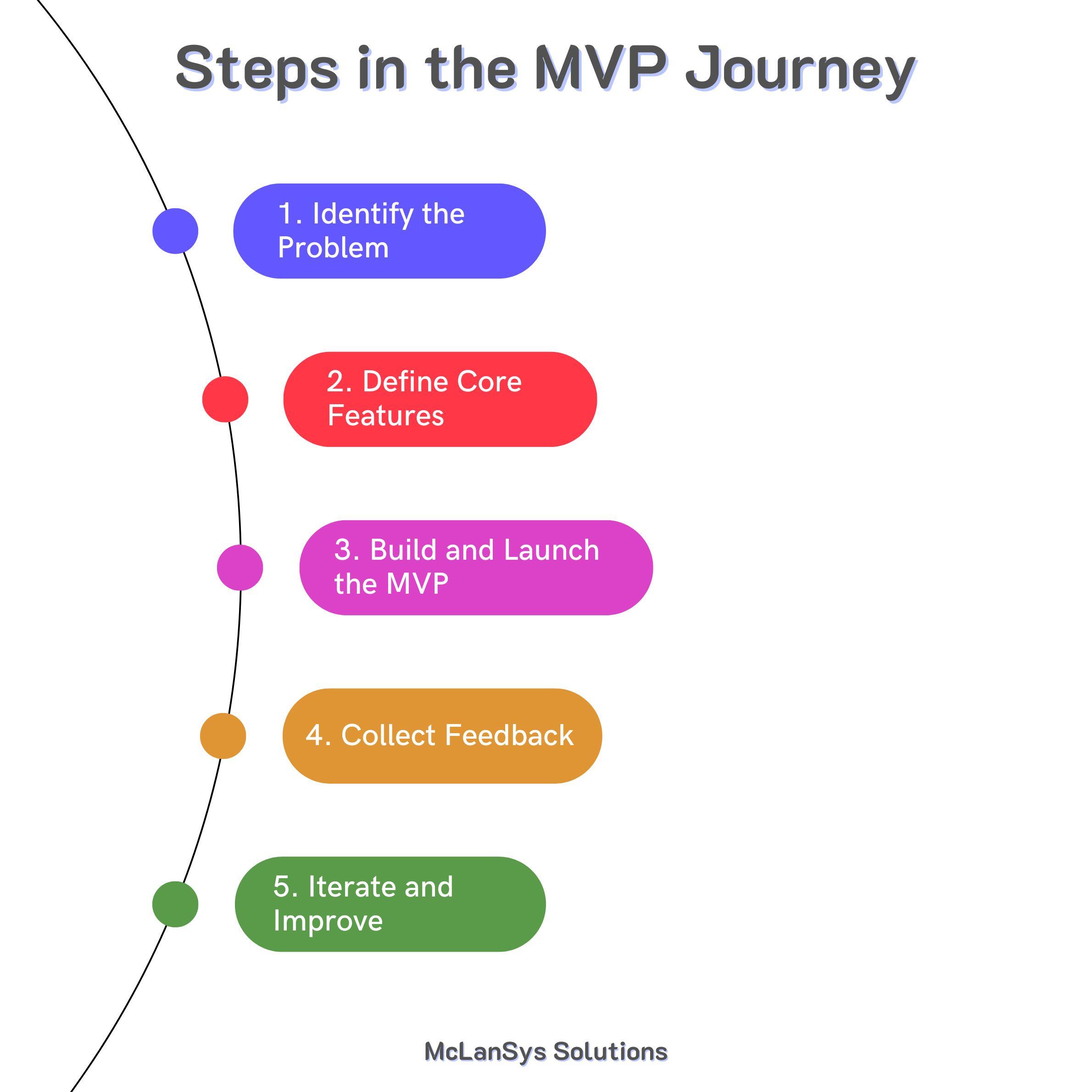
Steps in the MVP Journey:
- Create the MVP
- Launch it
- Gather feedback
- Make adjustments
- Rinse and repeat
This method keeps you focused on what matters most. To make sure your MVP gets better over time, hook up with savvy MVP developers. They can steer the project and keep the improvements coming based on ongoing user feedback!
Easy-peasy, right! Keep it smart, keep it simple, and let your MVP lead the way to startup success!
FAQs
1. What is MVP in startup development?
An MVP (Minimum Viable Product) in startup development is a product version with just enough features to satisfy early customer’s needs and gather feedback for future product development. It allow startups to test their ideas without fully developing the entire product, reducing the risk and cost of failure. For a deeper dive, check out “Elevate Your Startup: How an MVP Can Propel You Forward“.
2. How to build an MVP startup?
Building an MVP startup involves focusing on the core problem you are solving, defining your target audience, and building only the essential features needed to validate your idea. Once you have the basic version, launch it, gather feedback, and iterate based on user insights. Learn more about the step-by-step process in “Your Path to Success: How to Launch Your Minimum Viable Product App in 2024?“.
3. What is MVP in project development?
In project development, an MVP refers to the most basic version of a product that still provides value to users. It is used to test assumptions and validate the product concept before commiting more resources to full development. For more details on MVP in project development, read “From Idea to Reality: How an MVP Developer Can Transform Your Startup?“.
4. What are the milestones for MVP?
The key milestones for an MVP include defining the problem, building the core features, launching the product to a small user base, collecting feedback, and iterating based on user data. Each milestone ensures you are building something users actually want. Check out “Fueling Success: My Experience with MVP Web Development“ for more insights.
5. What are the costs of MVP app development?
MVP app development costs can vary depending on factors like complexity, design, and the development team. On average, MVP app development can range from $5000 to $30,000, depending on your requirements and the technology used. Get FREE MVP Development With McLanSys Solutions. Connect with us!
6. What are some good MVP development companies for startups?
There are many great MVP development companies catering to startups. Look for companies with a track record of building successful MVPs, experience in your industry, and the ability to scale your product as you grow. We have helped 200+ startup companies grow big. Connect with us!
7. How not to build a MVP?
Avoid over-complicating your MVP with unnecessary features. Don’t skip customer validation or feedback collection. Building an MVP without a clear vision and without considering your audience’s needs is a recipe for failure.
8. What are some examples of MVP in startups?
Famous MVP examples include Dropbox, which started with a simple explainer video, and Airbnb, which initially offered a basic website for renting rooms. Both companies used MVPs to test demand before scaling up. For more success stories, check out “Breakthrough: Leading Your Way to MVP Software Development Success“.