Unleash the Power: How MVP Transformed My AI and ML Projects
Olivia Harris – Startup Founder – When embarking on projects, understanding how to create an MVP for AI and machine learning projects can significantly enhance your success.
Sep 19, 2024 | 5 Minute Read
Purpose of MVP in AI
When I first decided to dive into integrating AI into my projects, the concept of the Minimum Viable Product (MVP) quickly became my go-to strategy. The main goal of an MVP is to slash risks and save costs when building complex AI solutions. This lets me roll out a usable product fast and gather game-changing insights for tweaks.
Advancements in AI have supercharged the MVP process, making it quicker and more efficient. Machine learning algorithms, for instance, bring better accuracy and lower the entry barriers, which is a boon for startups. This speeds up hypothesis testing and helps grasp what potential customers really want.
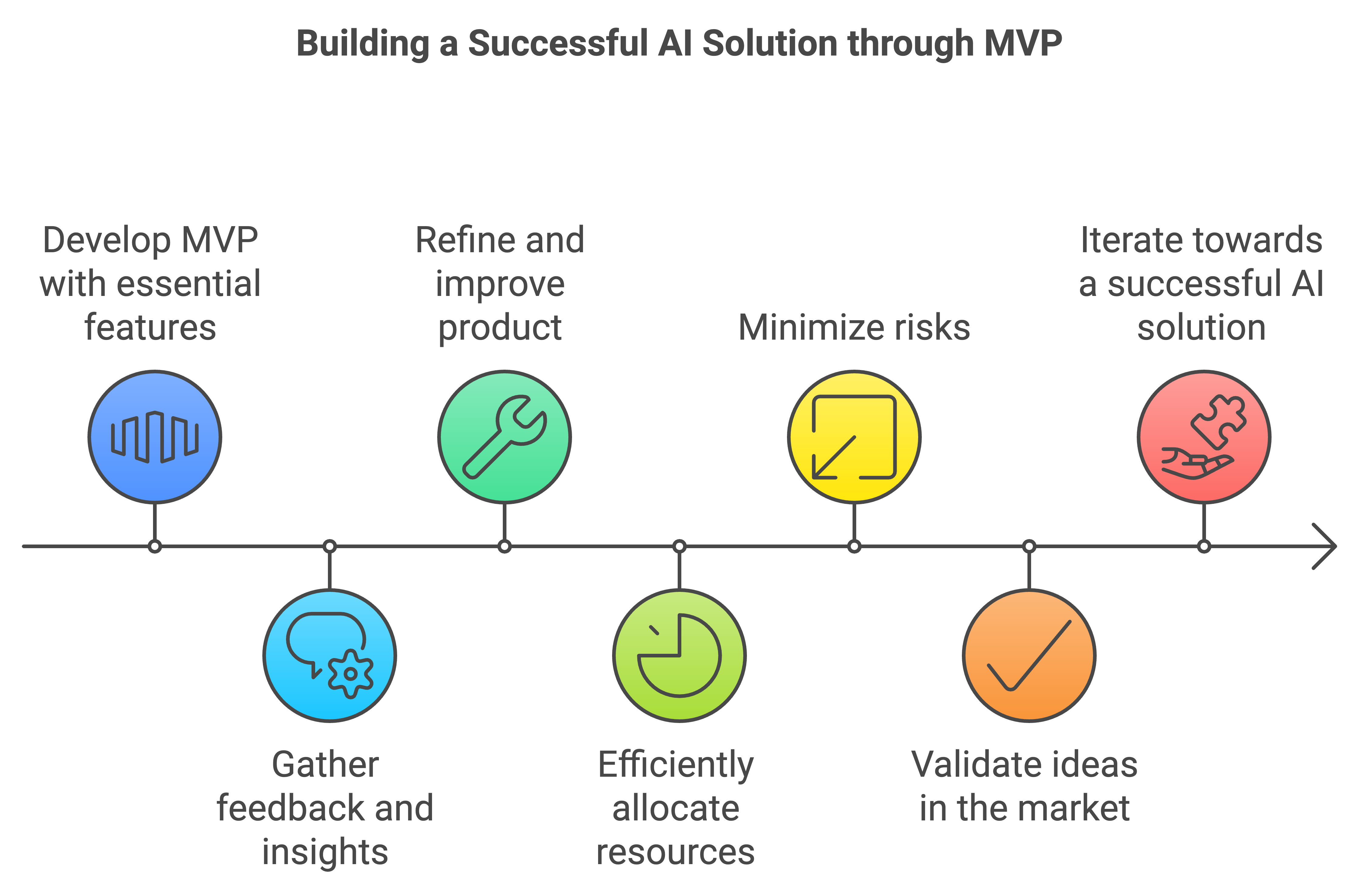
Here’s why MVPs are a big deal in AI development:
| Key Benefits of MVP in AI | Description |
|---|---|
| Lower Risk | Cuts down initial investment and risks. |
| Faster Deployment | Get to market faster and gather feedback. |
| Cost Efficiency | Keeps costs low and ramps up learning. |
| Enhances Learning | Offers key insights for ongoing improvements. |
The magic of MVP lies in its ability to drive rapid learning and iteration, making sure the AI product matches user expectations. This approach helps businesses make smart decisions based on hard data, leveling up the user experience.
Want more on MVP strategies for different sectors? Check out our guides on MVP for E-Commerce Success – Complete Guide.
Stakeholder Importance
In any AI gig I take on, stakeholders are the rockstars. Their early involvement is crucial for setting real-world expectations, aligning goals, and ensuring the final product meets actual needs, not just theoretical dreams. Engaging stakeholders right from the start builds trust and accountability, keeping everyone focused on the same target.
Stakeholders offer crucial insights and feedback that can steer the MVP in the right direction, helping it avoid becoming a dud.
Here’s a snapshot of why they’re so important:
| Stakeholder Impact | Description |
|---|---|
| Trust & Accountability | Keeps everyone dedicated. |
| Goal Alignment | Sets realistic, shared goals. |
| Valuable Feedback | Provides practical, actionable insights. |
| Product Utilization | Ensures the product serves real-world needs. |
Their input is especially vital when folding AI into the MVP, as they bring varied viewpoints on how the tech will be used and what features matter most. Prioritizing stakeholders ensures that the AI solutions I create are not just cutting-edge but also practical and widely embraced.
For more on managing stakeholders and aligning project aims, check out our articles on Pro-Tips: MVP Market Validation and low-code MVP development platforms.
Kickstarting MVPs for Machine Learning
Speeding Up the Development
When I kicked off creating MVPs for AI and machine learning, I quickly learned speed and quality are the secret sauce. Fast-tracking the development process was key. By tapping into existing solutions and tools, I cut down the dev time big-time.
Using pre-trained models from platforms like Google Cloud and Python libraries like TensorFlow, Scikit-Learn, and Keras gave me a solid start. These tools let me zero in on tweaking and fine-tuning models instead of starting from scratch.
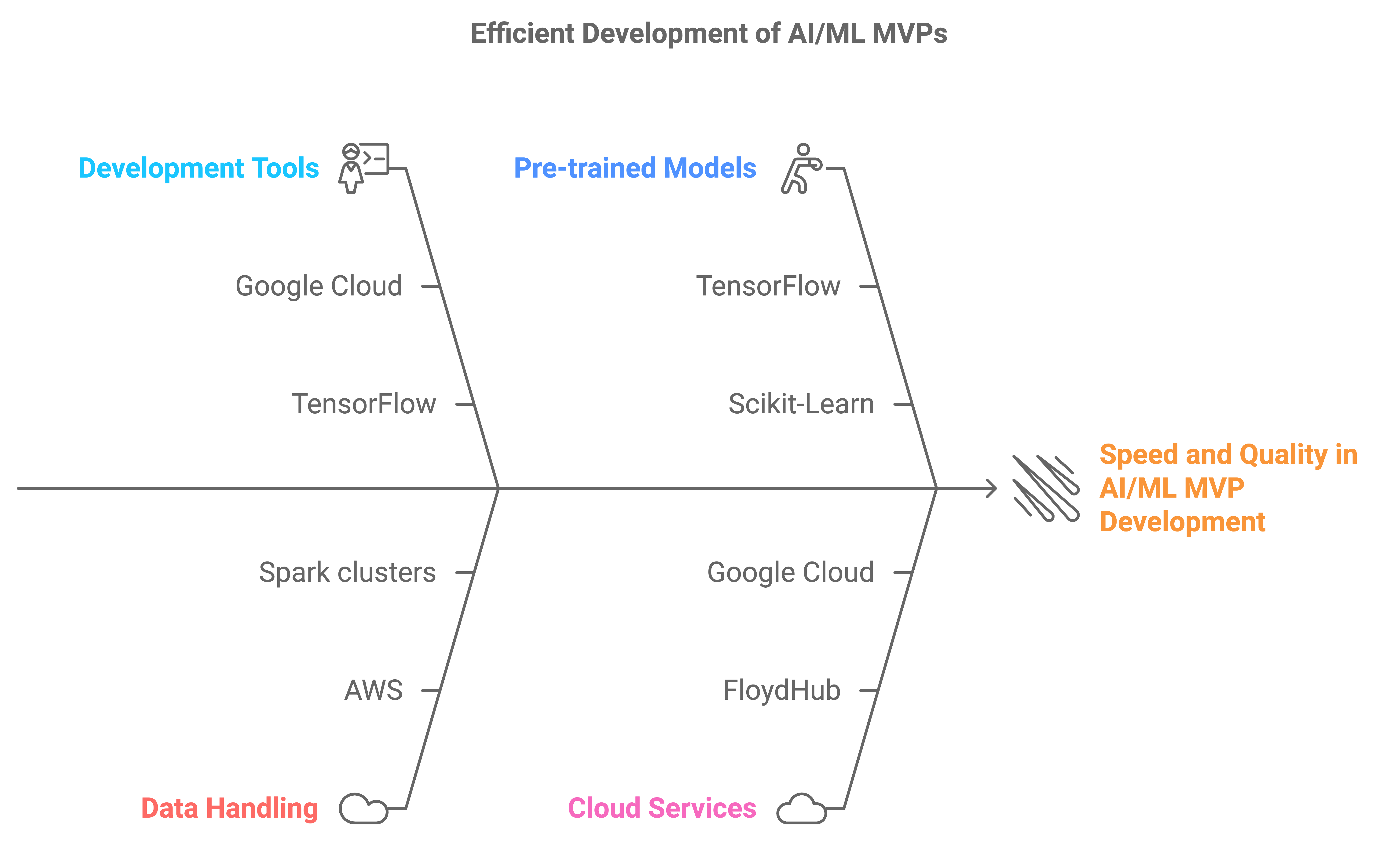
For wrangling data, cloud services like AWS and Google Cloud were my go-tos. With these, I could whip up Spark clusters quickly and handle huge datasets. For deep learning, FloydHub (Platform-as-a-Service) had my back by making model training and deployment on the cloud a breeze.
| Tool/Service | What It Does | Why It’s Awesome |
|---|---|---|
| TensorFlow | Model Training | Flexible, lots of community help |
| Scikit-Learn | Data Processing | Easy, loads of functions |
| Google Cloud | Data Management | Scalable, reliable, ready-to-use models |
| AWS | Cloud Services | Flexible, cost-effective, strong infrastructure |
| FloydHub | Deep Learning | Eases training and deploying models online |
These tools not only sped up development but also made sure the MVPs were tough and ready to grow.
Picking the Right Model
Nailing the best model for my MVPs in AI and machine learning projects was a game-changer. The model had to match the project goals. I went for models that were not just accurate but also efficient and easy to scale.
First off, I checked out different pre-trained models to gauge their performance. I looked at the complexity too. Deep learning models like neural networks deliver high accuracy but gulp down resources. Simpler models like decision trees or logistic regression, while lighter and faster to train, might not nail accuracy for tougher tasks.
To make sure the model fit the bill, I did A/B testing and measured performance using metrics like accuracy, precision, recall, and F1 score.
| Model Type | Best For | Key Metrics |
|---|---|---|
| Neural Networks | Tough tasks needing high accuracy | Accuracy, Precision, Recall, F1 Score |
| Decision Trees | Simpler tasks, quick training | Accuracy, Precision |
| Logistic Regression | Binary classification, resource-light | Precision, Recall |
I roped in stakeholders early on. Knowing what they wanted and matching the model to their needs kept me from hitting bumps later. Constant feedback and tweaks based on real-world results and stakeholder input were crucial.
Blending these factors, I built AI and machine learning MVPs that were not just efficient and practical but also aligned with business goals.
Essential-Tools-and-Resources-for-Lean-MVP-Development-copyUseful Resources: