Navigate Success: Essential MVP Validation Techniques
Liam Hayes – Startup Founder – Here are some essential MVP validation techniques that every startup founder should know.
Sep 19, 2024 | 5 Minute Read
Validating MVPs
Starting a new business? Here’s the deal: you’ve gotta validate that minimum viable product (MVP) before going all in. MVP testing means launching a stripped-down version of your product to a select group of users. It’s like a trial run—without all the bells and whistles. This way, you can gather real user feedback and tweak what needs fixing. By zeroing in on the main features, you’ll see if the product actually solves the problem it’s supposed to.
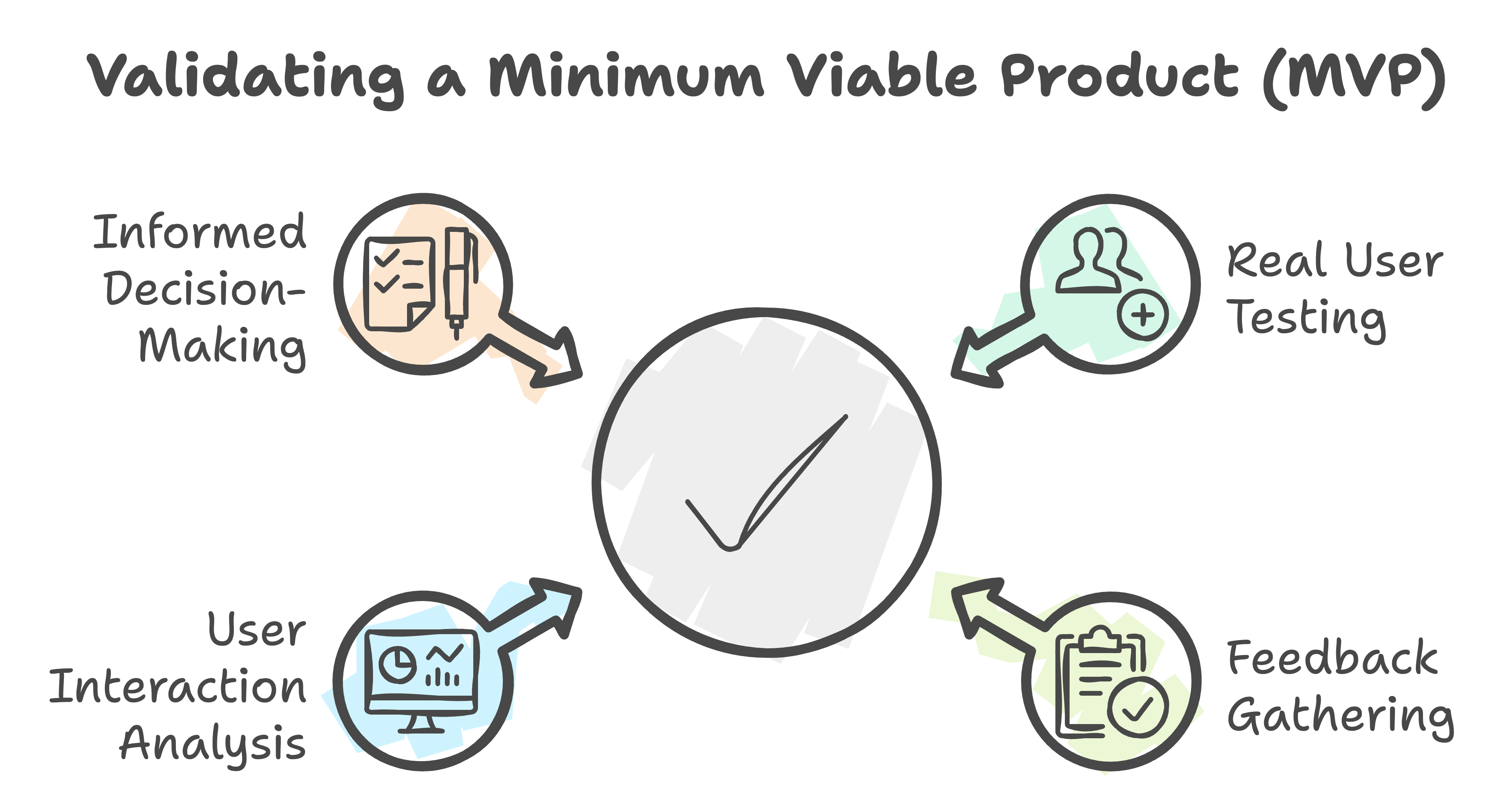
Check out these perks of MVP testing:
| Benefit | Description |
|---|---|
| Lowers Risk | Catch issues early, cut down on the risk of failure. |
| Budget-Friendly | Save cash by avoiding unnecessary features. |
| Market Fit | Make sure the product hits the mark before a full launch. |
| User Insights | Get real-world feedback to refine the product. |
Want to dig deeper into MVP? Head over to How To Transform Your Small Business With MVP.
The Lean Startup Method
Ever heard of the Lean Startup Methodology by Eric Ries? It’s a game-changer for MVP development. I swear by this approach, which gets a new product to market quickly with an MVP. The idea is to test how customers respond without diving into full-fledged development of every feature.
Here’s the gist of the Build-Measure-Learn cycle:
- Build: Start with the MVP, featuring only the must-haves.
- Measure: Track user interactions and performance.
- Learn: Crunch the numbers and make decisions for next steps.
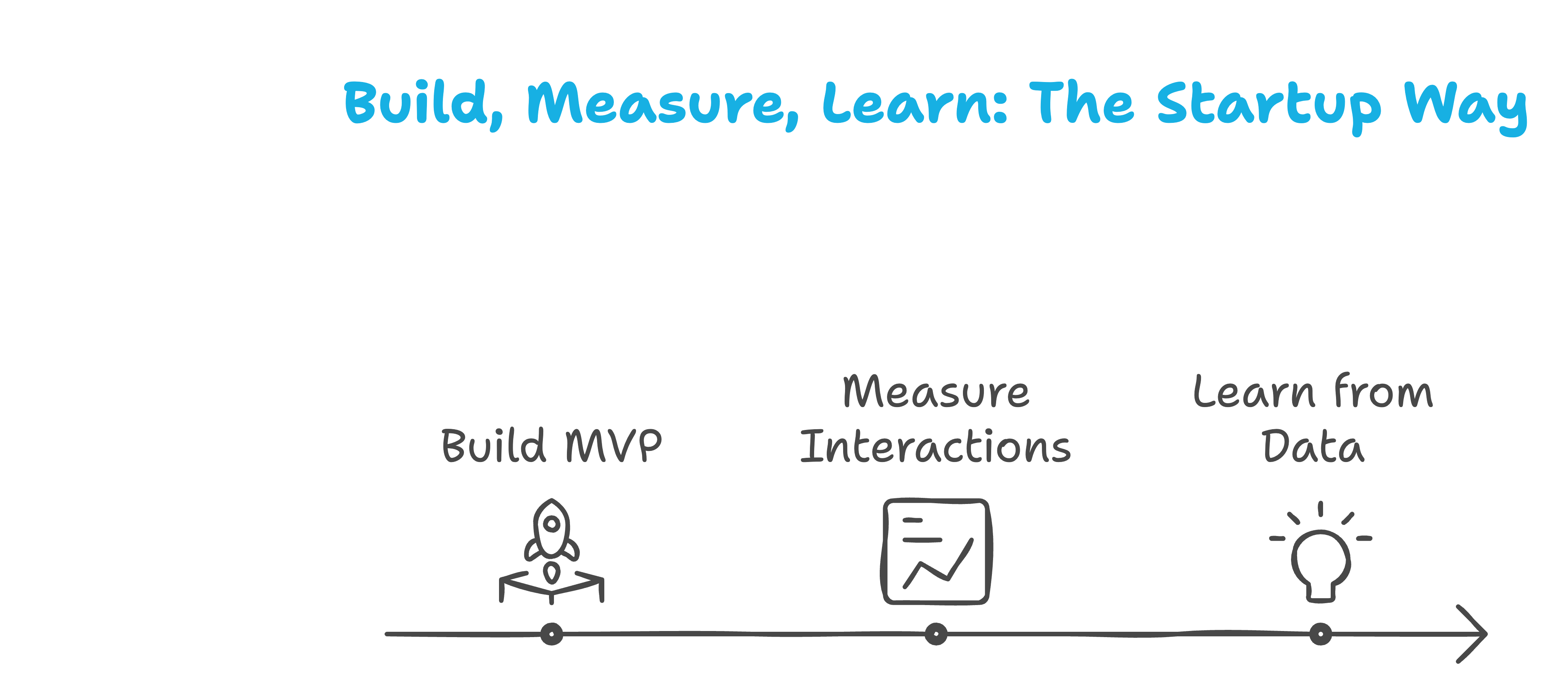
This loop ensures you keep improving based on what actual users think. By getting to market quick, you find out fast if your audience digs your idea.
Want more about Lean Startup? Check out Mastering Lean Startup Success.
Focusing on these MVP validation methods helps make sure your product clicks with your audience while saving time and money.
MVP Validation Techniques
User Interaction Data
So you’re working on a Minimum Viable Product (MVP) and wondering how well it’s catching on? User interaction data is your magic wand. This data gives you raw, real-deal insights into how folks are using (or not using) your MVP. It’s like punching a spy camera into their minds, seeing what excites them and what grinds their gears.
Basically, it’s your map to figure out what users love and what features are total duds. Patterns tell all — where they click, what they ignore, and what they keep coming back to. This info is gold, especially when you’re trying to tweak features or even pivot your product to make sure it fits market needs just right.
| Aspect | What It Tells You |
|---|---|
| User Behavior | Who’s doing what on your MVP — what they click, where they scroll, which features they adore or avoid |
| Feature Evaluation | How well your product’s shiny features are working out and if users are actually giving them a thumbs-up |
| User Experience Improvement | Pain points — where people struggle, get frustrated, or what they straight up hate, giving you a direct route to smooth out those kinks |
| Product-Market Fit | Whether your MVP is hitting the sweet spot with the right crowd or missing the mark |
For a deeper dive into certain fields, check out our articles on MVPs for E-Commerce Transformation.
Testing Methods
Testing? Think of it as your MVP’s boot camp. It’s how you figure out what’s working and what needs a bit more muscle. Here’s my go-to list of techniques:
- User Interviews: No rocket science here – just chat with your users. You’ll get the kind of candid feedback that’s hard to find.
- Usability Testing: Watch users interact with your MVP. Seeing them struggle (or not) tells you more than any survey ever could.
- A/B Testing: Show different users different versions and see which one gets them more excited.
- Focus Groups: Get a bunch of target users together and let them talk. It’s like a brainstorming session with your audience.
- Surveys: Cast a wider net to catch overall attitudes and preferences.
Here’s a sneaky but effective trick: the Fake Door test. It’s a pretend feature that’s not actually built yet. If users click on it, you know there’s interest before you spend time building it.
And A/B Testing? It’s like a coin toss with data. You throw two slightly different versions of a feature out there to see which one sticks. Think of it as user reactions in real-time, minus the guesswork.
| Testing Method | What It’s Good For |
|---|---|
| User Interviews | Getting straight-from-the-source feedback — what they think, what they need, what they dream about |
| Usability Testing | Spotting user pain points by watching them interact live, seeing where they fumble or fly |
| A/B Testing | Figuring out which version of a feature hits the sweet spot by showing two versions to users and seeing which performs best |
| Focus Groups | Tapping into group dynamics for a rich well of qualitative insights |
| Surveys | Gaining a broad-stroke picture of user preferences and overall attitudes |
| Fake Door | Gauging interest in an undeveloped feature before you sink time and money into it |
Use these techniques to fine-tune your MVP, especially if you’re deep into sectors like MVPs for healthcare startups or MVPs for SaaS products. They can make a world of difference in validating your ideas and making sure you’re on the right track.
Useful Resources:
How to Validate and Refine Your Minimum Viable Product (MVP)