Empower Your MVP Journey: Unleashing the Build-Measure-Learn Cycle
Liam Hayes – Startup Founder – In this article, I will be discussing the build measure learn cycle for MVPs and its importance for startups.
Sep 18, 2024 | 4 Minute Read
Getting the Hang of the Build-Measure-Learn Cycle
Alright, let’s talk about the build-measure-learn cycle. It’s the bread and butter of Lean Startup methodology—it helps you whip up and perfect those promising minimum viable products (MVPs).
Why Bother with the Build-Measure-Learn Thing?
Simply put, this cycle is your fast track to getting things done and making serious headway. It lets you test your hunches, figure out what works, and keep dialing in your product. Being nimble is everything in startup land; you got to roll with the punches.
Over the past few years, quick pivots based on real feedback separate the wheat from the chaff. Sure, planning is key, but don’t overdo it. Successful projects nail a good balance.
Lean Startup teaches us to whip up an MVP, see how it does, and use what we learn to adjust fast. Inspired by lean manufacturing, this method speeds up the journey from idea to customer. You get an MVP out there pronto, tweak it, and slice the wait from conception to customer compared to old-school ways.
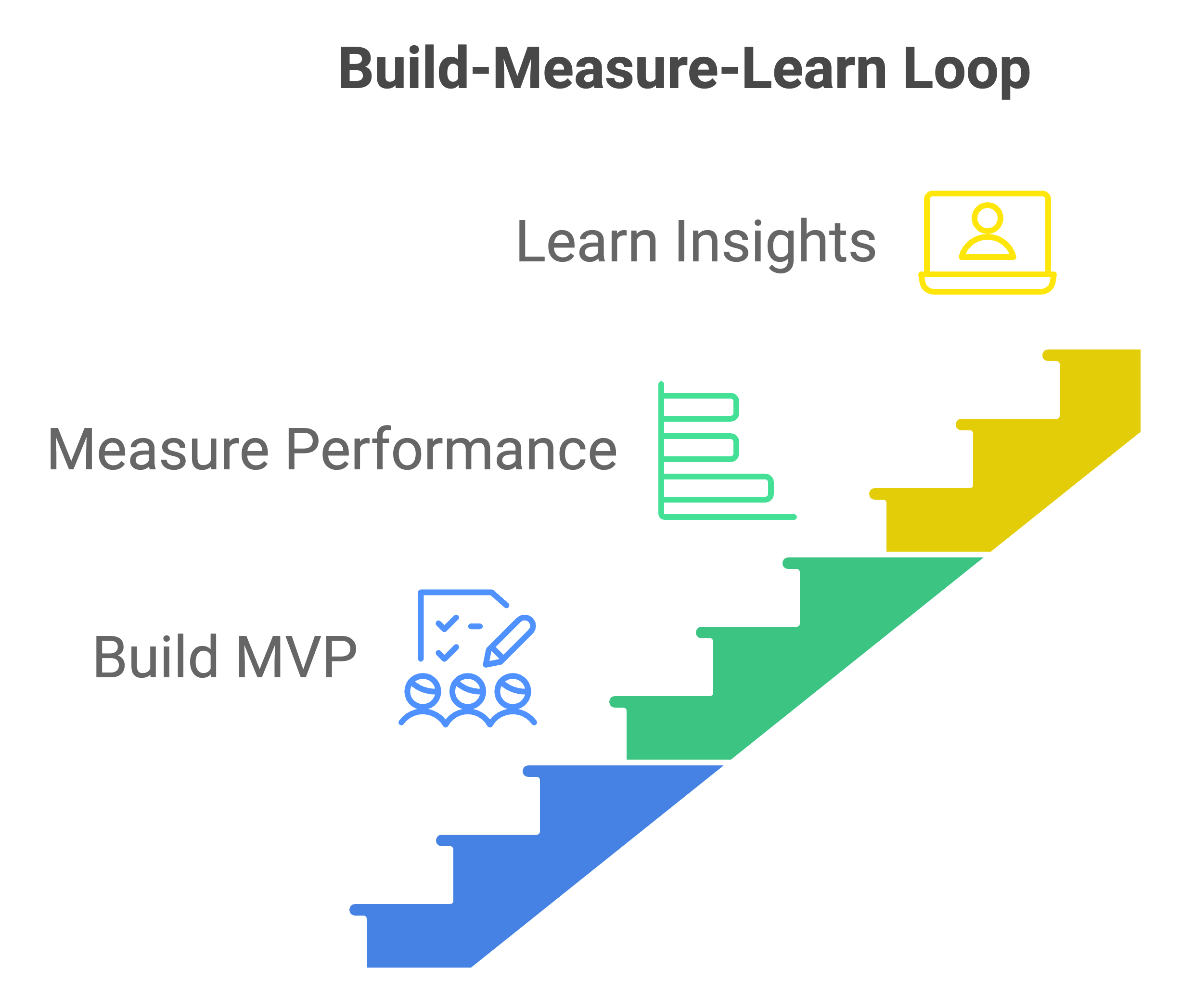
Steps in the Build-Measure-Learn Loop
To nail your MVP, you gotta get comfy with each part of this cycle. Let’s break them down:

Build Phase
Here’s where you get your hands dirty. The goal? Slap together an MVP—quick and dirty. Forget perfection; aim for functional. Test it on real users and keep tweaking. This way, you don’t splurge on something nobody wants.
Measure Phase
Once your MVP is out in the wild, it’s time to see how folks use it. Collect all kinds of data, focusing on metrics that show how well it’s solving the problem and satisfying users. For metric-gathering tools, check out our piece on MVP KPIs for Optimal Results.
| Phase | What You Do | Handy Tools |
|---|---|---|
| Build | Whip up an MVP | Prototyping tools, MVP platforms |
| Measure | Gather user data | Analytics tools, user feedback surveys |
| Learn | Make sense of data | Data tools, agile sprints |
Learn Phase
Data’s in, now what? Analyze it for keen insights. Make informed calls on whether to tweak a bit or pivot big time. Need help? We got you covered with tips on MVP Market Validation
Rolling with the build-measure-learn cycle means your MVP keeps getting better, fitting what users need and want.
Making the Build-Measure-Learn Cycle Your MVP Best Friend
Hey there, fellow entrepreneurs! Building a killer MVP (Minimum Viable Product) means nailing down the build-measure-learn cycle. This approach isn’t just a fancy term—it’s the magic sauce for creating a product that users can’t get enough of.

Step 1: Building Your MVP
Alright, time to get your hands dirty. Building your MVP isn’t about perfection; it’s about speed. You’re crafting just enough to get real feedback. Here’s how:
- Nail the Essentials: Focus on what’s absolutely necessary for solving your user’s problem.
- Prototype Like a Pro: Use low-code or no-code platforms for a quick start.
- Speed is Key: Aim to finish your MVP in no time.
- Watch the Wallet: Keep costs under control.
Step 2: Measuring Success
With your MVP out in the wild, it’s time to see if it sinks or swims. This means measuring how it’s actually doing.
- Key Metrics: Figure out which numbers tell the real story.
- Listen to Users: Grab feedback through surveys, usability tests, and talking to users directly.
- Crunch the Numbers: Use tools like Google Analytics and Mixpanel to see how users are interacting with your MVP.
- Keep an Eye on Progress: Structured tracking helps.
| Metric | Tool | Importance |
|---|---|---|
| User Retention | Google Analytics | High |
| Feature Usage | Mixpanel | Medium |
| Conversion Rate | Kissmetrics | High |
| Customer Satisfaction | SurveyMonkey | Medium |
Step 3: Learning and Improving
The last (but definitely not least) step is learning from all that juicy data. This is where you see if you’re on the right path or if it’s time to pivot.
- Dig Into Feedback: Break it down to find what’s working and what’s not.
- Refine Your Ideas: Use the feedback to tweak your product hypothesis.
- Make it Better: Decide on whether to pivot or keep going and refine.
- Product-Market Fit: Your end goal is to make sure your product clicks with users.
The cycle of build-measure-learn keeps your MVP evolving. Each spin of the cycle gets you closer to a product that users love. Happy building!
Useful Resources: