My Journey with MVP Usability Testing: Unleashing Potential
Liam Hayes– Startup Founder – One crucial aspect for us has been conducting MVP usability testing to ensure our product meets user needs effectively.
Sep 16, 2024 | 4 Minute Read
Why MVP Testing is a Big Deal?
MVP testing is big for a bunch of reasons. At its heart, it jives with the lean startup method, which pushes rolling out a simple version of a product to test its main features with real folks. This way, you dodge risks and use resources wisely.
One key reason for MVP testing is to check if the product’s value proposition holds water. By rolling out an MVP to a target crowd, you can pick up golden feedback on the product’s main features and functions, making sure it ticks the right boxes before going all in on full-scale development.
Another plus is nabbing potential tech and usability issues early on. User acceptance testing (UAT) fits in here, seeing how the platform meshes with users, spotting bugs, and confirming the product works right. This back-and-forth helps sharpen the concept with real-world data.
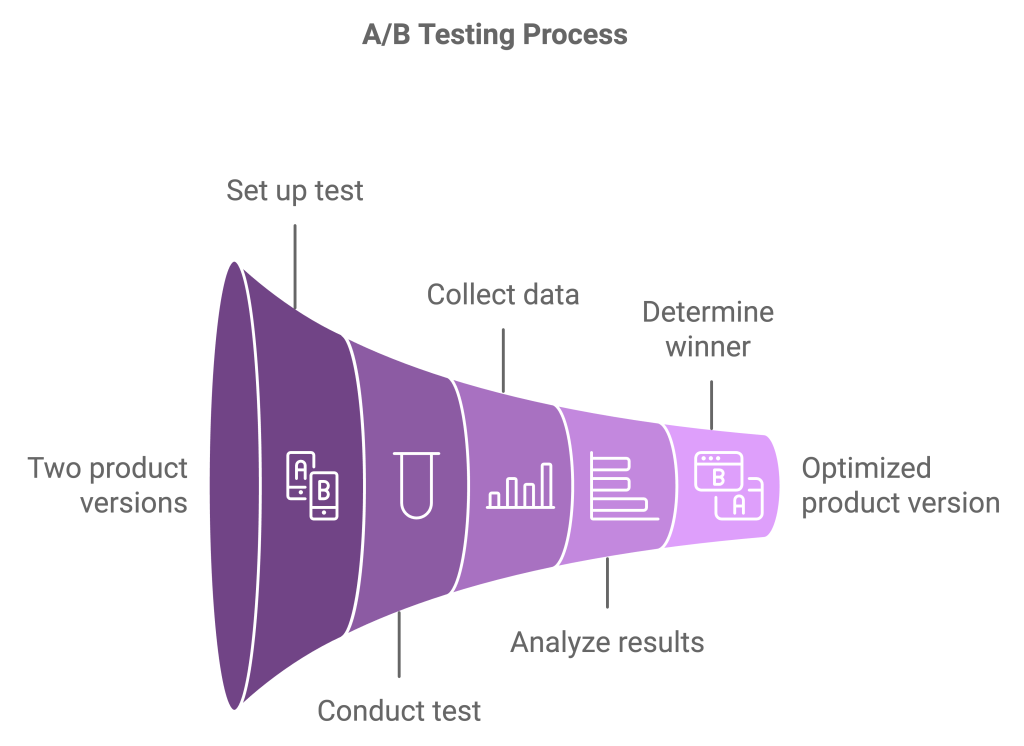
How to Test Your MVP?
Here’s the scoop on a few ways I test MVPs, each giving unique takes and insights:
- A/B Testing (Split Testing)
- A/B testing pits two versions of a product or feature against each other, revealing which one wins. It dishes out solid data for making smart decisions. For example, I’d test two landing page designs to see which one scores more conversions.
| Variant | Conversion Rate |
|---|---|
| Version A | 25% |
| Version B | 35% |
- MoSCoW Method
- The MoSCoW matrix sorts features into four buckets: Must have, Should have, Could have, and Won’t have. This keeps the project on track, focusing on must-have features. During my MVP testing phase, I zero in on ‘Must have’ features to nail the product’s core functions.
- User Acceptance Testing (UAT)
- UAT is where real users put the product through its paces to make sure it meets their needs and works right. This is huge for seeing how actual users deal with the MVP, spotting usability hiccups, and tweaking things as needed.
- Customer Feedback and Surveys
- Gathering direct feedback via surveys and interviews lets me get the lowdown on user satisfaction and pain points. Questions could cover everything from ease of use to feature friendliness.
| Question | Positive Responses |
|---|---|
| Is the product easy to use? | 80% |
| Does it meet your needs? | 70% |
These methods together help judge if the product’s value proposition and tech parts hold up. By mixing in these techniques, I can tweak my MVP just right before diving into full product development. For more goodies, check out MVP KPIs for Optimal Results.
Implementing Usability Testing
So, you’re dipping your toes into MVP usability testing. It’s a game-changer. Here’s how to nail it.
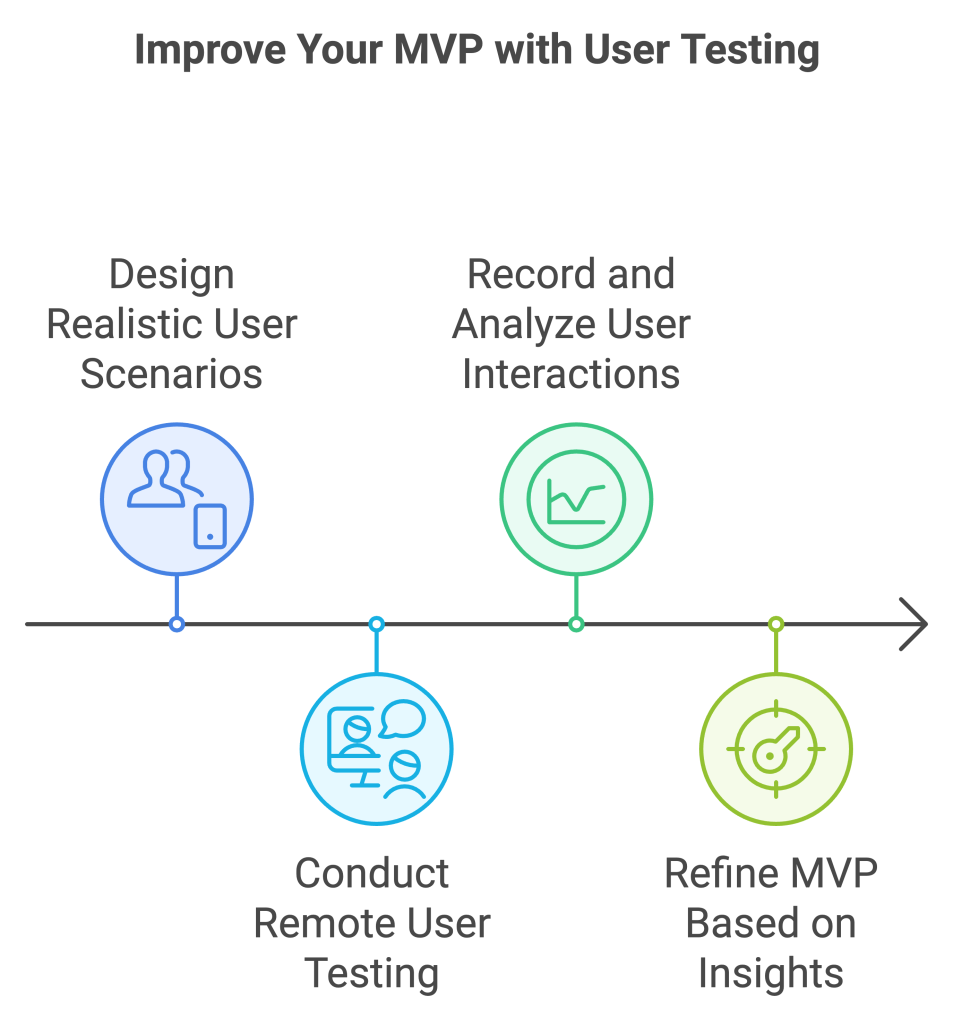
Usability Testing Process
Usability testing—watching real folks use your product—pinpoints hiccups and smooths out the experience. Here’s my take on the process:
Make Real Tasks: Dream up scenarios where users interact naturally. No hand-holding. This helps catch what’s real. Mix up open-ended tasks with goal-specific ones for a full view of your product’s usability.
Go Remote: Use video calls or testing platforms. Remote testing lets users stay comfy at home, gives you screen recordings, and broadens your user pool. Super handy for SaaS stuff.
Record and Analyze: Note problems and listen up. Remote setups let you catch every detail. All this info is gold for spotting pain points.
Tweak and Repeat: Post-test, gather insights and refine your design. Real user interaction shapes the success of your MVP.
Benefits of Usability Testing
Usability testing is like setting a foundation for your MVP. Here are the upsides I found:
Better Experience: It sniffs out issues, letting you fix them for a smoother ride. Watching users gives you clues for smarter design tweaks.
Cheap Fixes: Early problem-spotting saves big bucks. Fixing during the MVP phase is easier and avoids user headaches down the road.
Happier Users: Fine-tuning based on real feedback makes users smile. A seamless experience ups their satisfaction and, trust me, it shows in their feedback.
Solid Data: Usability tests give both hard numbers and user thoughts. This data guides you in prioritizing features that matter.
Edge Over Rivals: A well-tested product outshines others. Investing time in this step boosts your market standing.
Here’s a quick lowdown on usability testing perks for MVPs:
| Aspect | Perks |
|---|---|
| User Recruiting | Nabs key issues with spot-on feedback |
| Task Scenarios | Unveils authentic user behavior |
| Remote Testing | Gathers a broad user base and scales easily |
| Detailed Recording | Allows thorough analysis and critical insights |
| Feedback Iteration | Keeps the product sharp and user-approved |
Usability testing transformed my MVP. It polished the product and set the stage for a killer launch. If you’re gearing up for your own MVP adventure, don’t skip usability testing.
Useful Resources: