Revolutionize Healthcare: Expert Healthcare App Development Services
Olivia Harris – Startup Founder – is excited to share insights on healthcare app development services.
April 17, 2025 | 9 Minute Read
Selecting Healthcare App Developers
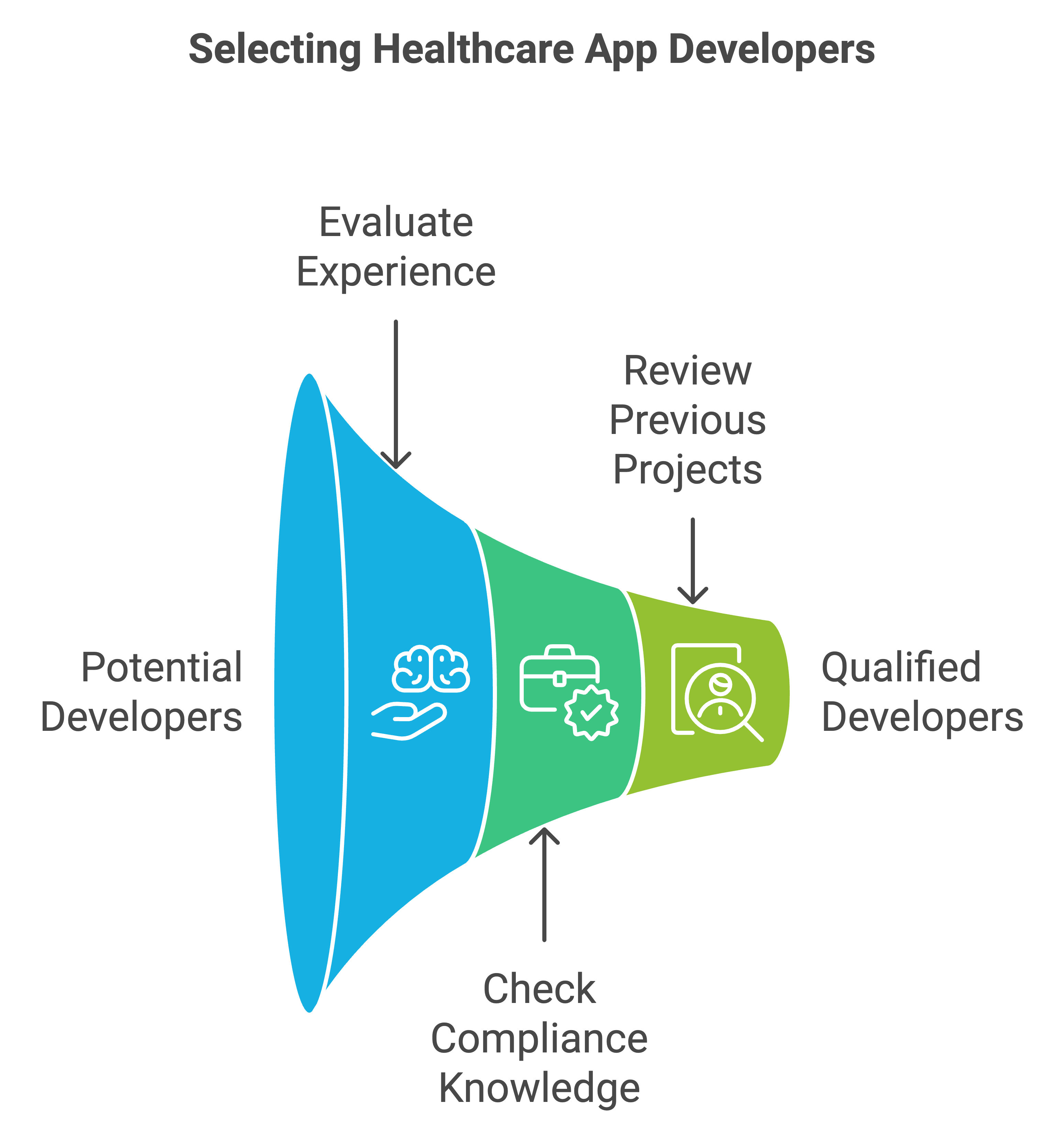
Picking the right healthcare app developers is like choosing the heart surgeon for your startup’s big operation in the health field. Let’s cut to the chase and break down what really counts: know-how in the industry, past work analysis, and what former clients have to say.
Industry Know-How and Skills
Healthcare apps have become lifelines in patient care and management. As the demand for these specialized services grows, you’ll want developers who’ve been around the block in healthcare tech.
| What to Look For | Why It Matters |
|---|---|
| Industry Know-How | Developers need a track record of crafting stellar healthcare apps. |
| Specialist Skills | They should know their way around things like EHR (Electronic Health Records) and be HIPAA game-ready. |
| Tech-Savvy | Being comfortable with both iOS app development services and Android app development services is a huge plus. |
Check Out Their Previous Work
Past projects tell you a lot. Dive into them to get a feel for what these developers can bring to the (operating) table.
- Browse Their Work: Flip through their portfolio to see how their past creations stack up with what you need.
- Safety First: Confirm they’ve got a grip on safety measures like HIPAA and GDPR.
- Tech Skills: Keep an eye out for know-how in Flutter app development services and React Native app development services.
For an extra helping hand on development styles, swing by our takes on custom app development services and cross-platform mobile app development services.
What Clients Have to Say
What others say matters. Real feedback paints a picture of the developers’ reliability and skill in healthcare app creation.
- Name Check: Great reviews from others can give you confidence in their work.
- Ongoing Help: Happy clients often praise developers for their long-term support and upkeep.
- Aloa’s Gold Star: Aloa has won hearts in areas like healthcare, with smart strategies in hybrid app development services and cloud app development services.
| Company | Specialties | Client Rating |
|---|---|---|
| Aloa | Health and Wellness Apps, iPhone & Android Apps, Hybrid & Cross-Platform Apps | 4.8/5 |
Finding the right healthcare app developer is about sifting through their industry smarts, dissecting past work, and listening to client stories. This way, you secure a team capable of delivering a healthcare app that’s as user-friendly as it is secure.
Tech Stack in Healthcare App Development
Picking the right tech stack? Well, it’s like choosing the best tools to fix your car, but in this case, for building a successful healthcare app. You’ve got your front-end stuff, the back-end magic, and a sprinkle of cloud services. Each piece plays a part in making sure the app is not just another pretty face, but also safe and following all the important rules.
Front-end Technologies
Front-end tech is all about what you see and touch in an app. It’s like giving your app a friendly face and making sure it’s not a pain to use.
| Technology | What It Does |
|---|---|
| HTML | It’s the skeleton, helping create web pages. |
| CSS | Dresses up HTML to make things look good. |
| JavaScript | Adds some pizzazz with moving parts and interactive bits. |
| React Native | Let’s you write code once and run it on both iPhone and Android—super handy! Read more |
| Flutter | Google’s toybox for building one app to rule them all, on any device. Explore Flutter |
A good user interface isn’t just eye candy; it’s about making sure everyone—from tech-savvy to first-time users—can navigate with a breeze. This is super important in healthcare apps since clunky designs can mess with patient care.
Back-end Technologies
This is where the heavy lifting happens. Think of it as the engine under the hood, where all the real work gets done—like checking data, saving new info, and keeping everything humming smoothly.
| Technology | What It Does |
|---|---|
| Node.js | A nifty tool for running JavaScript on the server-side. |
| Ruby on Rails | A framework that helps build websites quickly using Ruby. |
| Django | Like a digital construction kit using Python, quick and neat. |
| SQL Databases | Good for storing info in an organized way. |
| NoSQL Databases | Great for holding lots of info and making things flexible. |
Make sure your data isn’t just lying around unlocked—encrytion is the key! You gotta keep patient info under wraps so no one can poke their nose where it doesn’t belong.
Cloud Services Integration
Cloud is more than just fluffy images in the sky. In healthcare apps, it’s all about safely storing and managing patient info and making sure nothing important goes poof.
| Cloud Service | What It Does |
|---|---|
| AWS | Amazon’s digital toolbox for storing and sharing data. |
| Google Cloud | Helps you store data and do some heavy lifting when needed. Explore Google Cloud |
| Microsoft Azure | Offers everything from data storage to analytics, wrapped up in a neat package. |
Cloud services make sure your app follows the rules, like HIPAA, and keeps healthcare data locked tight. On top of that, it helps everything run smoothly, ensuring users, be it patients or providers, are happy campers. For those wanting to dive deeper into making apps secure, check our cloud app development services.
The secret sauce for a successful healthcare app? Choosing the right tech. It helps create an app that’s easy to use, safe, and ready to grow. For anyone on the lookout for top-notch developers, knowing these tech bits helps make smart choices. Check out our mobile app design and development services to take your healthcare app to the next level.
Key Considerations in Healthcare App Development
Security and Compliance
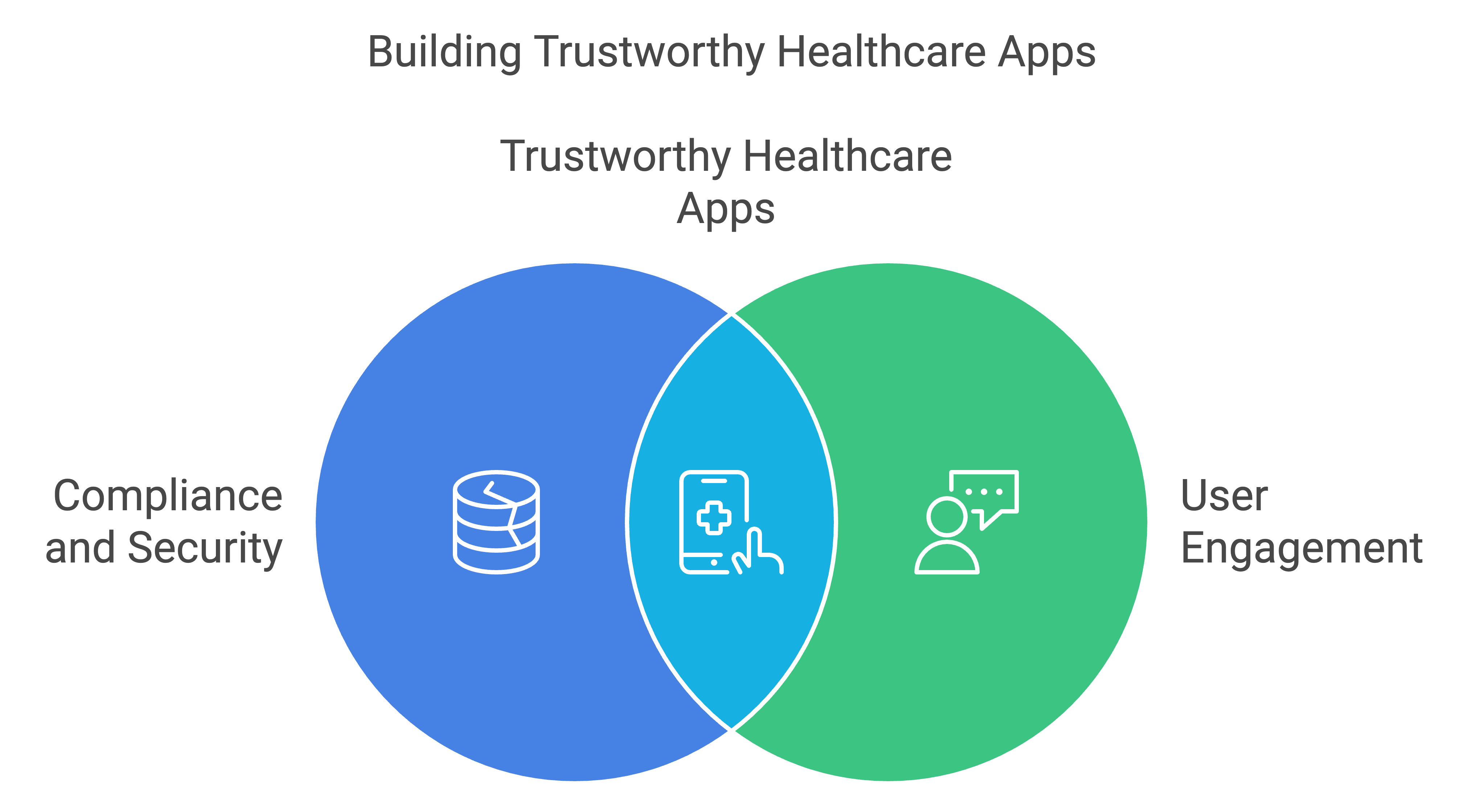
When diving into healthcare apps, it’s all about knowing the drill with rules like HIPAA in the USA or GDPR across the pond. These aren’t just fancy acronyms; they’re here to safeguard patient data, keep things legal, and earn that precious trust from users. Messing up on these can hurt your wallet big time, so it’s smart to bring onboard developers who’ve got these rules down pat.
User-Friendly Design
Making healthcare apps easy on the eyes and fingers isn’t just a nice-to-have; it’s a must. Think of it like setting up a comfy couch with a nice cup of tea – buttons, menus, and all that jazz should just feel right. A design that makes users go, “Ah, this is easy!” means more clicks and happy patients. So, keep it simple: straightforward navigation, info that pops, and layouts that adapt to any device size.
| Aspect | Key Features |
|---|---|
| Navigation | Simple and intuitive menus |
| Content Layout | Clear and easy-to-read information |
| Accessibility | Helping hands for users with disabilities |
Check out how we’re making it happen in our article on mobile app design and development services.
Patient Engagement Features
Getting patients involved through apps can really level up their medical journey. Imagine, just a tap away from prescriptions, appointments, and all the nitty-gritty health records. It’s like having a one-stop shop for all your health needs, bringing in a breeze of convenience.
Here are some patient engagement features that hit the mark:
- Quick access to health info
- Nudge for meds with reminders
- Keeping tabs on symptoms
- Doctor chats right from your couch
| Feature | Description |
|---|---|
| Medical Information | Dive into histories, lab results, and test reports |
| Reminders | Friendly nudges for your meds and check-ups |
| Symptom Tracking | Daily logs for keeping tabs on conditions |
| Telemedicine | Chatting up doctors without leaving home |
For startups, it’s about grabbing developers who can weave these elements seamlessly. Intrigued? Learn more in our article on mobile app development services.
Nailing down these essentials—security checks, a smooth ride via user-friendly design, and those crucial patient features—means putting out healthcare apps that tick all the regulatory boxes and deliver an experience that’s as easy as a Sunday morning. Peek at our custom app development services for more tailored options.
Growth and Trends in Healthcare App Development
Market Projections
Looks like the healthcare app market is on an uptrend! The hopes are high to touch a cool $314.60 billion by 2028. This leap clearly shows the hunger for all things digital in healthcare and a growing buzz around healthcare app development services.
| Year | Market Value ($ Billion) |
|---|---|
| 2024 | 200 |
| 2025 | 250 |
| 2028 | 314.60 |
Why the sudden boom, you ask? Well, it’s a mix of factors: more folks dealing with ongoing health issues, more gray hairs in the population, and tech moving at the speed of light. For startups with their eyes set on this goldmine, diving into custom app development services could be their jackpot.
Technological Advancements
Tech is shaking things up in healthcare app development, making strides like never before. AI, ML, blockchain, and those nifty connected devices are powering up healthcare apps to be smarter—giving the old ways a real run for their money.
Tech Power-Ups:
- AI & ML:
- Improves diagnostics and tailors treatments.
- Uses foresight to better patient care.
- Blockchain:
- Makes medical records secure and as clear as day.
- Boosts data protection and honesty.
- Connected Gadgets:
- Keeps tabs on patients at all hours.
- Teams up with wearable tech for seamless monitoring.
Curious about how these tech superheroes are changing the game in app development? Check out our cloud app development services and react native app development services.
Investment Opportunities
Here’s the scoop: the healthcare IT market is a treasure trove. Clocking a hearty 13.8% yearly growth spurt expected from 2019 to 2027, it might pop beyond $511 billion. And with the pandemic changing how we see healthcare, apps here are really catching the limelight.
Hot Investment Targets:
- Telemedicine:
- Could reach a hefty $64 billion by 2025 in the U.S.
- Takes healthcare to your couch with online check-ups, e-prescriptions, and digital billing.
- Health Monitoring Apps:
- Growing thanks to wearables and IoT.
- EHR Systems:
- Demand’s rising for digital health records to manage patient data like a pro.
With startups itching to dive into this ocean, picking the right mobile app design and development services and custom web app development services is a game-changer. Dive into our iOS mobile app development services and Android app development services to kick things off.
Seeing these trends and jaw-dropping tech, new business leaders can make smart choices and ride the wave of the booming healthcare app market.
Useful Resources:
Top Healthcare App Development Trends That Will Dominate in 2024
FAQ
1. How much does it cost to develop a healthcare mobile app?
The cost of developing a healthcare mobile app varies based on several factors:
- Complexity of Features:
- Basic apps (e.g., appointment booking): $10,000–$50,000.
- Advanced apps (e.g., telemedicine, EHR integration): $50,000–$200,000+.
- Development Location:
- Developers in the USA/Europe: $50–$150/hour.
- Developers in Asia/Eastern Europe: $20–$50/hour.
- Technology Stack:
- Costs may increase if the app involves AI/ML, blockchain, or HIPAA compliance.
- Development Time:
- Basic apps take 3–6 months.
- Complex apps can take 6–12 months or more.
- Other Costs:
- Ongoing maintenance and updates (~15–20% of development costs per year).
2. How many healthcare mobile apps are there?
There are thousands of healthcare mobile apps available globally, categorized into different types:
- General Healthcare Apps:
- For fitness, diet, and wellness tracking (e.g., MyFitnessPal, Fitbit).
- Telemedicine Apps:
- For virtual doctor consultations (e.g., Teladoc, Amwell).
- Chronic Disease Management:
- Apps for diabetes, hypertension, or asthma management (e.g., MySugr, Omada).
- Electronic Health Records (EHR):
- For patient data access and management (e.g., Epic MyChart).
- Medication Management:
- For prescription reminders (e.g., Medisafe).
- Mental Health Apps:
- For therapy, meditation, and support (e.g., BetterHelp, Calm).
As of recent statistics, the Apple App Store and Google Play Store have over 50,000 healthcare apps combined, with new ones being added regularly.
3. Who is an app in healthcare?
An app in healthcare refers to a mobile or web-based application designed to improve healthcare delivery, patient engagement, or health outcomes. These apps serve various purposes:
- For Patients:
- Help manage health conditions, track medications, book appointments, or monitor fitness.
- For Doctors/Clinicians:
- Provide tools for diagnosis, remote consultations, and managing patient records.
- For Hospitals/Healthcare Systems:
- Streamline processes like patient admission, discharge, and billing.
Some examples include:
- Doctor-On-Demand Apps: For telehealth consultations.
- Wellness Apps: Like Headspace for mental health.
- Wearable Companion Apps: Like Fitbit or Apple Health, syncing with smartwatches and other devices.