Transform Your Workflow: Low-Code/No-Code Developers at Your Service
Olivia Harris – Startup Founder – In my experience, low code no code developers are revolutionizing the tech industry by enabling more people to create applications.
Oct 1, 2024 | 6 Minute Read
Why Hiring Developers in India is the Right Thing to Do
Getting hold of low code/no code developers in India can prove useful taking into consideration that app development will become stress free without you burning a hole in your pocket. Here is what makes this a brilliant decision based on my own experience.
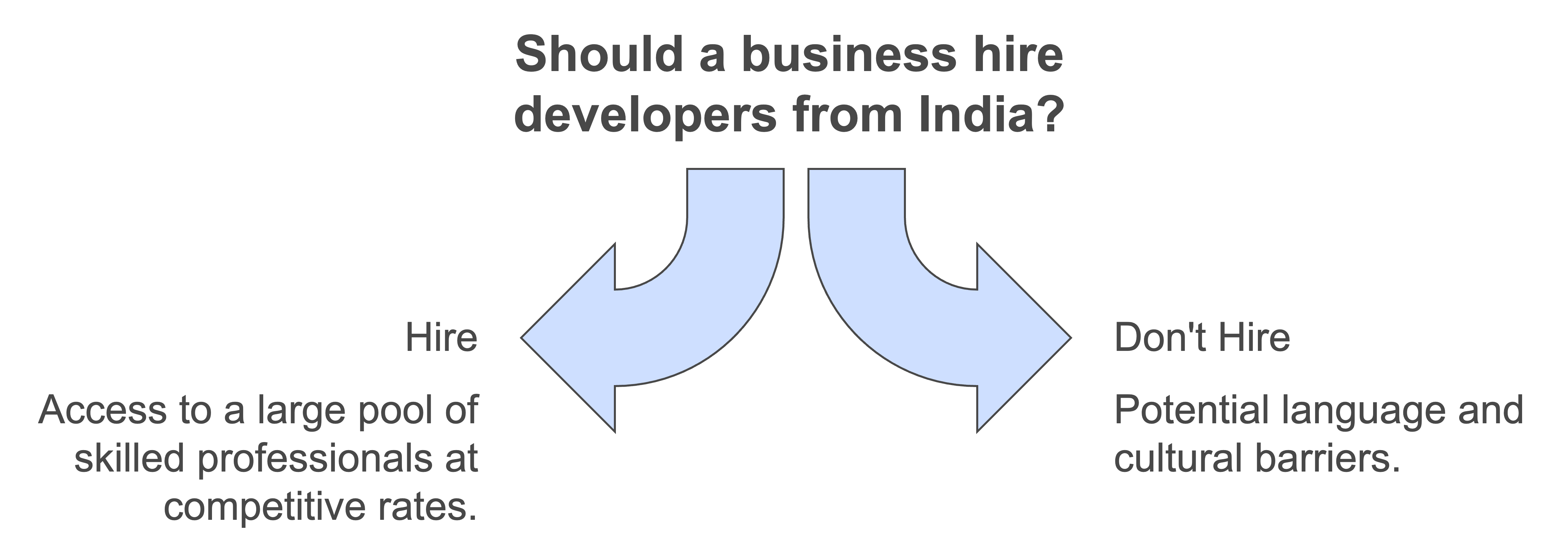
Returns on Investment
Primary, the savings on costs are enormous. The overload associated with low-code and no-code development is less relevant because you are simply purchasing a product as opposed to having it designed for you. There’s no spending less than $40,000 and the amount could reach very costly up to $250,000 for traditional custom software putting a strain of the wallet especially big companies.
| Type of Development | Average Cost ($) |
|---|---|
| Traditional Custom Software | $40,000 – $250,000 |
| Low-Code/No-Code | $15,000 – $50,000 |
Using low code/no code platforms makes things budget friendly by cutting down the amount of money that would have gone to very expensive and deeply qualified extensive developers. This is a development option on the market which any advanced organization would wish to use.
Cost Effective Skilled Talent for You
If tech skills were currency then India is without a doubt the richest country in the world with an abundance of low-code and no-code developers. The development of these platforms has revolutionized mobile application development because you can easily develop tailored applications in a matter of hours which is what most businesses which are in a competitive environment desire.
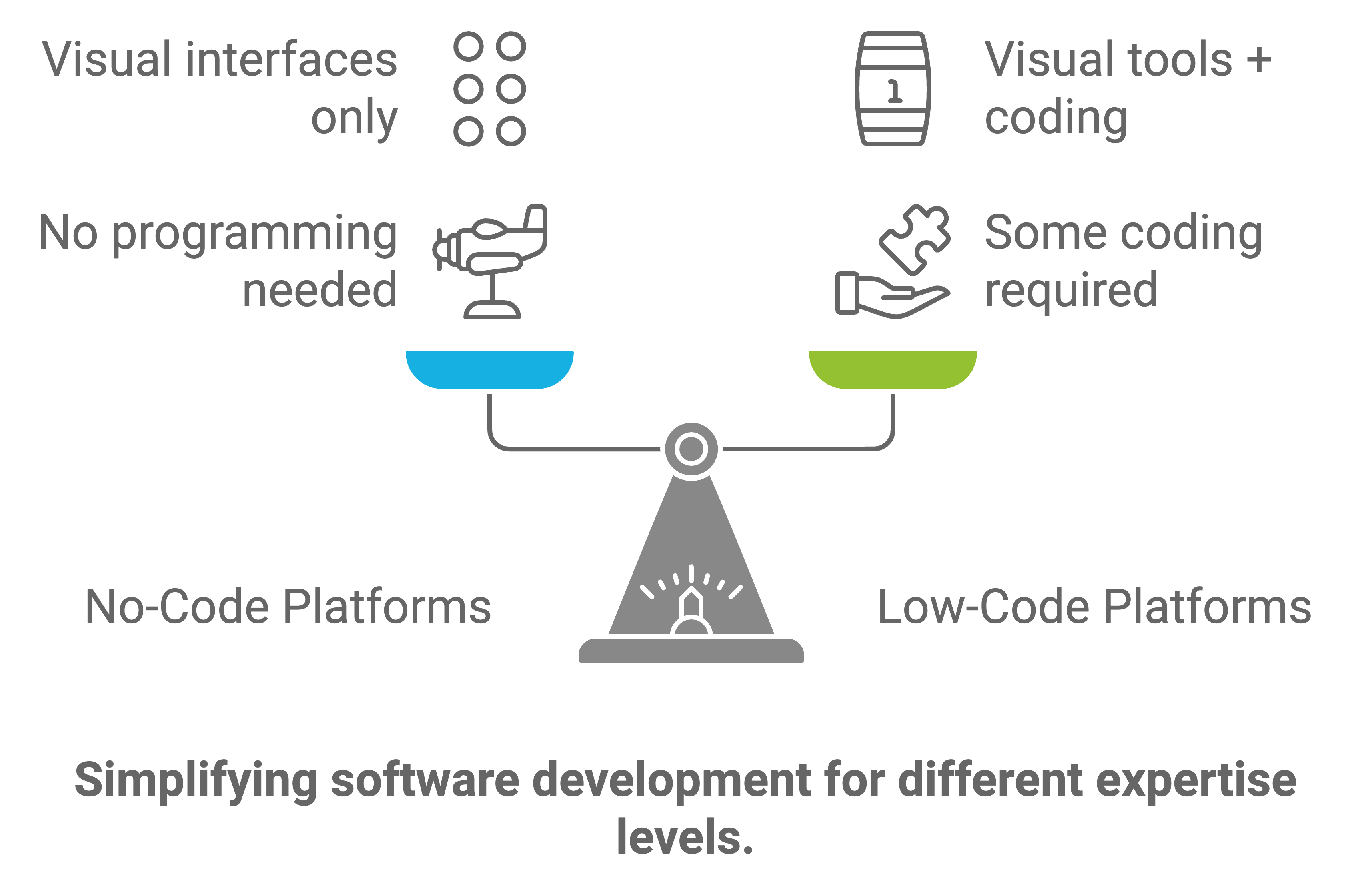
Low-Code Platforms:
- Some coding skills are required
- Ideal for professional programmers
- Speedy application delivery
No-Code Platforms:
- No coding skills to be done
- Ideal for usual people
- Helps in developing app in an easier way
Tapping into the largest pool of human resources that is India helps in hiring people who will be able to leverage these platforms to the full extent and in the very short time given.
Competitive Working Business Advantage
Another big advantage is the time zone advantage. If one hires programmers or developers from India, one can have people working on that project even while the project owners are asleep. This reduces time and makes way for such projects to be updated and changed quickly. It is one of those time zone management aids that go with the magnifying effect on certain types of projects.
| Activity | Benefit |
|---|---|
| Rapid Iterations | Quick updates and fixes |
| Continuous Development | Non-stop project progress |
| Reduced Time-to-Market | Faster solution rollouts |
Low-code/no-code enhancers make this even more better by enabling fast turns on any changes to the requirements and feedback from the users. If you are struggling on how to manage project growth or require quick response, India’s time zone benefit can be your extra advantage.

Handy Links
For additional information and contrasts, check this out:
Decoding Excellence: Guide to Evaluating Indian Developers Technical Skills
Tools and Techniques for Smooth Operations
After assessing those benefits, one would appreciate the fact that there is no doubt that engaging low-code/no-code developers in India will enhance your workflow especially for app development in the most increasing and efficient manner.
Things to Keep in Mind
There are many benefits to hiring low-code/no-code developers in India, however, there are also some factors which must be considered as well. But with the help of these strategies and tools, these issues can be easily gotten rid of. Here’s the scoop.
Communication Problems
The most common problem of working with developers from the other side of a different time zone is that sometimes conversations are messed up. There will be moments when you are left waiting for a response, and you sit there and wait again for a long time without words. Although it is a fact that a huge number of Indian engineers can speak in English, it is also a fact that the Indian culture can confuse sometimes.
| US Time (EST) | India Time (IST) |
|---|---|
| 8:00 AM | 6:30 PM |
| 12:00 PM | 10:30 PM |
| 5:00 PM | 3:30 AM (Next Day) |
Utilizing communication tools for remote teams such as video conferencing tools, real time chat applications and project management software is quite beneficial. Further, having specialization such as project management, minimizes the risks that arise when the entire team is involved in one project.
Cultural Challenges
Diversity not only influences collaboration but also affects the workflow. Business practices are unique in each division and so confusion may arise. There are Indian developers who may not be comfortable saying what is on their minds because of fear which would lead to expectations being misplaced.
To bridge this gap, invest in cultural alignment. Scheduling off-site team-building activities regularly is often helpful, as is providing training in culturally sensitive communication practices. Awareness of frequent cross-cultural dissimilarities encourages team coherence.
Data Security Concerns
Data security is also another major issue to address. The instant the sensitive information is transmitted internationally, there is a risk of unauthorized access and even leakage of the information.
In the event of such risks occurring, always ensure that client security measures are built into the contract. Seek firms whose practices observe certain regulation standard like GDPR as well as have ISO standard accreditations.
Considering these red flags, you can prepare more thoroughly before employing low-code/no-code developers in India.
Useful Resources:
The Low-Code / No-Code Ecosystem
FAQs
What is a no-code/low-code developer?
A no-code/low-code developer is someone who creates applications or software solutions using platforms that require minimal or no coding. No-code platforms provide visual tools and pre-built templates to build applications without writing code, while low-code platforms offer some coding flexibility to customize the solution beyond pre-built features. These developers focus on solving business problems quickly and efficiently without deep programming knowledge.
Will low-code/no-code replace developers?
Low-code/no-code platforms are unlikely to fully replace traditional developers, as they are designed to complement them. These platforms empower business users and non-technical individuals to build solutions quickly, but for complex or highly customized systems, professional developers are still essential. Low-code/no-code reduces dependency on developers for simple tasks but does not eliminate the need for in-depth technical expertise for more advanced development.
What is the difference between low-code and no-code app development?
The main difference between low-code and no-code app development lies in the level of coding required:
- No-code platforms allow users to create applications without writing any code, using drag-and-drop interfaces and pre-built templates.
- Low-code platforms require some coding, but they offer tools that significantly reduce the amount of manual coding needed, allowing developers to focus on customizing parts of the application that need more complex logic or functionality.
Is there demand for no-code developers?
Yes, there is increasing demand for no-code developers, especially as businesses seek faster, more cost-effective ways to develop applications without needing to hire full-time professional developers. No-code platforms allow companies to quickly prototype and deploy solutions, making it a valuable skill set in industries like marketing, operations, and startups that require agility and fast delivery.