Conquer the Market: How I Mastered MVP Market Validation
Liam Hayes– Startup Founder – Market validation for MVP is crucial to ensuring the success of your startup.
Sep 16, 2024 | 5 Minute Read
Why You Need Market Validation?
Market validation is like a reality check for your business idea. Before pouring time and money into a product, you need to make sure people actually want it. This isn’t just about asking folks if they think your idea is cool; you need hard evidence showing there’s a real need and folks willing to pay for it. I learned this pretty quickly. When I first started working on my MVP (Minimum Viable Product), understanding market validation made all the difference. It’s about digging deep through research and data to figure out if your idea can actually make it in the real world.
Why Bother with Market Validation?
Getting a thumbs-up on your product idea has some major perks that can make or break your success:
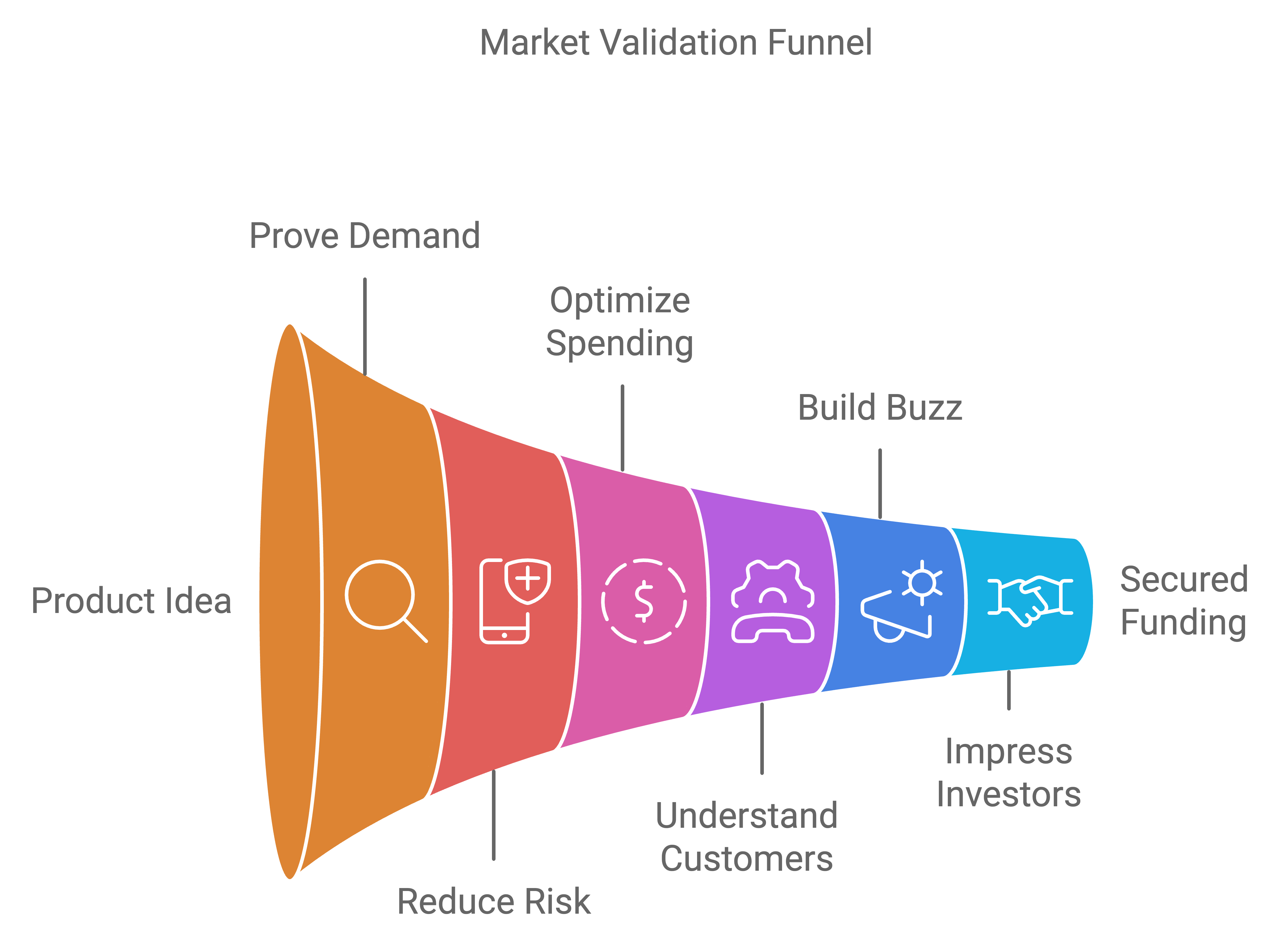
- Proving People Want It: There’s nothing worse than building something nobody needs. Market validation helps you figure out if your product actually solves a problem customers care about. Knowing there’s a market for it gave me the confidence to keep pushing forward.
- Cutting Down the Risk: Jumping into product development without validation is like gambling with your resources. I’ve seen too many startups crash and burn because they skipped this step. By checking the market first, I could avoid wasting time and money on a flop.
- Smarter Spending: With validation, you know exactly where to put your resources. I avoided adding fancy features that customers didn’t care about, focusing instead on what mattered most to them.
- Getting Inside Your Customer’s Head: Through validation, I learned what my potential customers were really thinking. Their feedback helped me tweak and improve the product to better fit their needs.
- Building Early Buzz: Talking to potential customers early on helped me start building relationships. Those early adopters and beta testers became a crucial part of the product’s success.
- Impressing Investors: Showing investors that I had done my homework with market validation helped secure the funding I needed. They liked the data-driven approach, seeing it as lower risk.
Every one of these benefits played a huge role in the initial success of my MVP. They can do the same for anyone starting out. Validation isn’t just a box to tick off; it’s a game-changer that can set you up for success from day one. If you’re curious about how to develop your own MVP quick, check out our Accelerate Time to Develop an MVP.
By nailing market validation, you give your MVP a much better shot at success and avoid nasty surprises down the road. This isn’t just a nice-to-have step; it’s essential for turning a good idea into a great product.
Market Validation Strategies
Market Research vs. Market Validation
Discovering the key differences between market research and market validation was truly a game-changer for me. Initially, I thought they were similar, but I soon realized their distinct purposes. On one hand, market research is primarily about gathering broad data on demographics and trends. On the other hand, market validation goes a step further—actually testing if your product or service idea has legs by directly engaging with potential customers.
Moreover, while market research paints a big picture of consumer behavior, market validation, in contrast, zooms in to see if people are not only interested but also willing to part with their cash for your offering. To illustrate this point, when I was checking if my MVP would fly, I didn’t just rely on market trends. Instead, I went straight to potential users to get firsthand feedback and see if there was real interest, rather than just wishful thinking.
| Category | Market Research | Market Validation |
|---|---|---|
| Focus | General market data | Specific product demand |
| Method | Passive data collection | Direct customer engagement |
| Goal | Spot trends | Confirm need |
Balancing both approaches is smart, but market validation is the quickest way to dodge a flop before sinking too much time and money into it.
Steps to Nail Market Validation
Let’s break down the market validation process into easy steps. Here’s exactly how I did it:
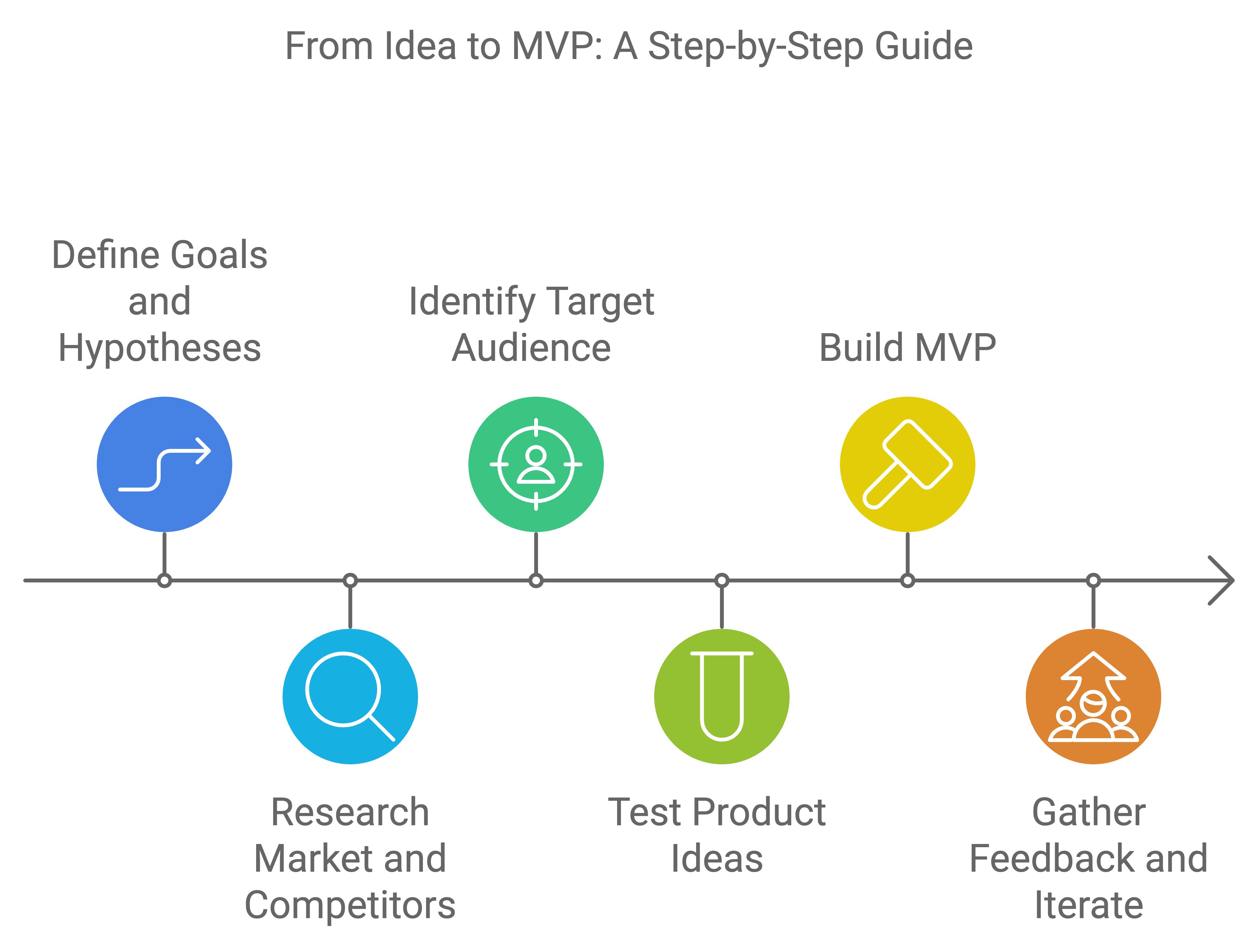
- Setting Clear Goals and Hypotheses First, I pinpointed what I needed to find out. My hypotheses were centered around what problems customers faced and whether my solution could fix them.
- Scoping Out the Market I dug into potential demand by assessing market segments and trends. While competitor analysis and industry reports were helpful, talking to potential customers gave me the best insights.
- Pinning Down the Target Audience I asked, “Who’s gonna love my MVP?” Narrowing down the target audience helped me focus my validation efforts better. Creating customer personas and identifying key demographics was critical.
- Testing Product Ideas I validated my ideas using surveys, interviews, and landing pages. The feedback was gold. Different sampling methods gave me varied perspectives on what customers wanted and what they’d pay.
- Building the MVP I created a basic version of my product to test in the real world. This MVP helped me gather crucial feedback without overloading on unnecessary features. To speed up this process, see Transitioning from MVP to Full Product.
- Tweaking the MVP Finally, I put the MVP out there. Using feedback tools like UserTesting and UsabilityHub, I gathered user experience data and made tweaks. This cycle continued until the MVP hit the mark.
| Stage | What to Do | Tools |
|---|---|---|
| 1 | Define goals | Custom question sets |
| 2 | Check market demand | Industry reports, competitor analysis |
| 3 | Identify audience | Personas, demographics |
| 4 | Test ideas | Surveys, interviews, landing pages |
| 5 | Build MVP | Rapid prototyping tools |
| 6 | Fine-tune MVP | UserTesting, UsabilityHub |
By following these steps, I tackled the challenge of market validation head-on, ensuring that my MVP would truly resonate.

Investing time in market validation was worth it, decreasing risks and boosting my MVP’s success odds. Knowing that there was genuine market demand helped me avoid missteps and lay down a solid path for future growth.
Minimum_Viable_Product_App_Guide_Preview-1Useful Resources:
Market Validation: Learn How To Create Products People Actually Want