Your Path to Success: How to Launch Your Minimum Viable Product App in 2025?
Olivia Harris – Startup Founder – Fluto (Seed Funding Stage) Looking to develop a Minimum Viable Product App for your startup? This guide will walk you through the essential steps.
Sep 4, 2025 | 8 Minute Read
MVP Essentials: Why You Should Start Here?
Starting with an MVP is like bringing a flashlight on a night hike—you can see the obstacles coming your way. An MVP lets you peek into your app’s future. It’s like a “test drive”, helping you figure out if people find your app is useful or if they are just politely nodding while secretly dreading it. You get immediate user feedback, which is like gold when you are looking to make your product better. Here’s why I swear by this method:
- Keeps You Risk-Free: MVPs cut down the risk of your project crashing and burning. Instead of guessing, you are actually testing the waters. The guy who came up with the Lean Startup Methodology, Eric Ries, says this approach keeps risks low (Product Plan).
- Real-World Feedback: The whole point is to learn from your potential users with minimal effort. It’s like getting a rough draft graded before your final exam—you know what needs fixing early on.
- Smart Use of Resources: Why waste months on features nobody cares about? With an MVP, you focus on what really matters, saving both time and money.
- Know Your Market: MVPs help you figure out if there is actually a market for your idea. This can steer your next moves and future features. If you are curious to try it, check out our minimum viable product template.
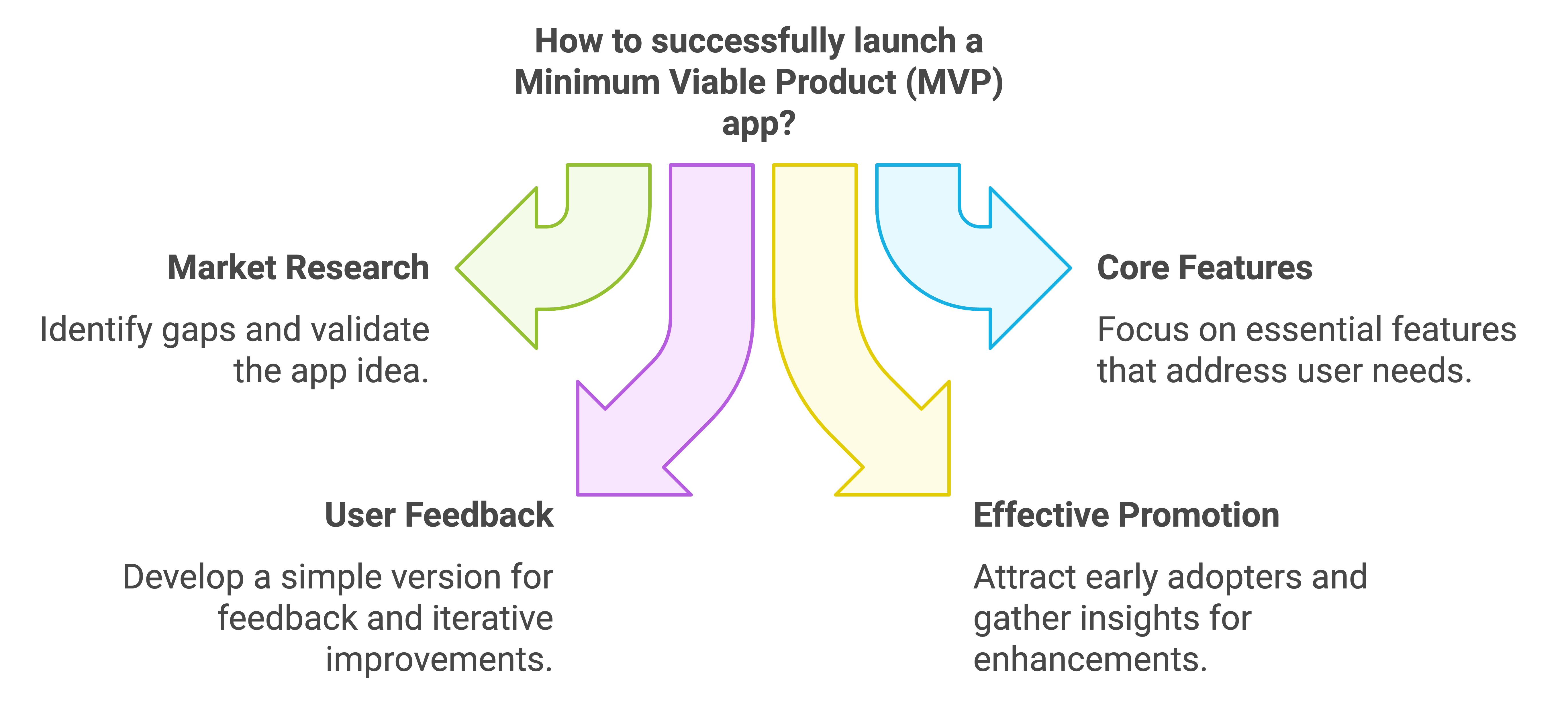
Starting with an MVP isn’t just about playing it safe; it’s playing it smart. It makes sure you are hitting the bullseye of customer needs and business goals right from the get-go.
Ready to jump in? Check out are to stay on course. Happy testing!
Learning From Successful MVPs
Let’s dive into successful MVP (Minimum Viable Product) journeys. We have got the tales of legends like Instagram and Amazon right here, sharing their paths from humble beginnings to household names.
Instagram’s Sharp U-Turn
Instagram’s journey is all about mastering the pivot. They kicked things off as “Burbn,” focusing on check-ins and sharing experiences. But users weren’t biting. Feedback screamed for a focus on photo-sharing. So, Instagram shed the extras, went all-in on photos, and boom—became a social media powerhouse.
| Features | Pre-Pivot | Post-Pivot |
|---|---|---|
| Functions | Check-ins, sharing experiences | Sharing photos |
| User Input | Confusing mix of features | Clarity and simplicity won |
| Outcome | Pivot to success, dominating social media (Curiosum) |
Amazon’s Humble Start
Amazon’s MVP was simplicity itself—an online bookstore launched in 1994. Their focus was on offering a huge selection of books at low prices, nothing fancy. Turns out, it was exactly what book lovers needed. The idea took off, and Amazon scaled from selling books to, well, selling everything.
| Features | Description |
|---|---|
| Core | Online book sales, no-frills design |
| First Show | 1994 |
| User Response | Proved there was a market for online book-buying |
| Outcome | From books to global retail juggernaut (Curiosum) |
The takeaway? MVPs let you test ideas, gather real-world data, and tweak quickly. Ready to start your own MVP journey?
How to Build a Minimum Viable Product App?
Creating a top-notch minimum viable product (MVP) app boils down to two steps: pinning down the problem and figuring out who it is for. Nailing these steps ensures your app hits the right note and reaches the folks who need it most.
1. Nailing the Problem
First things first, you gotta get the problem right. Getting a grip on the problem helps you decide what features are a must-have for the MVP and which ones can wait. The aim is to zero in on the headache your app plans to cure.
Ask yourself:
- What problem is my app solving?
- Who is dealing with this problem?
- Why should this problem be tackled now?
Crafting a clear problem statement can steer your apps development in the right direction:
| Criteria | Problem Statement |
|---|---|
| Problem | Users struggle to keep track of daily expenses. |
| Audience | Young professionals and college students. |
| Importance | Aids in better financial management, promoting financial stability. |
2. Knowing Your Audience
Next up, know your crowd. To get your MVP to the right people, you need to dig into who they are. This means researching and analyzing who would most benefit from your app. It’s vital because it tunes your MVP to the needs of its users.
Keep an eye on:
- Demographics: Age, gender, income level, education.
- Behavior: Spending habits, app preferences, interests.
- Needs: Problems they are facing, wishes, and demands.
Here’s a quick look at target market traits:
| Criteria | Details |
|---|---|
| Demographics | Ages 18-35, all genders, income $30k-$70k. |
| Behavior | Regular users of finance apps, budget-conscious, tech-savvy. |
| Needs | Easy expense tracking, budget management, financial advice. |
By knowing your target market, you can shape your MVP to hit the bullseye on their needs, making it more attractive and practical. Run surveys, conduct interviews, and do market research to gather this info. Use it to ensure your MVP meets user expectations and aligns with your business goals.
Unlock additional valuable insights with our Guide on How to Build your Minimum Viable Product App—Free Download to take your project to the next level!
3. Rolling with Agile
Agile is like having a playbook that is flexible enough to adapt to different game situations. This comes in handy when creating MVPs – work in chunks, get feedback, and adjust quickly.
How to Play Agile
- Small Goals, Big Returns: Break the development work into sprints, which are short bursts where you add features or fix things. These mini check-ins let you tweak stuff as you go based on what users think.
- Feedback is Gold: Keep an ear to the ground. User feedback during development will show you what is working and what needs tweaking. Agile shines in these scenarios because it welcomes continuous changes, making the product better with each iteration.
| Agile Practice | Benefit |
|---|---|
| Sprints | Stay agile with short, frequent updates |
| Real-Time Feedback | Improve constantly based on user input |
So, by sticking to your essential features and riding the agility wave, you’ll craft an MVP that hits your business targets and makes users happy. Keep refining based on what users say, and watch your product grow into something stellar.
4. Testing and Iteration
Alright, now let’s get real. If you’re not listening to your customers, you’re already losing. Your minimum viable product app needs to speak the language of your users. Take a page from Eric Ries, the MVP guru, who says, “Collect validated learning with minimal effort”.
You see, the MVP is not just a slapped-together prototype—it’s a legit product people can use to get stuff done. If it’s all bells and whistles but falls apart when you touch it, you’ve missed the mark.
So, how do you gather gold-mine feedback from users? Here’s the inside scoop:
- Surveys: Simply ask them what is working and what is not.
- Interviews: Get those deep dives into user minds.
- Analytics Tools: Spy on their clicks and scrolls with tools like Google Analytics.
Useful Resources:
Usability Testing
Now, let’s talk usability testing—think of it as your MVP’s rehearsal. You want your MVP to nail it on stage, right? By using agile methods, you can keep tweaking based on user feedback.
The mission here is to squash usability bugs before they turn into Frankenstein’s monsters. Here is your battle plan:
- Prototype Testing: Build and test core features, don’t just wing it.
- Task Analysis: Watch users like a hawk as they complete tasks.
- Feedback Sessions: Huddle up and hash out what is bugging them.
By fusing user feedback with hearty usability testing, you are setting your MVP up for stardom. This mix ensures you are delivering a product that isn’t just good but great. Ready to blow those user expectations out of the water? Let’s do this!
Download our free guide to unlock advanced tips and tricks on building your minimum viable product app. This comprehensive guide is packed with expert written insights to help you streamline and ensure your MVP is a success. Don’t miss out—Get your Free Copy Now!
The Lean, Mean Startup Machine
Ever heard of Eric Ries? He is the guy behind the whole Lean Startup Machine, which basically means doing a lot with a little. Your MVP fits right into this. Here’s the playbook:
- Build, Measure, Learn: Roll out an small, testable part of your product. See how it does, learn from it. Then rinse and repeat.
- Pivot or Persevere: Got some insights? Great. Decide if you need to switch things up or keep going the way you are going.
- Resource Savvy: Why build a mansion when a tent will do to get started? Focus on the core features that really matter.
- Learning Over Guessing: Use real data to steer your ship. It’s way safer than gambling on what you think users wants.
The MVP Playbook
Starting with an MVP doesn’t just save you from potential heartache; it sets you up for success. You get validation from real users and can perfect your product before fully committing.
In the startup world, an MVP is your best friend. It keeps you grounded, gives you critical insights, and helps you focus on making something people actually want. And in the end, isn’t that what it is all about.