Quality Beyond Boundaries: My Experience with Remote Team QA
Liam Hayes – Startup Founder – In today’s digital age, quality assurance in remote development teams is becoming increasingly important for maintaining high standards.
Sep 26, 2024 | 5 Minute Read
Outsourcing Development Teams
Thinking of outsourcing your development team? Let’s talk about why India often pops up as a top choice. I’ve got some first-hand experience and I’m here to lay down the good and not-so-good sides of hiring developers from India.
The Good Stuff About Hiring Developers in India
Wallet-Friendly: One major reason I’ve opted for Indian developers is the cost savings. It’s a no-brainer—hiring devs in India won’t drain your bank account like hiring locally in the U.S. It’s a lifesaver for startups and small businesses trying to stretch their budgets.
- Tons of Talent: India has a goldmine of tech talent. From mobile app experts to data whizzes and cloud gurus, you name it, they’ve got it. This makes it easier to find the perfect fit for your project.
Hard Workers: Indian developers are known for their rock-solid work ethics. From my perspective, they’ve always been eager to meet those tight deadlines and deliver top-notch work. This kind of dedication can really push your project forward.
- Time Zone Perks: Think of it as a 24-hour work cycle—while you’re catching Z’s in the U.S., your Indian team is grinding away. This means faster project completion and a quicker time-to-market.
The Not-So-Good Stuff About Hiring Developers in India
Quality Control: Keeping up with quality can be tricky. A survey says 65% of businesses bump into quality issues with offshore teams. Missing standards and sketchy communication can lead to subpar results. Bad software costs around $1.7 trillion annually.
- Communication Hiccups: Smooth talking is key to project success, but different time zones and cultures can mess things up. I’ve seen projects get delayed because of miscommunication about deadlines and requirements. Knowing about cultural differences in working with Indian developers can help dodge these issues.
- Supervision Needs: Managing a remote team needs extra effort to keep productivity up and deadlines met. Sometimes, the team might feel swamped or struggle to adjust to your work style. For tips on handling this, check remote developer productivity.
- Staying Consistent: Changes in the offshore team can disrupt the flow and consistency of your project. This can mess with your brand and deliverable quality. Strategies like keeping project scalability in mind and involving the whole team in planning can help keep things steady.
| Pros | Cons |
|---|---|
| Wallet-Friendly | Quality Control Issues |
| Tons of Talent | Communication Hiccups |
| Hard Workers | Supervision Needs |
| Time Zone Perks | Consistency Challenges |
Thinking of going down the outsourcing road? Understand these ups and downs first. Trying out different IT staffing solutions and looking at success stories of hiring Indian developers can give you more ways to maximize the perks and dodge the pitfalls.
Keeping Remote Teams on Their A-Game with Quality Assurance
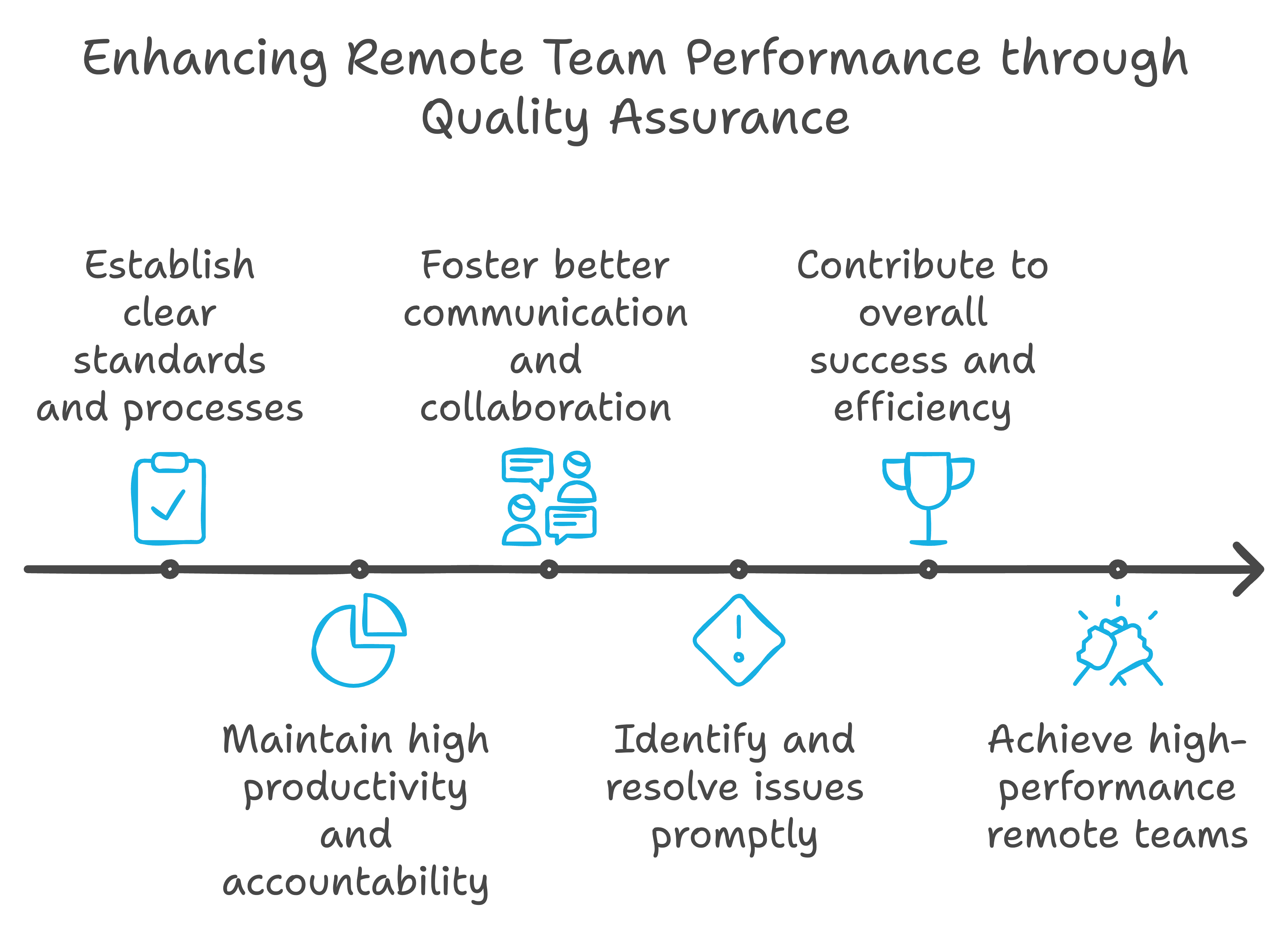
Knocking it out of the park with high-quality software starts with nailing your QA process, especially when you’re dealing with remote teams. From my own experience, I can tell you how crucial it is to have a rock-solid QA setup. So let’s dive into why QA matters and the hiccups you might hit along the way.
Why Quality Assurance Rocks
Quality Assurance (QA) is like the unsung hero of the software game. It’s not just about squashing bugs but about making the whole process smoother, meeting what your clients are asking for, and making users happy.
Stopping Bugs in Their Tracks: QA helps catch bugs while the code is still fresh, saving loads of time and dough compared to fixing them later on.
Hitting Client Expectations: QA makes sure the software matches what was promised. This keeps clients happy and helps hit those big business goals.
Making Users Smile: A thoroughly tested product won’t leave users pulling their hair out. Happy users stick around, plain and simple.
Check out the table that breaks down why having a QA team is a game-changer:
| Aspect | With QA Team | Without QA Team |
|---|---|---|
| Early Bug Detection | High | Low |
| Fix Costs Later | Low | High |
| Customer Happiness | High | Low |
| User Loyalty | Strong | Weak |
| Earnings Potential | Increased | Lost |
| Brand Image | Strong | Tarnished |
| Security Issues | Low | High |
What Can Trip You Up in QA?
QA’s awesome, but when you’re managing a remote team, it’s got its challenges.
- Chat Problems: Different time zones and schedules can mess with the instant responses you sometimes need. Tools like remote team chat can help smooth things out.
Understanding Gaps: Different work cultures can lead to mix-ups. A little cultural bridging can go a long way.
Tech and Tools Hassles: Making sure everyone’s got the same tools is key. Inconsistencies can mess with your testing and tracking.
Time Zones Kung-Fu: Syncing up QA processes across time zones can get tricky. Time zone tools can make it easier to stay on the same page.
Keeping Standards Steady: Maintaining the same quality levels everywhere can be tough. Regular checkups and ISO certifications can make sure you stay on track.

Here’s how these challenges stack up:
| Challenge | Impact | Fix |
|---|---|---|
| Chat Problems | Slower Fixes | Chat Tools |
| Understanding Gaps | Processes Gone Wrong | Cultural Bridging |
| Tech and Tools | Wonky Testing | Same Tool Kits |
| Time Zones | Workflow Issues | Sync Tools |
| Consistency | Quality Up and Down | ISO Checks |
In the end, QA in remote teams has its curveballs, but tackle these right, and you’re golden. Delivering top-notch software isn’t just doable—it’s the norm.
The-Ultimate-Guide-to-Hiring-Top-Indian-Developers-PreviewUseful Resources: