The Ultimate Arsenal: Rapid Prototyping Tools for MVP Prosperity
Olivia Harris– Startup Founder (Fluto – Seed Funding Stage) – When building your Minimum Viable Product, having access to the best rapid prototyping tools for MVP is crucial.
Sep 16, 2024 | 4 Minute Read
Prototyping for Product Development
Whipping up a killer prototype is like cooking up a recipe to get your dish just right. It’s an essential part of roughing out your minimum viable product (MVP). Using rapid prototyping tools for MVP development can work wonders, showing off your ideas and getting people talking.
Why Bother with Prototypes?
When I brew up something new, my secret sauce is the prototype. It’s like a sneak peek of your final product. Get a feel of what works (and what crashes) before diving into expensive production. It’s crucial for MVPs where you’re running tight on time and cash.
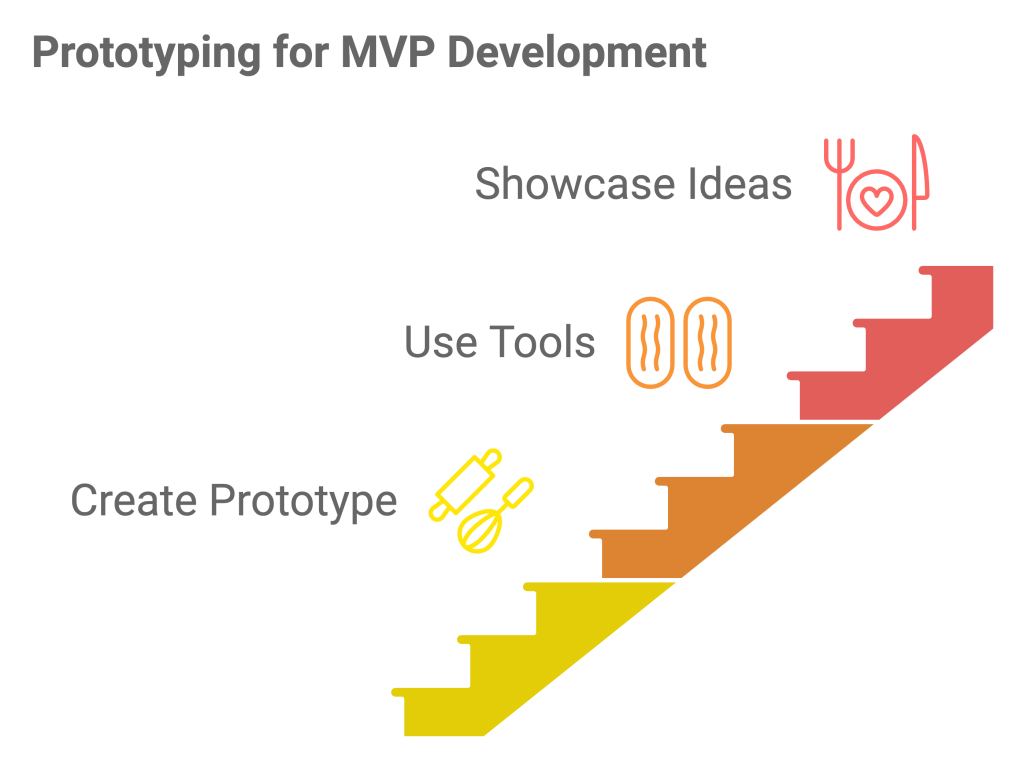
Smashing benefits of prototypes:
- Show, Don’t Tell: Prototypes give you a hands-on demo of what your product could be. Everyone on the team gets a clear picture, making life easier.
- Reality Check: Test those brilliant ideas early. Cut down on risks and dodge blunders before it’s too late.
- User POV: See how folks actually use your product and use that goldmine of feedback to polish up your design.
I’m all about teaming prototypes with quick iterations, perfect for the Agile crowd. This means tweaking and perfecting at every stage, with your users and team chiming in.
Chatting and Tweaking with User Feedback
Talking to users during development is the game-changer. Especially for startups, it’s your direct hotline to what’s hot or not about your MVP. Here’s why user feedback is priceless:
- Early Birds: Get the deets on usability and functions right off the bat. Pinpoint issues and tweak as needed.
- User Love: Make sure your product hits the sweet spot for your audience. Happy users mean a hit product.
- Change or Stick: With user insights in your pocket, decide if you’re on the right track or if you need a U-turn. It’s a smart, data-driven way to mold your MVP.
One handy trick I love is evolutionary prototyping. This is all about reworking your prototype based on user inputs. Perfect match for Agile, keeping things nimble and user-focused.
| Prototyping Cheat Sheet | What It Does |
|---|---|
| Evolutionary Prototyping | Ongoing tweaks from user feedback. |
| Engineering Prototyping | Test mechanical, electrical, and thermal bits and bobs. |
For a drill-down into MVP nitty-gritty, check out mvp usability testing and gathering user feedback.
Rolling out prototypes and looping in users early on nails down informed decisions and market-ready products. Getting to grips with this means crafting MVPs that align smack-bang with what users want.
Ready to prototype like a boss? Let’s get cracking.
Quick-and-Easy Prototyping Tools for MVP
Alright, let’s cut to the chase. If you’re a startup gearing up to whip up a minimum viable product (MVP), rapid prototyping tools will be your secret weapon. These tools are lifesavers for quickly churning out high-detail prototypes, which are key for testing and refining your future product.

High-Detail Prototypes
High-detail prototypes are nearly a mirror image of the final product. They’re clutch for MVP development because they help you get real user feedback and see how your product will look and work. These prototypes give you a real feel for the product’s design and user experience.
Here are some trusty tools:
| Tool | Why It Rocks |
|---|---|
| Sketch | Vector-based, perfect for UI/UX design |
| Adobe XD | All-in-one design and prototyping |
| Figma | Cloud-based, awesome for team collabs |
| InVision | Makes interactive prototypes; easy to get feedback |
These tools are user-friendly and packed with features, making them go-tos for rapid high-detail prototyping.
Rapid Prototyping Methods
Knowing your way around different rapid prototyping methods helps you pick the best one for your MVP.
- Stereolithography (SLA)
- Nails it with high resolution and precision
- Great for smooth, detailed surfaces
- Works with a bunch of materials
- Selective Laser Sintering (SLS)
- No need for support structures
- Creates strong, functional prototypes
- Handles complex shapes like a boss
- Direct Metal Laser Sintering (DMLS)
- Makes metal parts straight from a 3D CAD file
- Good for both prototypes and regular production
- Tough and durable
- Fused Deposition Modelling (FDM)
- Budget-friendly and easy to use
- Perfect for general prototypes
- Lots of material choices
- Multi Jet Fusion (MJF)
- Quick and detailed printing
- Good for functional and complex parts
- Strong mechanical properties
- Binder Jetting
- Builds layer by layer with a binding agent
- Ideal for colorful prototypes
- Minimizes material waste
- Poly Jetting
- High-res, accurate prints
- Can print multiple materials at once
- Creates smooth and detailed parts
- CNC Machining
- Carves out precise, durable parts
- Suitable for both metals and plastics
- High accuracy and repeatability
- Vacuum Casting
- High accuracy replication
- Good for low-volume, intricate parts
- Versatile material selection
- Investment Casting
- Makes complex metal parts
- High precision
- Perfect for detailed designs
Using these methods can seriously cut down your MVP development time. Each method has its own perks, from precision to cost-effectiveness, so you can pick what suits your product best.
Useful Resources: