Top Strategies to Hire Offshore Programmers for Optimal Results in 2025
Need to hire offshore programmers? This article shows you how to cut costs, access specialized skills, and scale your team quickly. Learn about the benefits, key qualities to look for, and steps to find the best developers.
Key Takeaways
- Hiring offshore programmers can lead to significant cost savings and access to specialized skills, making it beneficial for startups and businesses looking to innovate.
- Hiring offshore programmers can help align technical expertise with your business goals and address specific business needs.
- Key qualities to seek in offshore developers include technical expertise, effective communication skills, and cultural fit, ensuring they can integrate well with your team and deliver high-quality solutions.
- Establishing structured processes for defining project requirements, sourcing candidates, and evaluating skills is crucial to successfully hire and manage offshore development teams.
Benefits of Hiring Offshore Programmers
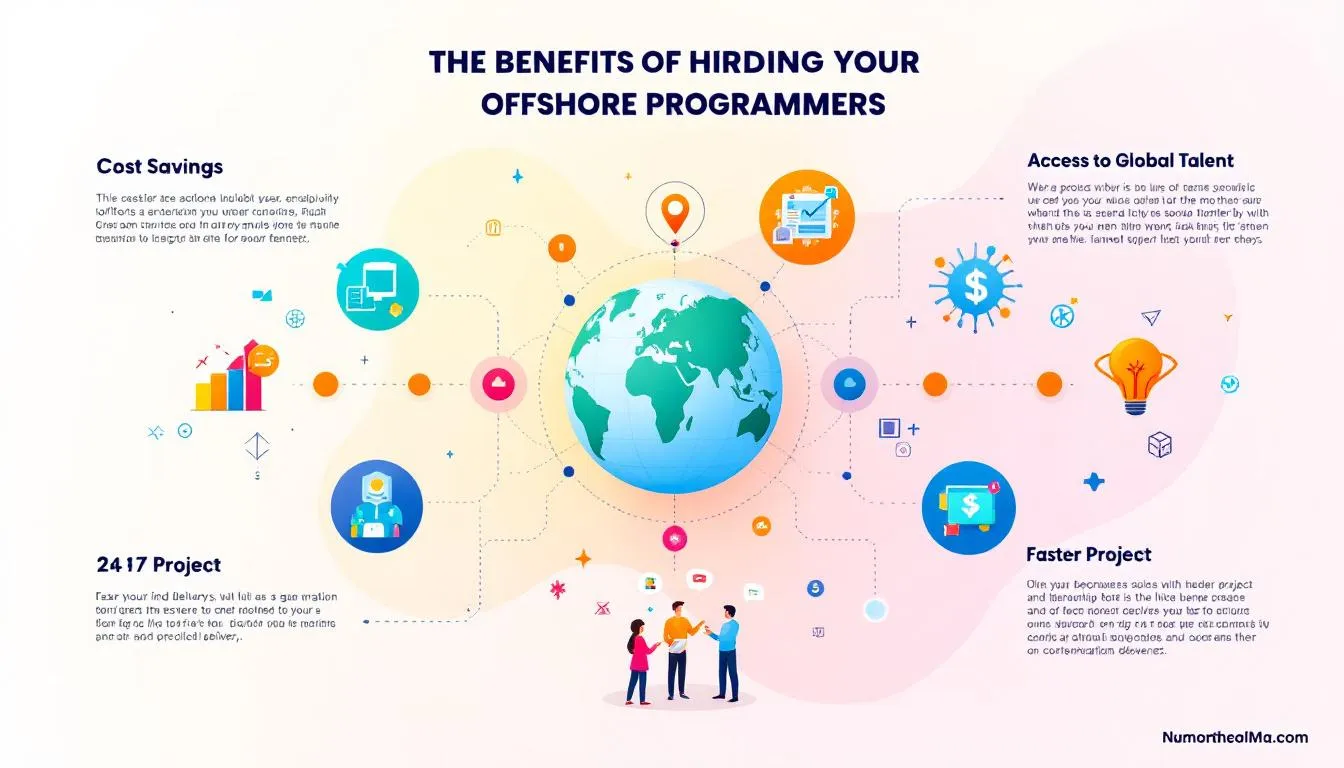
Hiring offshore developers offers several benefits:
- Significantly reduces operational costs, with potential savings of up to 70% compared to local hires.
- Particularly beneficial for startups, allowing every dollar saved to be redirected towards growth and innovation.
- Leverages remote offshore developers’ expertise to produce high-quality Minimum Viable Products (MVPs) cost-effectively.
- Reduces overhead payments such as payroll and office rent, further contributing to cost savings.
One of the most compelling advantages of hiring offshore developers is access to a diverse pool of global talent. Businesses can hire from various offshore countries, each offering unique advantages for outsourcing development teams. This enables businesses to find specialized skills that may not be available locally. Hiring offshore programmers gives access to talented developers and software engineers with a wide range of expertise. Whether you need experts in specific programming languages or cutting-edge technologies, offshore developers bring a wealth of knowledge and experience to the table, enriching your team’s capabilities.
Scalability and flexibility are other significant benefits. Offshore development teams can be easily scaled up or down based on project demands, offering a level of adaptability that is hard to achieve with local hires. Collaborating with overseas developers can further enhance a company’s ability to adapt to changing project requirements. This dynamic approach allows businesses to respond swiftly to market changes and project requirements, ensuring that they remain competitive and innovative.
Key Qualities to Look for in Offshore Programmers
When hiring offshore developers, prioritize technical expertise by:
- Seeking candidates deeply familiar with the programming languages relevant to your project
- Ensuring familiarity with the technologies specific to your project
- Confirming they can meet your specific requirements
- Expecting delivery of high-quality solutions with specialized expertise in software development, including dedicated offshore developers
- Ensuring they have a strong command over relevant frameworks, databases, programming languages, and tools
- Looking for offshore developers with a proven track record, supported by references or testimonials from previous clients
Effective communication skills are also essential. Offshore developers should articulate their ideas clearly and engage meaningfully with the team. Strong communication channels help prevent misunderstandings and promote a collaborative environment, crucial for project success. Strong communication skills are vital in this context. Additionally, offshore developers should have experience in working remotely and collaborating with distributed teams to ensure seamless integration and productivity.
Cultural fit also plays a crucial role. A programmer who fits well with your company’s culture and values integrates smoothly, enhancing teamwork and adaptability, which leads to successful project outcomes. Prioritizing these qualities ensures you hire offshore software developers who contribute positively to your project’s success.
When considering the types of developers to hire, look for a range of skill sets, such as front-end, back-end, and full stack developers, to ensure all aspects of your project are covered.
Steps to Hire Offshore Programmers
Hiring offshore developers requires a well-structured development process. Start by clearly defining your project needs, including the technology stack, specific skills, and overall goals. When hiring remote developers, it is important to consider key factors such as communication, time zones, and collaboration to ensure a successful partnership. If you want to scale your team efficiently, consider to hire dedicated offshore developers.
With a clear picture of your project requirements, follow these steps to find the best offshore developers:
- Explore various sourcing channels to identify potential candidates.
- Thoroughly evaluate their technical skills and experience through coding tests and problem-solving assessments.
- Ensure the candidates fit well with your offshore development team structure and can collaborate effectively in a remote environment.
- Many platforms offer trial periods for offshore developers to evaluate their performance before full commitment.
Following these steps meticulously streamlines the hiring process, ensuring you onboard talented offshore developers who meet your project’s demands.
Define Your Project Requirements
Defining project requirements is crucial for successful offshore hiring. Identify the type of developer needed—front-end, back end development, or full-stack—based on your project demands. Consider the tech stack required for your web applications and web development projects, ensuring candidates have experience with the specific technologies and tools your project needs. This clear understanding streamlines the hiring process.
Equally important is understanding the technology stack needed, including relevant programming languages, frameworks, and tools. Clear requirements help identify and select candidates with the necessary technical expertise.
Thoroughly defining project requirements sets clear expectations for candidates and ensures developers can contribute effectively. This clarity also creates a more focused and efficient hiring process.
Explore Various Sourcing Channels
Finding the best offshore developers requires exploring various sourcing channels. Consider freelancing websites, recruitment agencies, and outsourcing platforms. Platforms like Turing offer AI-driven talent matching and machine learning, streamlining the hiring process to find top offshore developers suited to your needs.
Agencies and platforms for hiring developers include:
- Agencies like Accelerance, which provide access to a large pool of developers and offer diverse hiring options.
- Agencies specializing in connecting businesses with skilled offshore developers, ensuring a wide array of choices.
- Platforms like Fiverr, which allow businesses to engage developers on a project-by-project basis, offering flexibility and cost-effectiveness. Fiverr is a gig-based marketplace offering a wide array of specialized developers globally.
Using diverse sourcing channels leverages unique advantages based on project size and complexity, enhancing the hiring process to find the right talent. However, be mindful of potential challenges like spending excessive time vetting agencies or selecting the wrong vendor.
Evaluate Technical Skills and Experience
Evaluating offshore developers’ technical skills and experience is critical. A well-structured vetting process reduces onboarding time and increases project success chances. Conduct coding tests to assess candidates’ technical abilities, problem-solving skills, and coding proficiency.
High-quality tech talent with technical expertise and high technical proficiency is essential for a project’s success. Consider a no risk trial period or a small project to evaluate performance before fully committing, allowing you to gauge capabilities and team fit. Setting up a trial period or giving a small project provides an opportunity to assess an offshore developer’s performance and suitability for your team.
Carefully evaluating technical skills and experience ensures you hire offshore developers with the necessary expertise to meet your project requirements. This rigorous vetting process is crucial for project success, especially when you have skilled developers on your team.
Effective Communication with Offshore Teams

Effective communication is key to the success of any offshore development project. Utilizing project management tools like Slack and Zoom can enhance connectivity and support real-time chats and video conferencing. These tools facilitate seamless communication, ensuring that all team members are on the same page.
Regular team meetings, even outside standard hours, can strengthen project updates and set clear expectations. Creating a feedback culture encourages remote team members to share insights, improving collaboration and processes. This open communication environment fosters a sense of belonging and teamwork among remote developers and the development team using Microsoft Teams, enhancing the overall company culture. Clear communication keeps everyone on the same page, reducing mistakes and improving application quality.
Key factors for effective team communication and collaboration include:
- Awareness of language and cultural differences to promote respectful and effective communication among team members.
- Ensuring all team members respect each other’s working hours for effective scheduling.
- Flexibility in schedules to accommodate critical project phases, improving overall team collaboration.
Establishing strong communication protocols mitigates misunderstandings, ensuring smooth project execution.
Managing Time Zone Differences
Managing time zone differences is a common offshore development challenge, but can be addressed with good time management skills. Establish overlapping working hours between onshore and offshore teams to facilitate real-time interactions, ensuring important meetings and discussions occur without delays.
A clear communication plan aligns responsibilities and deadlines across time zones. Collaboration tools like Slack and Zoom improve communication without needing simultaneous online presence, keeping team members connected and informed through collaboration platforms. Time zone differences can hamper workflows when working with offshore developers in different geographical areas, but these challenges can be mitigated with proper planning and tools.
Flexibility in working hours accommodates offshore teams’ varying schedules. Consider offshore team members’ personal lives and responsibilities when scheduling communications. Mindfulness of these factors creates a harmonious, productive, and minimally disruptive working environment.
Ensuring Quality Assurance and Security
Quality assurance and security are paramount in offshore development. Rigorous quality assurance testing, regular audits, and NDAs protect sensitive information, safeguarding project integrity and confidentiality. Quality assurance testing is essential to ensure software solutions are reliable and perform as expected.
Establishing quality assurance processes ensures high-quality project delivery. Use automated testing tools like JMeter to cut release cycles and improve testing efficiency, enhancing speed, coverage, and overall quality in offshore development.
Secure coding practices, regular code reviews, and data encryption are essential to prevent security threats. Offshore programmers must know best practices for data security and privacy. Implement role-based access control and data encryption to protect intellectual property.
Prioritizing quality assurance and security ensures the long-term success and reliability of your software solutions.
Flexible Engagement Models for Hiring Offshore Programmers
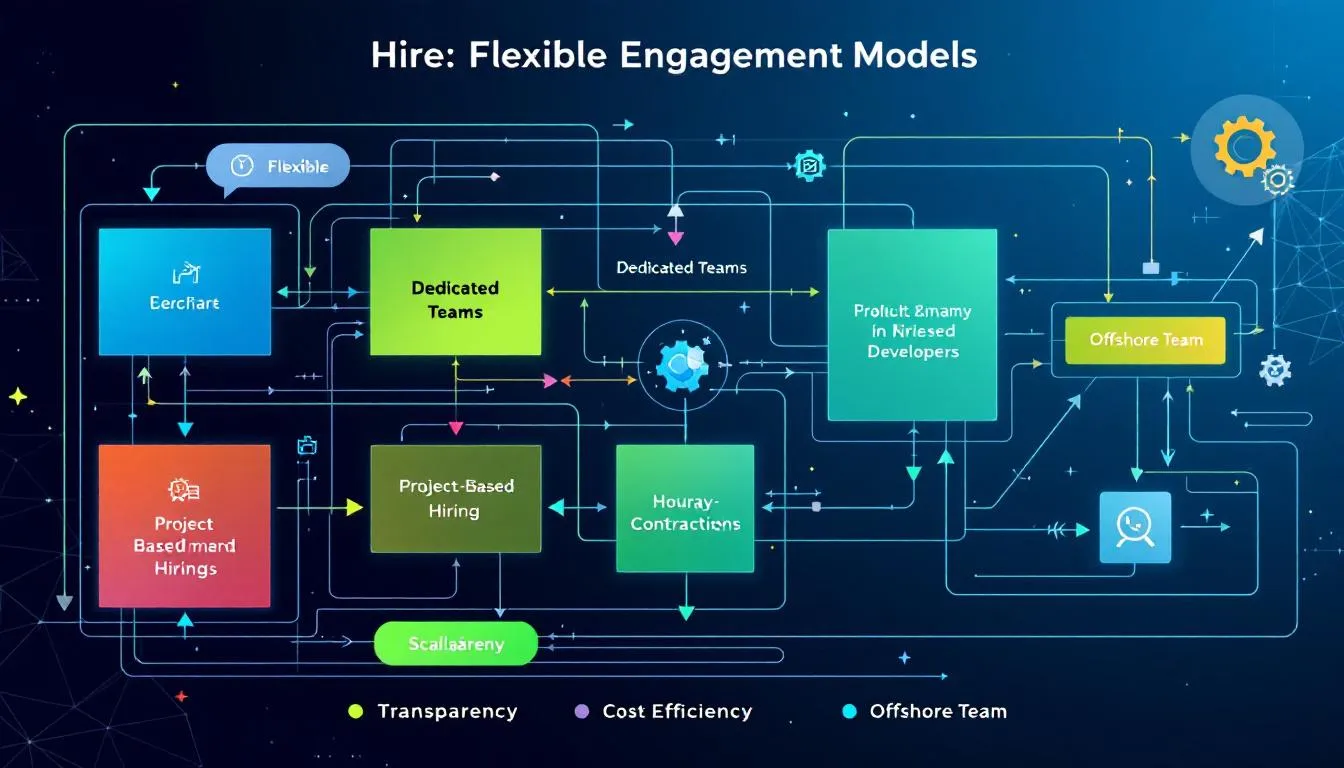
Flexible hiring models for offshore programmers cater to different project needs:
- A dedicated team offers ongoing support.
- They enable businesses to scale their workforce based on project requirements.
- This model is ideal for long-term projects needing continuous development.
The time and material model allows clients to hire experts flexibly, suitable for varying project sizes. This model enables adjustments based on project demands, providing the flexibility to hire developers as needed.
The fixed cost model is best for clearly defined project requirements, suitable for smaller projects, ensuring controlled and predictable costs.
Understanding and utilizing these flexible engagement models helps businesses effectively manage offshore development projects, ensuring the right talent and support at every stage.
Case Study: Successful Offshore Development Projects
Several successful offshore development projects highlight the potential benefits of offshore locations. IBM improved cost-efficiency and delivery speed by expanding offshore operations in India. WhatsApp outsourced server management and code optimization to handle rapid scalability, prioritizing user experience.
Cisco’s global development model enabled continuous operations, leveraging time zones to accelerate product development. Skype’s collaboration with Estonian developers was crucial for its early growth, establishing a strong software foundation. Adobe’s offshore centers in India reduced development costs while maintaining high-quality standards.
Oracle adopted agile practices for offshore projects, resulting in faster feature delivery and improved teamwork between onshore and offshore teams. Key takeaways from these successes include improved cost-efficiency, faster delivery timelines, and enhanced product quality through diverse collaboration. Best practices involve clear communication channels, agile methodologies, and leveraging time zone differences for continuous progress.
Summary
In conclusion, hiring offshore developers offers numerous benefits, including cost savings, access to a diverse talent pool, and scalability. By understanding the key qualities to look for in offshore programmers and following a structured hiring process, businesses can successfully integrate offshore talent into their projects. Effective communication, managing time zone differences, and ensuring quality assurance and security are crucial for the success of offshore development.
By leveraging flexible engagement models and learning from successful case studies, businesses can harness the power of offshore development to drive innovation and growth. The potential of offshore development is vast, and with the right approach, it can be a game-changer for your business.
Frequently Asked Questions
What are the main benefits of hiring offshore developers?
Hiring offshore developers offers significant cost savings, access to a diverse talent pool, and the flexibility to scale teams rapidly according to project needs. These advantages help enhance productivity and drive project success.
What qualities should I look for in offshore programmers?
Look for offshore programmers with strong technical expertise, excellent communication skills, and a cultural fit that aligns with your team to ensure effective collaboration and project success.
How can I ensure effective communication with offshore teams?
To ensure effective communication with offshore teams, leverage tools such as Slack and Zoom for regular meetings, foster a feedback culture, and remain conscious of language and cultural differences. These practices will enhance collaboration and understanding among team members.
How should I manage time zone differences with offshore teams?
To effectively manage time zone differences with offshore teams, establish overlapping working hours and a clear communication plan, while remaining flexible with schedules. This approach ensures collaboration and minimizes misunderstandings.
What measures should I take to ensure quality assurance and security in offshore development?
To ensure quality assurance and security in offshore development, implement rigorous quality assurance testing, adopt secure coding practices, conduct regular audits, and establish NDAs to safeguard sensitive information and intellectual property.
More useful links :
Delving Deeper Into The Dedicated Team
Offshore Development Center: Understanding The Key Principles