Next-Level MVP: The Power of User Feedback Revealed
Olivia Harris – Startup Founder – One of the crucial steps in the development of a Minimum Viable Product (MVP) is gathering user feedback for MVP.
Sep 16, 2024 | 5 Minute Read
Why User Feedback is Gold for MVP Development
When you’re building a Minimum Viable Product (MVP), user feedback isn’t just helpful—it’s crucial. From my experience as a business owner, tuning into what users want and need has always been my secret weapon for great product development.
Collecting feedback from users during MVP development is like having a backstage pass. It offers you all the juicy details and insights you need to make your product a hit. Personally, I swear by the feedback loop—a simple cycle of gathering, analyzing, and acting on user opinions. This routine lets my team tweak things on the fly, making sure our MVP hits the market spot-on and fast.
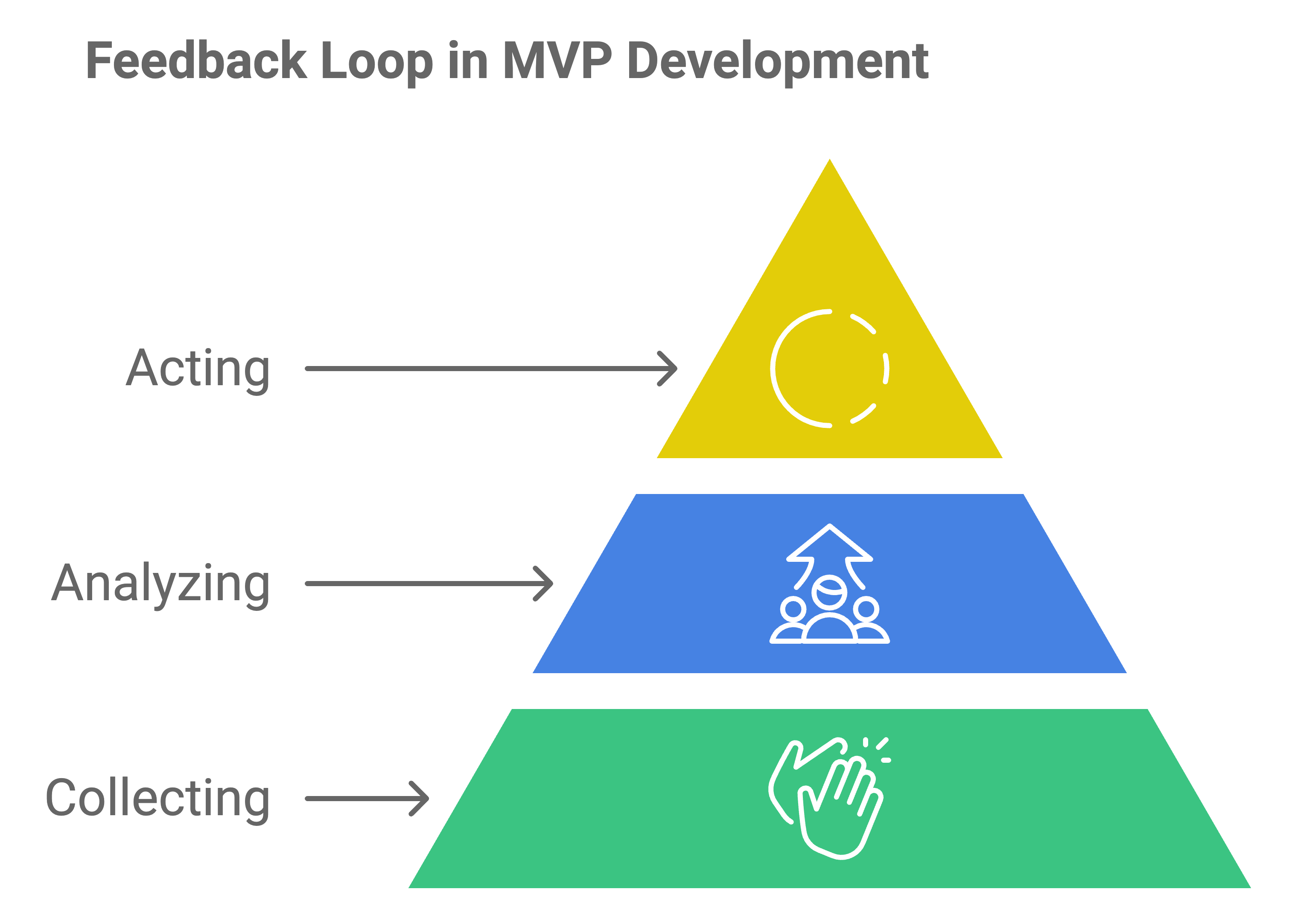
Here’s why listening to users is a game-changer:
- Know the Gaps: User feedback tells me exactly where my product falls short or shines. I get the inside scoop straight from the folks who matter most.
- Quick Fixes, Quick Wins: Regular feedback means we can keep improving. We spot what works and what doesn’t, making quick tweaks that keep us ahead of the game.
- Happy Users, Happy Life: When you listen to users and make changes based on their input, they notice. It makes them feel special and keeps them coming back.
Check out our guide on how to measure MVP success for more tips on keeping your development on point.
| What You Get | Why It Rocks |
|---|---|
| Fast Tweaks | Quicker to market |
| Better User Experience | Happier users |
| Real Insights | Build what they actually need |
Why User-Centric Rocks
Putting users at the heart of your MVP development isn’t just a strategy—it’s a game plan. For my business, this approach has paid off big time.
Here’s the lowdown:
- Stickier Products: When your product hits the right notes with users, they stick around. Your retention rates go up, and so does user loyalty.
- Perfect Fit: Real feedback helps shape your MVP to solve real problems, upping the chances of a perfect market fit. Interested in scaling post-validation? Peek at our
Transitioning from MVP to Full Product article. - Fewer Blunders: Catching issues early means fewer expensive mistakes down the road.
| Why It Works | How It Helps |
|---|---|
| Higher Retention | Users keep coming back |
| Market Fit | Solves real user problems |
| Less Risk | Spot problems early and fix ’em cheap |
Focusing on user feedback and sticking to a user-centric approach has helped me launch MVPs that truly connect with my target crowd.
Key Metrics and KPIs
When gathering user feedback for your MVP, focusing on metrics that matter is crucial. Instead of getting distracted by surface-level numbers, hone in on data that provides real insights into user behavior and product performance.
- Retention Rate: This metric tells you how many users come back after their first visit. A high rate suggests your product has staying power.
- Engagement: Look at how users interact with your MVP. Are they spending lots of time on it? This often signals they’re finding it useful.
- Revenue: Track how money is coming in, whether it’s through subscriptions or one-time purchases.
- Referrals: When users recommend your product, it’s a strong sign they’re happy with it.
Here’s a table to sum up:
| Metric | What it Measures |
|---|---|
| Retention Rate | How many users return over a period |
| Engagement | User interaction level with the product |
| Revenue | Earnings from subscriptions, purchases, etc. |
| Referrals | How many users tell others about your product |
Using these metrics helps you collect, analyze, and act on feedback, so your MVP can keep getting better.
Mixing It Up: Qualitative and Quantitative Feedback
To nail down what users need and want, it’s key to use both qualitative and quantitative methods. Here are some go-tos:
Qualitative Methods
- User Surveys: Ask your users directly how they feel about your product. This can give you detailed info on what’s working and what’s not.
- User Interviews: One-on-one chats can reveal a lot that surveys might miss.
- Focus Groups: Gather a bunch of users and let them discuss their experiences. This can provide fresh insights you hadn’t considered.
Quantitative Methods
- Analytics Tools: Tools like Google Analytics or Mixpanel can show you how users are interacting with your product – which features they use, how long they stay, and where they drop off.
- A/B Testing: Try out different versions of features to see which one works best.
- Heatmaps: Tools like Hotjar show you where users click and scroll, revealing which parts of your app are hot and which are not.
Here’s another table for you:
| Method | What it Does |
|---|---|
| User Surveys | Gathers detailed user opinions through questionnaires |
| User Interviews | Offers deep insights from one-on-one chats |
| Focus Groups | Captures collective views and unique insights |
| Analytics Tools | Tracks user behavior for hard data |
| A/B Testing | Compares feature versions to find the best one |
| Heatmaps | Visualizes user interactions on the app |
Combining these methods helps you get a complete picture of how your MVP is doing and areas you can tweak. 0Put these strategies to work, and you’ll be on your way to building a product that not just meets but exceeds user expectations.
Minimum_Viable_Product_App_Guide_Preview-1Useful Resources: