Navigating the MVP Landscape: My Guide to Measuring Success
Olivia Harris – Startup Founder – Measuring success of an MVP is crucial for any new business venture.
Sep 16, 2024 | 4 Minute Read
The Scoop on Market Research
Alright, listen up. Market research is the secret sauce to really getting what your customers want. You know, the difference between just another meh product and something that really clicks with people. Here’s a fun fact: businesses that get this right are 60% more profitable. Yep, 60%.
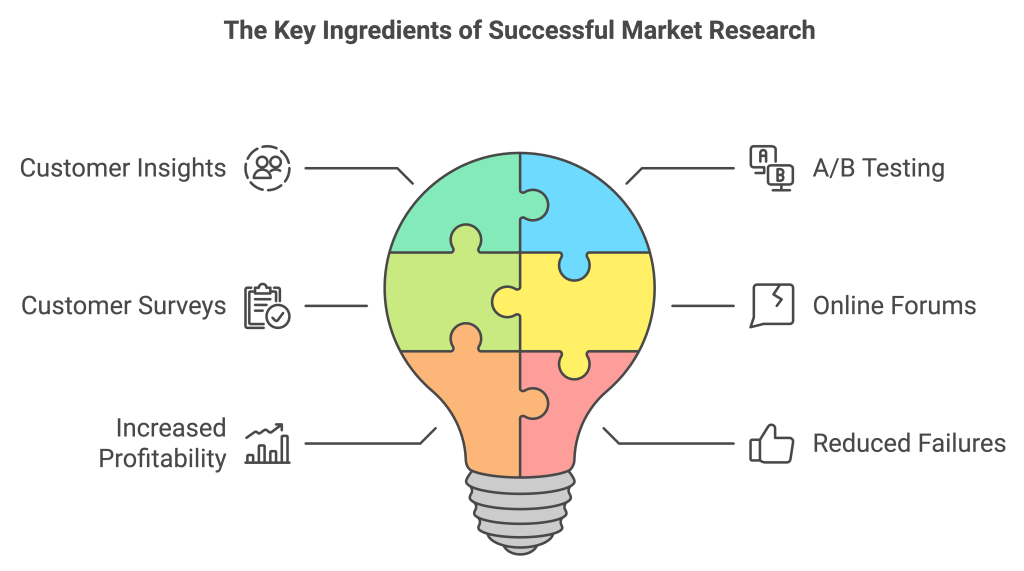
With market research, you get the lowdown on the folks you’re targeting. It’s like heat-seeking for your marketing. I’m talking A/B testing, customer surveys, and even nosing around online forums. What do you get out of it? Fewer facepalms and more high-fives. Fewer flops and more wins, and ultimately measuring success of an MVP becomes more straightforward.
| Why Bother with Market Research? | How it Helps |
|---|---|
| Stay customer-focused | Boosts profits by 60% |
| Kill the risks | Higher chance your product flies |
| Talk their talk | Connects you with your audience |
For tips and tricks on testing, check this out: Cost of MVP Development.
Lean, Mean Validating Machine
Lean market validation—it sounds fancy, but it’s just testing, tweaking, and doing it again until you’ve got it right. It’s like having a chat with your customers while you’re building your MVP. No more guessing games—just real feedback from real users. Neat, huh? This process is crucial in measuring success of an MVP.
I’m all about running focus groups, putting out beta versions, and getting trials going. Keep what works, ditch what doesn’t. Iterate. Rinse. Repeat.
Here are the metrics I swear by:
| Metric | Why I Love It |
|---|---|
| Customer Happiness | Gauges how people feel about it |
| Net Promoter Score | Tells you if folks would recommend it |
| User Engagement | Measures who’s actually using it |
These metrics give a clear picture of what’s working and what needs ditching. By zooming in on market research and leaning hard on validation techniques, you can nail down your MVP’s success. You’ll see if it’s on point with what people want and if it aligns with your business goals. So yeah, it’s kinda important. Measuring success of an MVP often involves analyzing both qualitative and quantitative data.

Measuring Success: MVP Style
So you’ve launched your Minimum Viable Product (MVP) and now you need to see if it’s hitting the mark. To get this right, you need to measure the right stuff. Let’s get into what really matters:
Picking the Right KPIs
Key Performance Indicators (KPIs) are your MVP’s report card. They show you how things are going and point you in the right direction. Different businesses will look at different KPIs. For example, a software startup might care most about revenue growth compared to last year, while a retail chain might focus on sales performance in individual stores. These KPIs are essential for measuring success of an MVP.
Here’s a look at some common KPIs that can guide you:
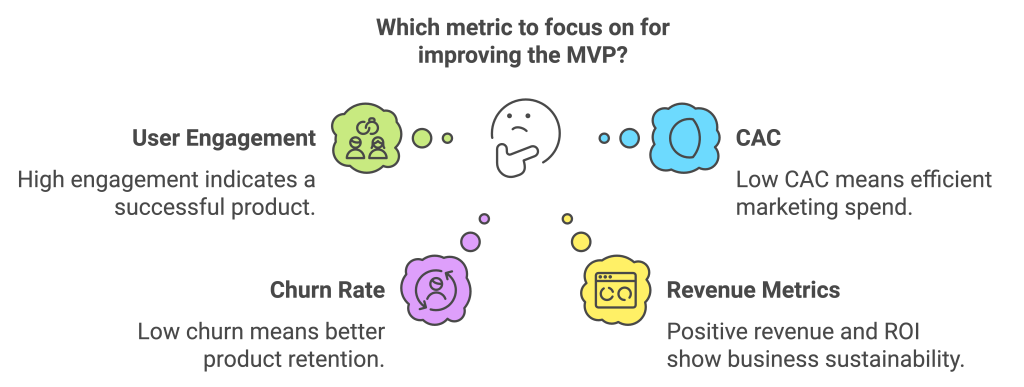
- User Engagement: Are people actually using your MVP? Look at things like how often users come back (retention rate), and the number of daily (DAU) and monthly active users (MAU).
- Customer Acquisition Cost (CAC): How much are you spending to get a new customer? This metric tells you if your marketing dollars are well spent.
- Churn Rate: How quickly are users leaving your product? A high churn rate could mean people aren’t digging your MVP.
- Revenue Metrics: Total revenue, net profit, return on investment (ROI) – these tell you if you’re making money or just burning it.
Curious about other KPIs suited for different industries? Check out our detailed guide on KPIs for MVP.
Numbers vs. Stories: Data Analysis
To understand your MVP’s performance fully, you need to look at both hard numbers and personal stories.
| Data Type | Description | Examples |
|---|---|---|
| Quantitative | Hard numbers that you can measure and analyze. | Retention rates, DAU, revenue figures |
| Qualitative | Feedback and stories from users about their experience. | Customer reviews, user feedback, behavior insights |
- Quantitative Data: This is your bread and butter for measuring success. Metrics like user engagement and revenue growth fall under this category. Tools like Google Analytics and Mixpanel help you gather this data, painting a clear picture of what’s happening. Measuring success of an MVP relies heavily on these numbers.
- Qualitative Data: Don’t just focus on numbers. User feedback from interviews, surveys, and reviews is gold. It lets you see how people feel about your product. Engage directly with your users to understand their problems and needs – you might discover the next big feature to add.
Put these two types of data together, and you’ll get a complete picture of how your MVP is doing. This balanced view helps you make better decisions and tweak your product to fit your users perfectly. This approach is vital when measuring success of an MVP.
With the right metrics and a good mix of numbers and stories, you’ll turn your MVP into a success story. So, roll up your sleeves, dive into the data, and keep improving.
Useful Resources: