Elevate Your Startup: How an MVP Can Propel You Forward
Olivia Harris – Startup Founder – Fluto (Seed Funding Stage) Learn why creating an MVP for startup companies is crucial in the early development stages.
Sep 10, 2024 | 7 Minute Read
MVP Basics: The Essential Guide
Getting a grip on what MVP (Minimum Viable Product) means can be a game-changer for any startup founder. So let’s break it down: what is a MVP and why does your business desperately need one?
An MVP is an product stripped down to it’s bare, functional essentials—just enough features to let early users try it and give feedback. It’s like an prototype, but a bit more polished.
| Feature | What It Means |
|---|---|
| Core Features | Only the must-have bits that make the product tick. |
| Feedback Loop | Lets users chip in with their thoughts to help you shape the product’s future. |
| Early Users | Attracts those brave early adopters eager to test and tweak. |
Why Bother About an MVP?
It’s not just about throwing out an simplified version of your dream product. The MVP serves some seriously important functions:
- Test the Waters: Figure out if people even want what you are creating. No point in building the next big thing if nobody is interested.
- Resource Saver: Why blow tons of cash and time on developing a full-fledged product right away. Focus on what matters and get into the game faster.
- Fast Feedback: The quicker you get real user opinions, the quicker you can fix and fine-tune your product.
- Learn and Adapt: The whole point is to learn what folks actually want and are willing to pay for. Your MVP is your learning tool.
Popularized by Eric Ries through his Lean Startup approach, the MVP is all about gathering user insights swiftly with minimal wastage. This cycle of constant feedback and improvement helps ensure your product nails customer needs.
We’ve got more resources if you want to dive deeper. Check out our minimum viable product services. Getting these MVP basics down puts you on track for killer product development and beyond.
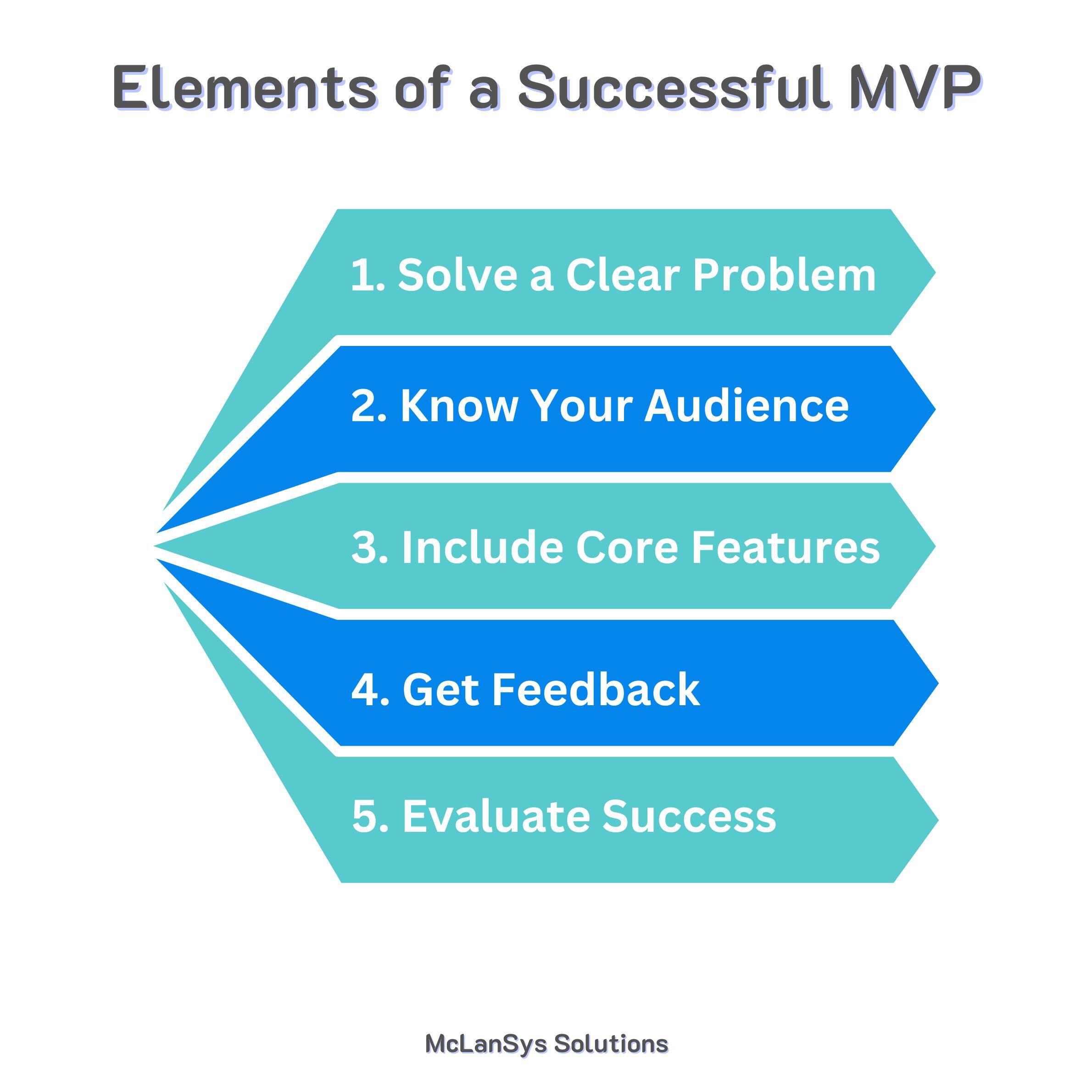
Elements of a Winning MVP
Creating a Minimum Viable Product (MVP) is your ticket to checking if your startup idea flies. It is about getting feedback from real users without blowing your budget. Here’s how to nail it!
To click with users, an MVP need to blend with simplicity and functionality. You are shooting for something just good enough to hook early users. As Eric Ries, who came up with the MVP idea, said, it’s about learning as much as you can about your customers with minimal effort.
What to Aim For:
- Functionality: Your MVP should let users complete a main task or solve a problem.
- Quality: Keep it simple, but make sure it work wells. It shouldn’t feel like it is only half-done.
- Feedback Focused: The key is getting your users opinions to guide your next steps!
With an MVP, you save time and money by figuring out early on if an idea has legs. You tweak and improve based on actual user feedback, growing bit by bit until you are ready for the big time.

MVP Success Stories
Want to see how its done? Here are some big names that started small and nailed it.
Amazon
Jeff Bezos started Amazon as a simple online bookstore out of his garage This basic MVP let him test the market before expanding to everything under the sun!
Uber
Uber’s first version, UberCab, was just an text-based service connecting drivers with passengers. User feedback from this simple MVP shaped the app we know today.
Spotify
Spotify kicked off with a landing page to see if people were interested in music streaming. This basic setup provided the insights needed to build their full service.
Emulating these successful MVPs can give you an good start. Stick to minimalism, make it viable, and focus on getting feedback.
MVP Development Tips
Bootstrapping an MVP (minimum viable product) is key to testing your business idea without burning your resources. Here’s a cheat sheet to help you build a killer MVP:
- Find Out What is Bugging Your Customers: The first job is figuring out the headaches your target users are dealing with. This means diving into some serious research to get to the root of their problems. Nail this, and your MVP will be something folks actually want to use.
- Keep It Simple and Smart: Your MVP should hit the bullseye without getting bogged down in extras. Stick to the must-have features that solve the main problem. Extra fluff just piles up costs and complications. Think about how Airbnb kicked things off with just a basic site for short-term rentals from the founders’ own pad.
- Listen Up: People using your product are a goldmine of info. Get their feedback through surveys, interviews, or usability tests This will help you tweak your MVP and figure out what should come next! Foursquare started off with simple check-ins and evolved into a full social network by listening to users.
- Make It Easy On the Eyes (and Brain): A user-friendly experience is a no-brainer If your product is a pain to use, people will bail. Keep it simple and intuitive so users can get what they need without pulling their hair out!
Here’s a quick MVP development cheat sheet;
| Step | Action |
|---|---|
| Find Pain Points | Dig into research, snag insights |
| Focus on Essentials | Build only the crucial features |
| Gather Feedback | Use surveys, interviews, usability tests |
| Create Simple UX | Design an intuitive interface |
MVP Must-Haves
When putting together an MVP, zero in on features that pack the most punch. Here are the core aspects to focus on:
- Functionality: Your MVP should clearly solve the main problem. Remember Dropbox? Their MVP was just a video demo, but it was enough to pull in over 70,000 signups. Get the core functionality down pat.
- Usability: Smooth and easy is the way to go. Users should meet their goals without a hassle. An easy-to-use design keeps them happy and makes gathering feedback like a breeze.
- Reliability: Even with just the basics, your MVP should be something users can count on. A stable product builds trust and good vibes, making folks more likely to stick around and give constructive feedback.
- User Appeal: Besides being useful, your MVP needs to look good and perform well. A slick design and quick response time can make your product that much more appealing.
By focusing on these must-haves, you’ll create an MVP that effectively tests your business idea and pulls in valuable insights!
MVP for Business Growth
Creating an MVP (minimum viable product) can catapult your startup to new heights. Let’s dive into how MVPs fuel growth by tapping into the goldmine of user feedback and spotlighting big names that began their success stories with MVPs.
User Feedback: The Game-Changer
User feedback is like rocket fuel for your MVP. Early users aren’t just beta testers; they’re the pulse of the market. Their feedback shows what clicks and what bombs. This magical loop of feedback and tweaking make your product better, faster, and more attuned to what people actually want! Engaged users often turn into your biggest cheerleaders, giving your marketing a boost without you lifting a finger.
The MVP process isn’t just about coding—it’s about listening. Fast iterations and consistent feedback keep the product sharp and user-focused, helping make sure your dream project does not become last night’s dinner leftovers.
| What Matters | Why It Rocks |
|---|---|
| Early User Feedback | Spots strengths and hones in on needed tweaks |
| Fast Iterations | Quick updates mean staying ahead |
| User-Centric Approach | Directly meets what customers crave |
| Advocacy by Early Users | Free word-of-mouth marketing |
Want to ace the startup game? Check out how to hire a developer for startup.
Nailing an MVP can make or break your startup This method sets a strong base, steering your project towards scalability and market prominence. Need expert guidance? Our MVP development consultants have got your back. Contact Now
FAQs
1. What is an MVP startup?
An MVP (Minimum Viable Product) startup is a business that focuses on launching a product with just enough features to attract early adopters and validate an idea. The goal is to test the market, gather feedback, and iterate quickly based on real user interactions. For more details, explore “How MVP Agile Development Transformed My Startup: A Personal Account 2024“.
2. What should an MVP include?
An MVP should include the core features necessary to solve a specific problem for your target users. It doesn’t need to have all the bells and whistles, but it must deliver value, work reliable, and provide room for future growth based on user feedback. To understand more, click on “Unlock Your Potential: The Ultimate Minimum Viable Product Template 2024”.
3. What is an example of a MVP?
A famous example of an MVP is Dropbox. Before building the full product, Dropbox created a simple video explaining how the service would work. This MVP video generated thousands of signups and validated the demand before they fully build the product. To check out more examples, explore “Fueling Success: My Experience with MVP Web Development”
4. What is the difference between MVP and Lean Startup?
An MVP is a part of the Lean Startup methodology. The Lean Startup focus on testing assumptions and building products through rapid iteration. An MVP is the product version that allows you to collect the maximum amount of validated learning with the least effort.