Best MVP Development Service for Startups in 2025
Need to validate your startup idea fast? MVP development service helps you create a basic product to test in the market, saving costs and gathering valuable user feedback.
Key Takeaways
- MVP development services are essential for startups to validate ideas quickly, reduce costs, and align products with market needs, enhancing early market entry and attracting investors.
- A comprehensive MVP development process includes discovery, design, agile development, user testing, and post-launch support, ensuring that products meet user expectations and business objectives.
- Choosing the right MVP development company is critical; factors such as proven experience, alignment with your vision, transparency, and effective project management significantly influence project success.
Why MVP Development Services are Crucial for Startups

MVP development services are a game-changer for startups looking to validate their ideas and align them with market needs swiftly. Focusing on core functionalities allows startups to launch a product that captures their vision’s essence without unnecessary features. This approach not only reduces the MVP development cost but also ensures that the product resonates with early adopters, paving the way for future growth through minimum viable product development.
Starting small with a minimum viable product enables startups to:
- Manage their budgets effectively, leading to reduced financial risk.
- Gauge market interest and make informed decisions using real user feedback.
- Prevent the wastage of resources on features that may not be needed.
- Ensure that every dollar spent contributes to the product’s success.
Launching an MVP also provides startups with the critical advantage of entering the market early. This early entry helps capture the interest of early adopters and attract potential investors. Investors are more likely to support a startup that has a proven concept and demonstrated market demand, which can be achieved through a well-executed minimum viable product mvp.
Validating a business idea and proving market demand through user feedback and idea validation secures business value and sets the stage for subsequent development phases.
MVP vs. Traditional Development
| Feature | MVP Approach | Traditional (Full-Scale First) |
|---|---|---|
| Time to Market | Fast | Slow |
| Initial Investment | Low | High |
| Risk Mitigation | High (Early Validation) | Lower (Late Validation) |
| User Feedback Loop | Early & Continuous | Late or Post-Launch |
| Adaptability to Change | High | Low |
| Scope Focus | Core Viable Features | Comprehensive Features |
Click on a row in the table above to see more details about each comparison point.
Our Comprehensive MVP Development Process
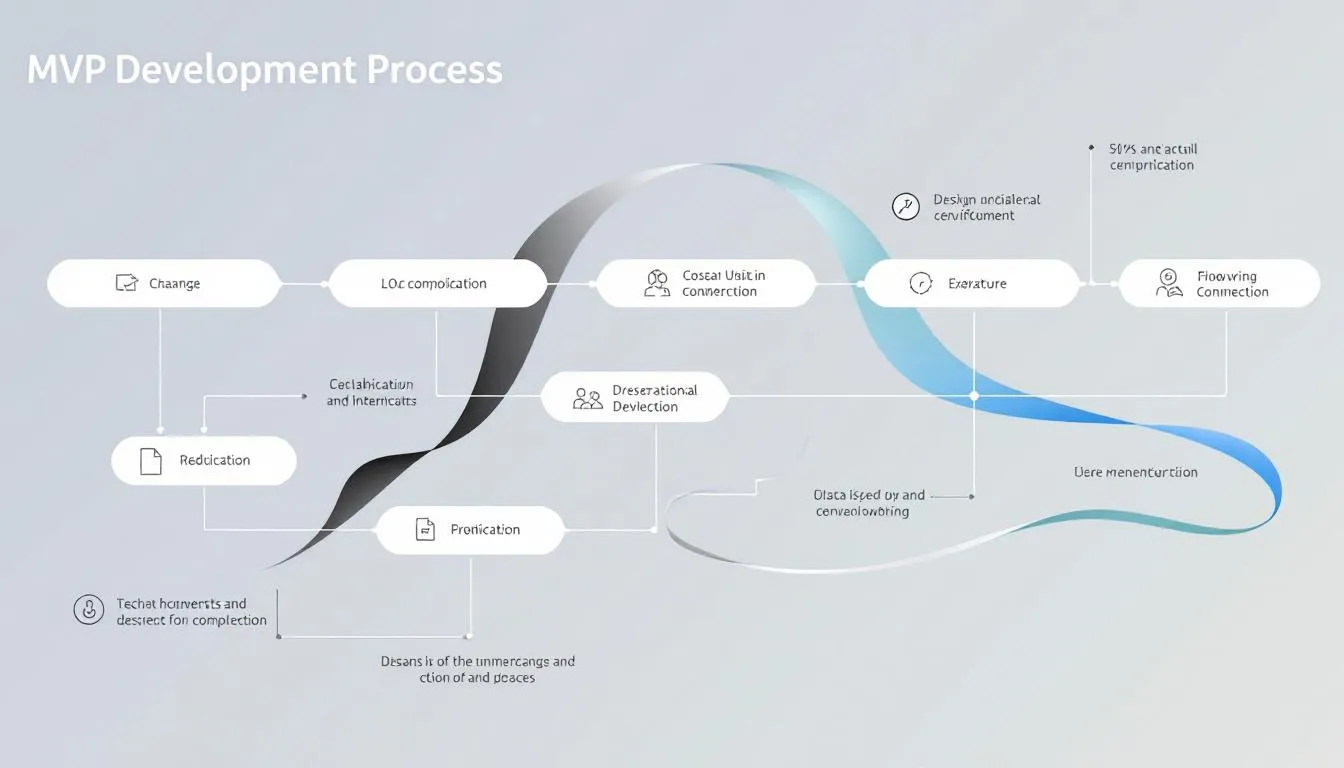
Explore Our Structured MVP Development Process
This foundational phase involves a deep dive into your business. We focus on:
- Identifying core business objectives and vision.
- Defining clear success metrics and key performance indicators.
- Conducting thorough market analysis and user research (interviews, surveys).
- Facilitating workshops to align development with user needs and market demands.
We transform insights from the discovery phase into tangible designs:
- Creating wireframes and detailed mockups for visual guidance.
- Developing information architecture by UX/UI designers.
- Building interactive, clickable prototypes for early user feedback.
- Prioritizing user research, product visualization, and conducting regular design reviews to refine UX and meet accessibility standards.
Our development is rooted in Agile methodologies for flexibility and speed:
- Implementing Agile practices like sprints and collaborative processes.
- Ensuring ongoing adjustments based on continuous user feedback.
- Encouraging rapid iterations and maintaining flexibility to adapt.
- Evolving product features based on real-time user needs for quicker market validation.
Continuous user validation is key to a successful MVP:
- Building early customer relationships through MVP testing.
- Collecting valuable feedback via interviews, surveys, analytics, and direct observation.
- Using real user feedback to guide feature prioritization and enhancements.
- Iterating on the MVP to improve usability, functionality, and overall customer satisfaction.
The journey continues beyond the initial launch:
- Collecting insights and refining the product post-launch.
- Ensuring smooth performance and monitoring user interactions.
- Providing ongoing support for scaling into a full-scale solution.
- Managing stakeholder expectations, preventing feature creep, and ensuring alignment on MVP goals for continuous growth.
Our MVP development process is designed to transform your innovative ideas into functional products that meet market demands. As a leading MVP development company, we follow a structured approach that ensures the successful execution of your MVP project. This process begins with a deep understanding of your business objectives and target audience, setting the foundation for a successful MVP software development process.
The development process is divided into several critical phases:
- Initial Consultation and Discovery
- Design and Prototyping
- Full scale development
- Agile Development Approach
- User Testing and Feedback Integration
- Software development services and Post-Launch Support
Each phase is meticulously crafted to ensure that the final full scale product not only meets but exceeds your expectations.
Let’s delve into each phase to understand how our MVP development services can drive your startup’s success.
Initial Consultation and Discovery
The journey of creating a successful MVP begins with the Initial Consultation and Discovery phase. This crucial step involves identifying your core business objectives and defining clear success metrics and key metrics. Without a clear product vision and objectives, development teams may end up building irrelevant features, leading to wasted resources and missed opportunities.
During this phase, market analysis and user research are conducted through interviews and surveys to gather valuable insights. Workshops play a vital role in aligning the development team with user needs and market demands, ensuring that the product is tailored to meet the expectations of your target audience. This deep understanding of your business and market sets the stage for a successful MVP development process.
Design and Prototyping
Once the discovery phase is complete, the next step is Design and Prototyping. This phase focuses on:
- Creating wireframes and detailed mockups that provide clear visual guidance for the development team.
- UX/UI designers working diligently to create information architecture.
- Developing interactive prototypes that allow users to experience the product before development begins.
Prototyping prioritizes:
- User research and product discovery, enabling the creation of interactive, clickable prototypes.
- Visualization of the product concept and gathering feedback from potential users regarding the product idea.
- Regular design reviews and feedback sessions to ensure the design aligns with brand and accessibility standards.
These activities ultimately refine the user experience.
Agile Development Approach
Our Agile development approach is integral to the MVP development process, allowing for adaptive planning and delivery. Key aspects include:
- Implementation of various Agile methodologies, including sprints and collaborative processes
- Ensuring ongoing adjustments based on user feedback
- Encouraging rapid iterations and flexibility
- Enabling the development team to evolve product features based on real-time user needs
Choosing Agile practices not only enhances development speed but also facilitates quicker market validation. By incorporating user feedback throughout the development process, we ensure that the final product meets user expectations and addresses real market demands. This iterative approach is crucial for achieving MVP success and maintaining a competitive edge in the market.
Agile methodologies also promote a collaborative environment where dedicated developers work closely with stakeholders to prioritize features and deliver a functional product. This collaboration ensures that the development process remains aligned with business goals and user needs, ultimately leading to a more successful MVP.
User Testing and Feedback Integration
User Testing and Feedback Integration is a pivotal phase in the MVP development process. Creating an MVP enables startups to build early relationships with customers, facilitating valuable feedback during the developmental phase. This feedback is essential for identifying areas of improvement and aligning the product with user needs.
Methods used to collect feedback during user testing include:
- Interviews
- Surveys
- Analytics
- Direct observation
This real user feedback guides the feature prioritization of features and enhancements, ensuring that the product evolves to meet user expectations.
Iterating on an MVP based on user feedback is critical for enhancing usability, functionality, and overall customer satisfaction.
Launch and Post-Launch Support
The Launch phase of the MVP development process emphasizes:
- Collecting insights and refining the product
- Ensuring that the performance runs smoothly
- Monitoring user interactions
- Collecting feedback to iterate on the MVP and make necessary adjustments
This continuous improvement ensures that the product remains aligned with user needs and market demands, including quality assurance.
Post-launch support is equally important for scaling the product into a full-scale solution based on user feedback and insights. This support helps in managing stakeholder expectations, preventing feature creep, and ensuring alignment on MVP goals. By providing ongoing support, we ensure that your product continues to grow and evolve to meet changing market demands.
The combination of a thorough launch strategy and dedicated post-launch support sets the foundation for future growth, enabling your startup to scale successfully and achieve long-term success using lean startup methodology.
Case Studies of Successful MVPs
Real-world case studies provide compelling evidence of how MVPs can drive innovation and business growth. By examining successful MVP projects and adhering to industry best practices, we can glean valuable insights into the strategies and practices that lead to MVP success stories.
Let’s explore three case studies that highlight the impact of well-executed MVP development services. These case studies include a HealthTech platform for patient management, an on-demand service app for urban users, and an e-commerce solution for a niche market. Each case study demonstrates the unique challenges and solutions that contributed to the success of the MVP projects.
HealthTech Platform for Patient Management
The HealthTech platform for patient management exemplifies the benefits of starting with an MVP. By validating assumptions and gathering real customer feedback, the platform was able to improve operational efficiency by 55%. This significant improvement highlights the importance of feedback and iteration in refining the product to meet user needs.
Intellectsoft’s focus on streamlining project management, improving communication, and enhancing efficiency during MVP development played a crucial role in achieving these results. Closely monitoring performance and incorporating user feedback allowed the platform to evolve and better serve its target audience.
On-Demand Service App for Urban Users
The success of the on-demand service app for urban users is a testament to the power of user engagement and feedback. This app provided convenience and instant access to services, driving significant user engagement. Post-launch, continuous improvements based on user feedback and performance metrics further enhanced operational efficiency.
This example underscores the importance of leveraging user data effectively to refine and improve the product. Understanding user behavior and needs enabled the app to deliver a seamless and satisfying user experience, ultimately leading to MVP success.
E-Commerce Solution for Niche Market
The e-commerce solution designed for a niche market demonstrates the value of tailored design and market analysis. By focusing on the specific needs and preferences of the target audience, the platform achieved a notable increase in customer satisfaction. This success highlights the importance of understanding market demands and delivering customized solutions.
The tailored design of the e-commerce platform not only met market demands but also provided a competitive edge in the niche market. Aligning with market trends and incorporating cutting-edge technologies allowed the platform to market faster and achieve significant business growth.
Key Benefits of Custom MVP Development
Custom MVP development offers numerous benefits that can significantly impact the success of your startup. One of the primary advantages is the ability to identify and focus on essential core features, ensuring that the product remains aligned with the core idea. This focus prevents the inclusion of irrelevant features that can delay the launch and complicate user interactions.
Tailored software solutions are another key benefit of custom MVP development. These cost effective solutions ensure the exact execution of the core idea, providing a cleaner user interface and enhancing usability. Custom MVPs are designed to meet the specific needs of the target audience, leading to higher user satisfaction and better adoption rates.
Planning for scalability and security is also essential in custom MVP development. Neglecting these aspects can result in significant issues as user demand grows. Ensuring that the product can scale and remain secure as it evolves is a vital consideration when evaluating an MVP development partner.
Finally, defining target users personas is crucial for the success of an MVP. Understanding the needs, pain points, and preferences of the target audience helps guide the development process and ensures that the product addresses real market demands. This user-centric approach is key to achieving MVP success and delivering a product that resonates with users.
MVP Timeline Estimator
Estimated Timeline: — weeks
Our dedicated MVP Tools Hub is built to meet every founder’s needs. From a DIY MVP cost calculator to a suite of essential tools, it’s everything you need to plan and launch smarter. Founder’s-MVP-Tools-Hub is here
How to Choose the Right MVP Development Company
Choosing the right top mvp development company is a critical decision that can significantly impact the success of your project. Prioritizing companies with a proven track record in MVP development is essential for ensuring successful outcomes. An experienced mvp development team can navigate the complexities of MVP software development and deliver a high-quality product.
Ensuring alignment between your startup’s vision and the development companies’ philosophy can enhance collaboration and project success. A development partner that understands your goals and values will be better equipped to deliver a product that meets your expectations. Transparency regarding costs and processes is also vital to avoid unexpected expenses and ensure clear communication throughout the project.
Effective project management is crucial for timely delivery within budget. This reflects the company’s ability to manage resources and execute the development process efficiently. Selecting a development partner with a strong track record and transparent practices increases the likelihood of MVP success.
Common Challenges in MVP Development and How to Overcome Them
MVP development can present several challenges, but with the right strategies, these can be effectively managed. One common challenge is the technical complexity, especially with integrations, which can disrupt performance if not managed properly. Conducting a thorough requirement definition and risk assessment can help mitigate these technical challenges.
Another challenge is ensuring that the MVP addresses actual user needs and has market demand. Conducting a product-market fit analysis and thorough user research can guide MVP development and ensure that the product resonates with the target audience. Working with an experienced MVP app development services provider can help prevent common pitfalls. This collaboration is key to ensuring the success of your MVP project.
Summary
In conclusion, MVP development services are crucial for startups looking to validate their ideas, manage budgets, and attract investors. By following a comprehensive MVP development process and learning from successful case studies, startups can navigate the challenges of MVP development and achieve significant business growth. Choosing the right development partner and focusing on user needs are key to ensuring MVP success and delivering a product that resonates with the market.
Frequently Asked Questions
Why are MVP development services important for startups?
MVP development services are crucial for startups as they allow for early market entry and testing of ideas, helping to attract initial users and secure potential investors. This approach not only optimizes budgets but also validates concepts before full-scale development.
What is the role of user feedback in MVP development?
User feedback is crucial in MVP development as it helps identify improvement areas and aligns the product with user needs, ensuring it adapts effectively to market demands.
How does the Agile development approach benefit MVP development?
The Agile development approach significantly benefits MVP development by enabling adaptive planning and rapid iterations based on user feedback. This results in quicker market validation and increases the potential for a successful product launch.
What are the key benefits of custom MVP development?
Custom MVP development allows for precise implementation of core ideas while offering tailored solutions that enhance usability and ensure scalability and security, ultimately resulting in higher user satisfaction and improved adoption rates.
How can startups choose the right MVP development company?
To choose the right MVP development company, startups should focus on firms with a proven track record, seek alignment in vision, and demand transparency in costs and processes to foster clear communication and avoid unexpected expenses.