MVP Development : Top Proven Strategies for Startup Success in 2025 (Reviewed)
Looking to develop a Minimum Viable Product (MVP) for your startup? MVP development involves creating a simple version of your product with essential features to validate your idea quickly and cost-effectively. This guide covers the steps to build an MVP, its benefits, common mistakes to avoid, and real-world examples.
Key Takeaways
- A Minimum Viable Product (MVP) helps startups validate business ideas with essential features while minimizing costs and facilitating agile development.
- Key benefits of MVP development include cost efficiency, faster market entry, and validated learning through customer feedback.
- Common pitfalls in MVP development, such as overcomplicating the product and neglecting market testing, should be avoided to maximize success.
Understanding Minimum Viable Product (MVP) Development
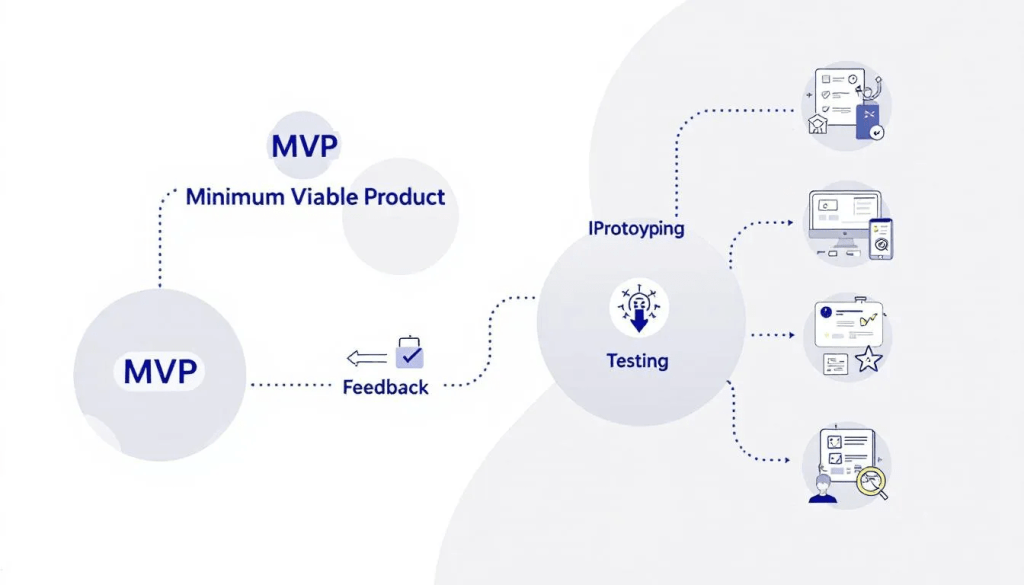
At its core, a Minimum Viable Product (MVP) is the initial version of a product that includes only the essential features needed to address a specific problem. The primary goal of an MVP is to validate your idea and prove its market potential while keeping costs low. This approach allows startups to gather maximum customer learning with minimal effort, ensuring that resources are not wasted on developing features that may not be needed.
The MVP development process is closely aligned with the lean startup methodology, which emphasizes rapid iterations and continuous learning. Focusing on essential features enables startups to engage in agile development, facilitating quick pivots and adaptations based on user feedback. This iterative approach not only saves time and money but also increases the chances of achieving product-market fit.
Key Benefits of MVP Development for Startups
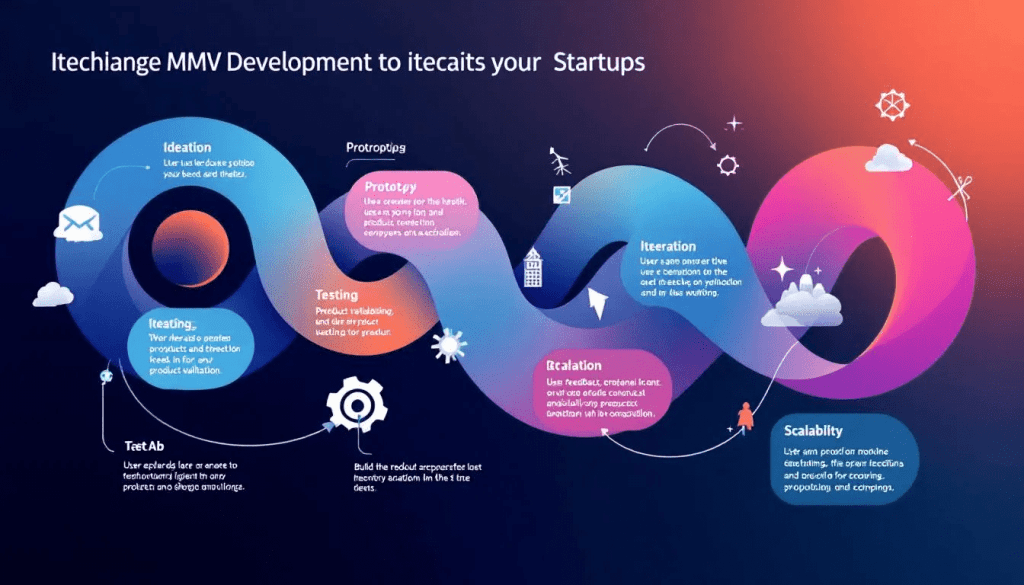
Developing a minimum viable product offers several key benefits for startups, including cost efficiency, faster time to market, and validated learning. These benefits are crucial for startups looking to minimize risks and maximize their chances of success with minimum viable products.
Focusing on essential features and engaging in rapid iterations helps startups attract early customers, validate their business ideas, and meet market demands, which is a key feature of successful strategies. Additionally, understanding the key features of these strategies can further enhance their effectiveness.
Cost Efficiency
One of the most significant advantages of MVP development is cost efficiency. Concentrating on core functionalities helps startups avoid unnecessary expenditures and maintain flexibility. This focus on essential features helps minimize development costs, ensuring that resources are directed where they add the most value. Additionally, including too many features in an MVP can lead to delays and increased costs, undermining the very purpose of the MVP approach.
Cost efficiency is not just about saving money—it’s about making smart investments that pay off in the long term. Reducing development costs allows startups to allocate more resources to marketing their MVP, crucial during the early stages. This strategic allocation of resources can make a significant difference in a competitive market, helping startups achieve long-term success.
Faster Time to Market
MVP development allows startups to launch their products quickly, often well ahead of their competitors. Focusing on essential features enables startups to enter the market swiftly, gain valuable feedback from early adopters, and capture market share. This rapid market entry not only helps in validating the business idea but also provides a competitive advantage in a crowded marketplace, making mvp creation a crucial step for success.
Validated Learning
Validated learning is one of the core principles of MVP development. Launching an MVP allows startups to gather user feedback and ensure their product resonates with the target audience. This iterative process allows startups to refine their products based on real user needs and market trends.
Establishing key performance indicators (KPIs) helps measure the MVP’s success and guides future development. Achieving product-market fit is crucial, as it significantly increases the chances of a startup’s success.
Steps to Develop a Successful MVP
Explore the MVP Development Steps
Understanding Feature Categories
Launch and Gather Feedback
Launching an MVP enables startups to:
- Test their product ideas quickly and efficiently, ensuring they meet market demands.
- Enter the market quickly to capture market share and build user relationships early.
- Gather feedback after launching through surveys, user interviews, and analytics.
This feedback loop is essential for continuous improvement and success of the MVP.
Analyzing feedback from early adopters is beneficial. It helps in identifying trends and new growth opportunities. Incorporating additional features in later iterations is a strategy based on the feedback received to gather valuable feedback, ensuring that the product evolves to meet user needs.
Utilizing analytics is critical as it helps measure performance, track user behaviors, and gather insights.
Real-World Examples of Successful MVPs
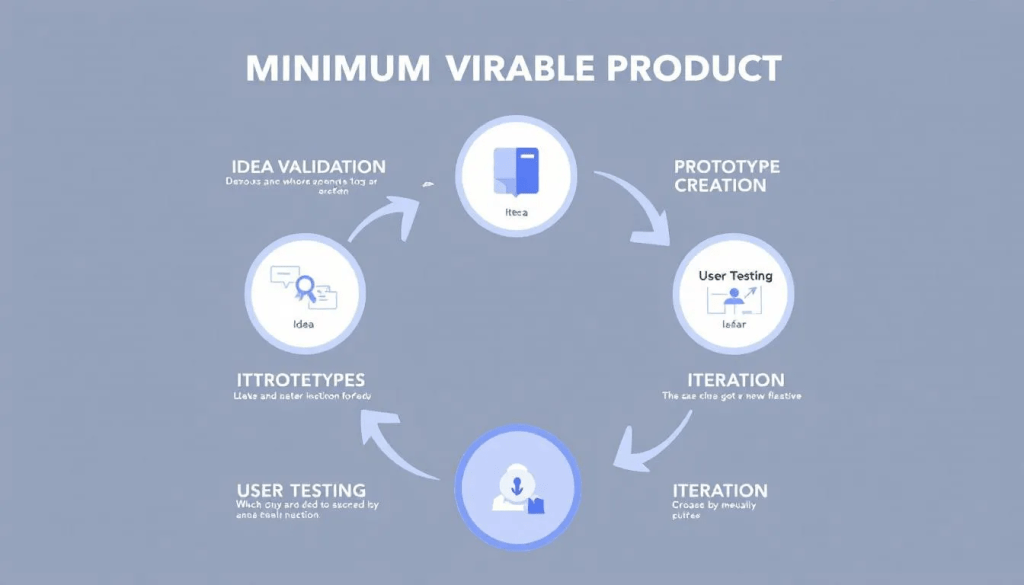
Real-world examples of successful MVPs provide valuable insights into how startups can effectively validate their business ideas and achieve market success. By examining the approaches taken by companies like Dropbox, Airbnb, and Buffer, startups can learn how to create functional MVPs that resonate with their target audience and pave the way for future growth.
Dropbox
Dropbox’s initial MVP approach involved:
- Creating a simple video demonstration that illustrated the product’s functionality.
- Using this video to validate Dropbox’s idea by attracting potential users.
- Gathering valuable feedback from users.
- Confirming core assumptions about user needs and product viability.
Airbnb
Airbnb’s MVP approach involved:
- Creating a basic website for short-term room rentals.
- The founders setting up an air mattress in their living room to generate income.
- Using this MVP to test the market and gather initial feedback from users.
- Refining their platform based on the feedback.
- Successfully growing and validating their business model.
Buffer
Buffer validated their idea for the MVP by creating a landing page to gauge interest and collect user feedback. It took Buffer seven weeks to build the first version of their product, and within nine months of launching their MVP, they achieved 100,000 users.
The feedback received informed the future development of Buffer’s product, ensuring it met user needs.
Common Mistakes in MVP Development and How to Avoid Them
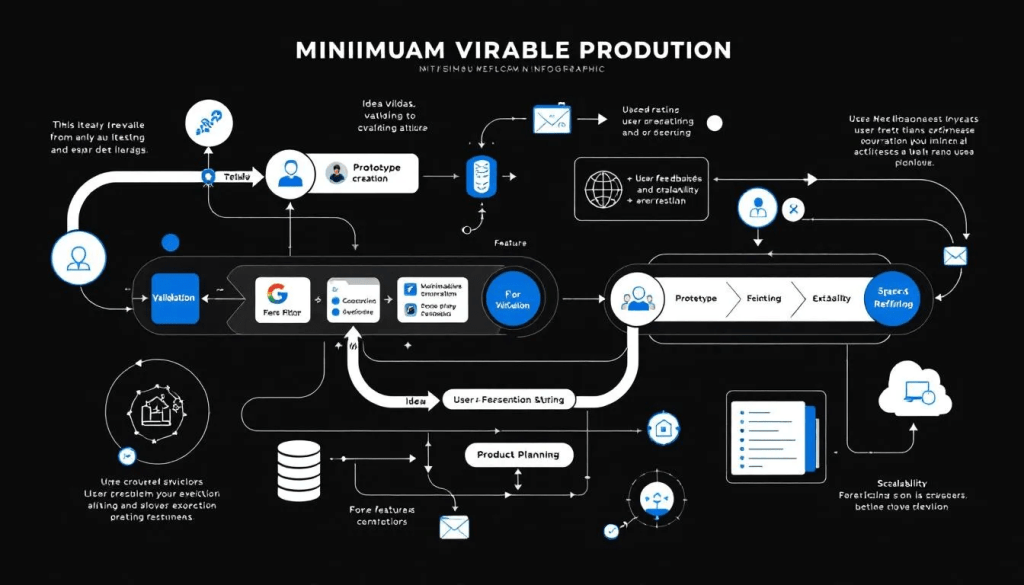
Developing a complex mvp comes with its own set of challenges and potential pitfalls. Common mistakes include:
The key steps include conducting thorough market research, defining core features, designing and prototyping, developing and testing, and finally, launching and gathering feedback. Following these helps streamline development and increase success chances.
Market research is vital to understand the target market, identify customer pain points and existing gaps, and analyze competitors. This ensures the MVP delivers real value and meets genuine user demands effectively, setting a foundation for success.
Focus on features that address the most critical user needs and deliver the key value proposition. Categorize features into essential, nice-to-haves, and add-ons, prioritizing only the essentials to avoid overcomplication and ensure cost-efficiency.
Design and prototyping (using wireframes, mockups, and interactive prototypes) help visualize user interactions, gather early customer feedback, and validate the user experience before full-scale development. This iterative process ensures the product aligns with user expectations.
Thorough testing, including usability testing, is crucial to identify and correct any issues or bugs. Skipping this step can lead to performance problems and user dissatisfaction. Rigorous testing ensures the MVP is functional and provides a positive user experience.
| Aspect of MVP Development | Focus Area | Key Outcome | Common Pitfall to Avoid |
|---|---|---|---|
| Market Research | Understanding target users, pain points, competitor landscape. | Validated problem & market need, informed strategy. | Skipping research, building on unverified assumptions. |
| Defining Core Features | Prioritizing essential functionality that delivers key value proposition. | Lean product with high-impact features, clear scope. | Feature creep, overcomplicating the MVP, misjudging user needs. |
| Design & Prototyping | Visualizing user flow, UI/UX, gathering early user feedback. | User-centric design, early issue identification, validated concepts. | Underestimating design’s role, poor user experience, not testing prototypes. |
| Development & Testing | Building efficiently (e.g., Agile), ensuring quality and functionality. | A functional, stable product ready for initial users. | Unnecessary complexity in code, insufficient or rushed testing. |
| Launch & Feedback | Getting to market quickly, systematically collecting user data for iteration. | Real-world validation, actionable insights for improvement. | No clear plan for feedback collection or analysis, slow iteration. |
Overcomplicating the MVP
A key principle in MVP development is to focus on essential features and avoid unnecessary additions. A single feature MVP can help prevent feature overload, which can significantly delay the release of the MVP and undermine its effectiveness.
Startups should aim to create the simplest version of a functional MVP that addresses the core needs of their users without overcomplicating the product.
Skipping Market Testing
Conducting thorough market research and interacting with users is essential to ensure that the product meets market demands. Failing to conduct market research can result in substantial financial losses for startups and increase the likelihood of developing a product that falls flat.
Startups should prioritize market testing to validate their assumptions and ensure a successful MVP; many startups fail without proper validation.
Ignoring User Feedback
User feedback is crucial in guiding updates and improvements in the MVP development process. Results and feedback should be measured to ensure that user needs are met and that the product evolves accordingly. Incorporating user feedback enhances the product’s effectiveness and helps avoid serious setbacks in the development process.
Leveraging India-Based MVP Developers
Outsourcing MVP development to India offers several advantages, including significant cost savings and access to a skilled talent pool. By choosing India-based developers, startups can reduce development costs by up to 70% compared to US development rates, making it an attractive option for cost-conscious startups.
Additionally, India offers special offers that can further lower MVP development costs, enhancing the overall go-to-market strategies for startups.
Cost Savings
Outsourcing MVP development to India can significantly reduce development costs while maintaining high-quality standards. India boasts a skilled talent pool of experienced developers who are capable of efficiently managing MVP projects, ensuring that startups receive high-quality outputs at a fraction of the cost.
Additionally, startups can benefit from special offers, such as complimentary man-hours and tools like the MVP Cost Calculator, which enhance cost efficiency. These cost savings can be redirected towards other critical areas such as marketing, which is essential for a startup’s early success.
Skilled Talent Pool
India offers a vast array of experienced dedicated developers and Project Manager skilled in MVP software development, with a proven track record in handling complex software product projects effectively, ensuring timely and quality outputs that align with the startup’s goals. Our development team is committed to delivering exceptional results.
By leveraging the expertise of India-based developers, startups can streamline their MVP development process and bring their product to market more efficiently.
Special Offers and Tools
Startups can take advantage of special offers and tools available from India-based developers. For instance, the offer here includes 100 complimentary man-hours of web development as part of a 15th-anniversary celebration, which provides a maximum amount of real-time value of $2,500 USD. Click here to avail this offer.
Additionally, tools like the MVP Cost Calculator can instantly estimate project expenses based on platform, complexity, and region, helping startups plan smarter and make better decisions. These resources are designed to save time and enhance the efficiency of the software based mvp development process. Click here to use these tools. Click here for MVP Cost Calculator
Summary
Developing a Minimum Viable Product (MVP) is a strategic approach that allows startups to validate their product ideas quickly and cost-effectively. By focusing on essential features and engaging in rapid iterations, startups can achieve cost efficiency, faster time to market, and validated learning. Real-world examples like Dropbox, Airbnb, and Buffer demonstrate the power of starting small and iterating based on user feedback. Additionally, leveraging India-based MVP developers can provide significant cost savings and access to a skilled talent pool. By following the outlined steps and avoiding common pitfalls, startups can increase their chances of success and bring their innovative ideas to market efficiently.
Frequently Asked Questions
What is a Minimum Viable Product (MVP)?
A Minimum Viable Product (MVP) is the initial version of a product that encompasses only the crucial features required to solve a specific problem. This approach enables startups to validate their concept and assess market viability while minimizing expenses.
Why is cost efficiency important in MVP development?
Cost efficiency is important in MVP development as it allows startups to minimize unnecessary expenses and concentrate on essential features, thereby enabling better resource allocation towards marketing for early success.
How does MVP development lead to faster time to market?
MVP development enables faster time to market by concentrating on essential features, allowing startups to launch quickly and capture feedback from early adopters. This approach facilitates swift adjustments based on user input, enhancing product-market fit.
What are some common mistakes in MVP development?
Overcomplicating the MVP, skipping market testing, and ignoring user feedback are common mistakes that can hinder the product’s success and lead to increased costs. It is crucial to maintain simplicity, validate ideas through testing, and actively seek user input to align the product with market needs.
What are the benefits of outsourcing MVP development to India?
Outsourcing MVP development to India provides substantial cost savings of up to 70% compared to US rates, along with access to a highly skilled talent pool. This strategic choice enhances overall development efficiency and quality for startups.