How to Hire MVP Developer for Healthcare Startups: Proven Strategies
Liam Hayes – Startup Founder – Building an MVP for healthcare startups is a crucial first step that can lead to success. Learning how to hire an MVP developer for startups ensures that you have the right expertise on board from the start.
May 30, 2025 | 4 Minute Read
Why MVPs Matter for Healthcare Startups
Jumping into healthcare as a startup? Forget tackling everything at once. Nailing down an MVP (Minimum Viable Product) can make all the difference.
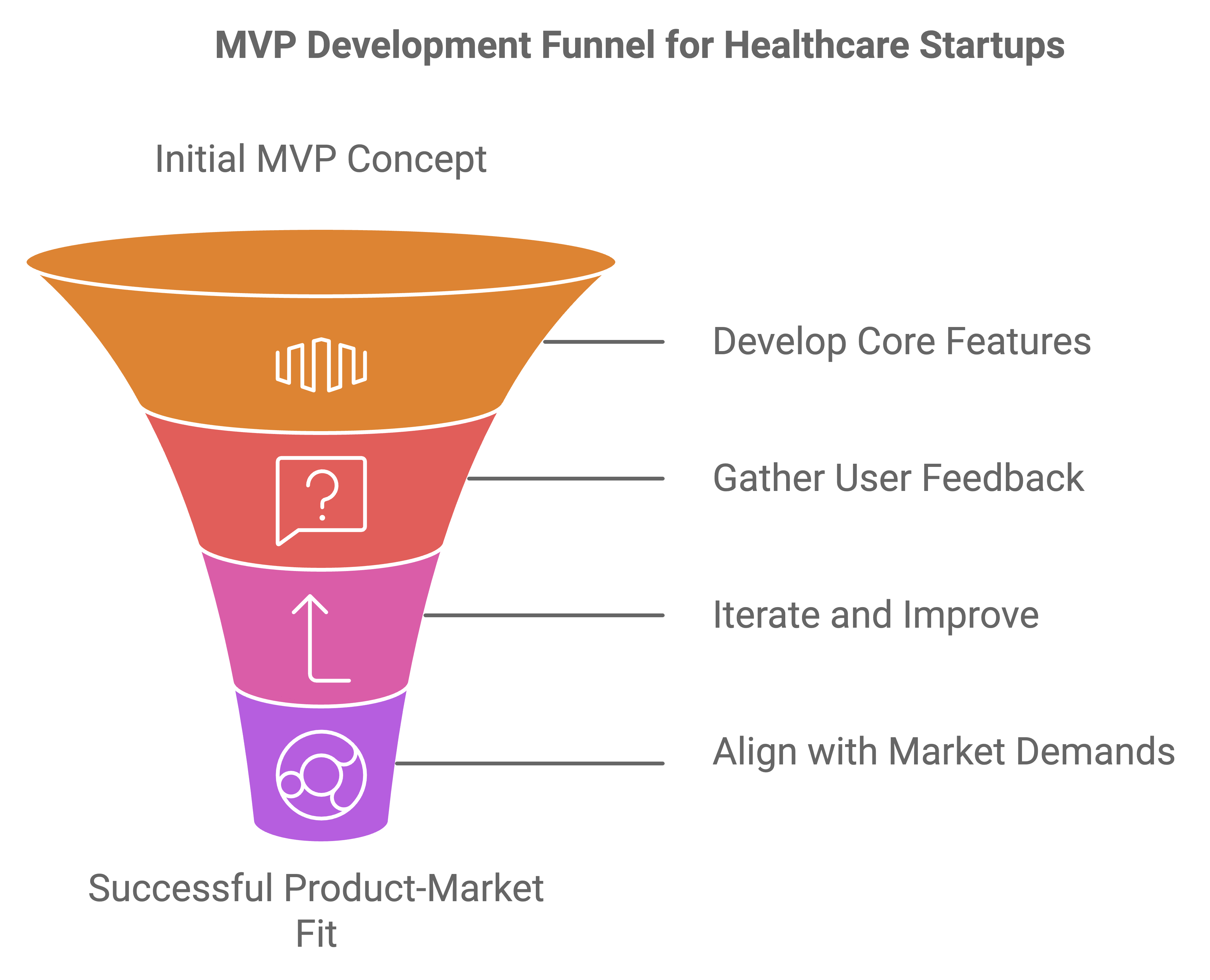
Why MVPs Are a Game-Changer
Using an MVP isn’t just smart; it’s necessary for healthcare startups. It’s about moving fast, staying flexible, and always keeping the user in mind. With an MVP, you can focus on what’s important without blowing all your resources on things that might not work out.
Here’s why an MVP is your best bet:
- Test it Out: Quickly see if your idea holds water, without diving in headfirst.
- Lower Your Risks: Spot trouble early and fix it on the fly.
Plus, going agile with MVP development means you’re always improving, getting constant feedback, and staying ready for whatever comes next.
| Benefit | What It Means for You |
|---|---|
| Quick Check | See if your ideas work, fast. |
| Risk Control | Spot and fix issues early. |
| Core Focus | Hit the key needs of your users now. |
| Always Improving | Keep getting better with feedback. |
Getting Your Market Research Right
Nail your market research, and you’ve got a solid foundation. This helps you build healthcare solutions that solve real problems and stay ahead of the curve.
Here’s what you need to focus on:
- Know the Pain: What do users struggle with? Fix that.
- Spot Trends: What’s hot in healthcare? Make sure your MVP is part of it.
- Competitor Check: See what others are doing and spot your unique edge.
Doing this homework means your MVP isn’t just a good idea. It’s viable, practical, and ready to scale. Want more tips? Check out our guide on Proven MVP Market Validation.
| Research Focus | Why It Matters |
|---|---|
| User Pain | Get to the heart of user problems. |
| Trend Spotting | Be relevant and cutting-edge. |
| Competitive Edge | Find and own your niche. |
When you combine smart MVP strategy with solid market research, you’re not just keeping up — you’re leading the pack. Dig deeper with our resources on KPIs for MVP success.
Crafting MVPs for Healthcare Startups
Building MVPs (Minimum Viable Products) for healthcare startups is a must for quick, effective product development. Using agile methods and speeding up market readiness can make a huge difference.
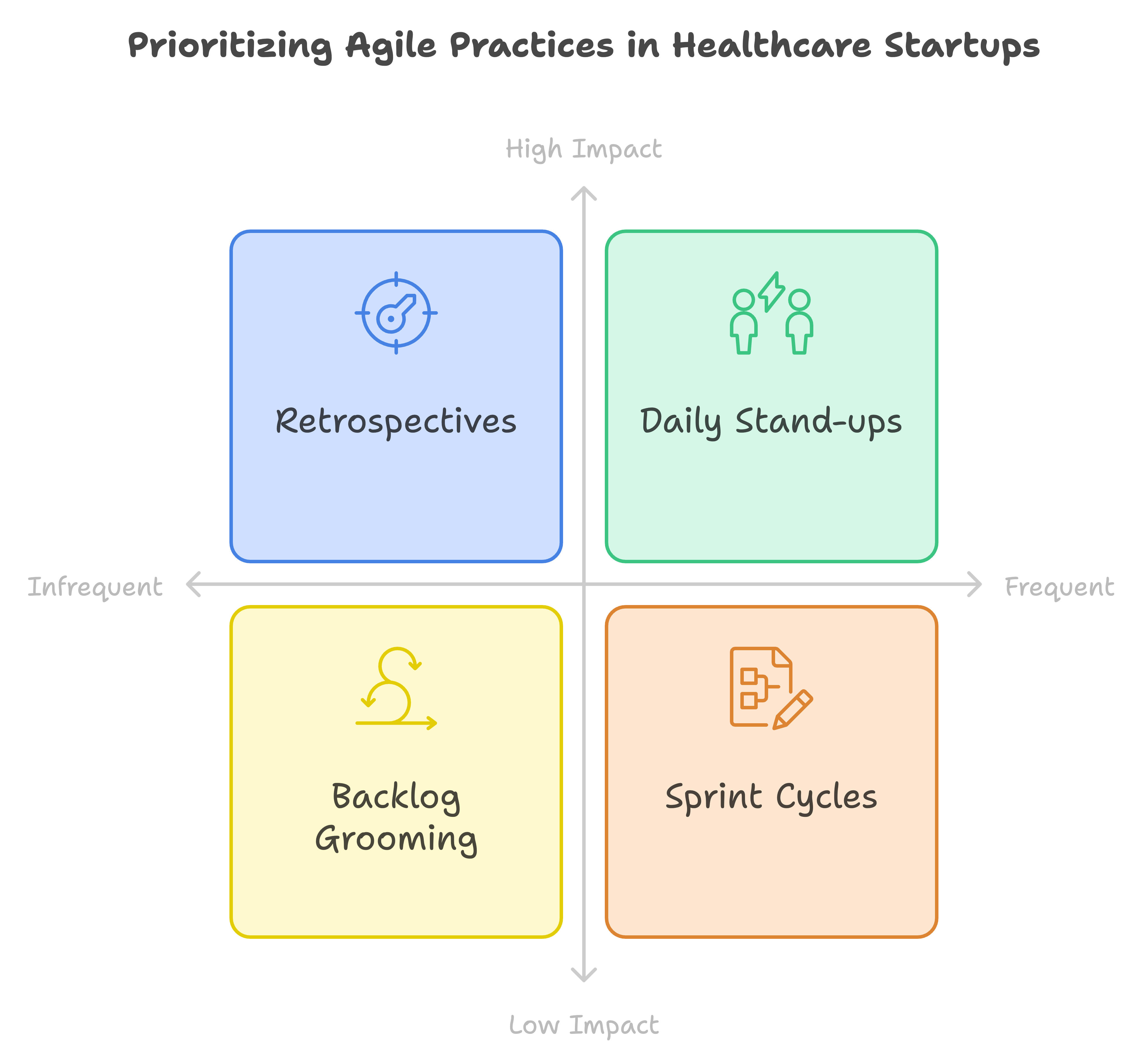
Agile Methods for Healthcare MVPs
In my experience, using agile methods to make MVPs in healthcare really changes the game. It’s all about quick development, constant feedback, and being ready for changes.
Agile lets you stay flexible and ensures your MVP matches what users need and what’s hot in the market. Devs can tweak things rapidly based on feedback, reducing risks before a full launch. Here’s how agile can help:
- Sprint cycles: Fast development, testing, and tweaking.
- Daily stand-ups: Keep everyone synced up and tackle issues head-on.
- Backlog grooming: Sort features by what users want and market need.
- Retrospectives: See what’s working, toss what’s not.
| Practice in Agile | Why It Helps MVPs in Healthcare |
|---|---|
| Sprint Cycles | Quick build and testing. |
| Daily Stand-Ups | Fast problem-solving. |
| Backlog Grooming | Focus on key features. |
| Retrospectives | Constantly improve. |
Perks of Fast Market Entry with MVPs
Speeding up your time-to-market with an MVP brings big wins for healthcare startups. An MVP lets you test your ideas and spot problems early. Here’s why that’s great:
- Instant Feedback: Get user input right away to build what people actually need.
- Save Money: Fixing things early is cheaper than after a full rollout.
- Stay Ahead: Launch quick to beat the competition.
- Smarter Use of Resources: Invest in what truly matters.
By using agile methods and getting to market fast, healthcare startups boost their chances of success. This user-focused, step-by-step approach provides priceless insights, leading to stronger, ready-for-market products.
Minimum_Viable_Product_App_Guide_PreviewUseful Resources:
MVP Development for Healthcare SaaS Projects: A Comprehensive Guide
FAQs
How to build an MVP in healthcare?
Building an MVP in healthcare involves several key steps:
- Identify the Core Problem: Understand the specific healthcare issue or need that your product aims to address.
- Engage with Stakeholders: Consult with healthcare professionals, patients, and other stakeholders to gather insights and validate the problem and solution.
- Define Essential Features: Determine the minimal set of features that will effectively address the core problem and comply with regulatory requirements.
- Develop the MVP: Build the product with strict adherence to healthcare regulations and data security standards.
- Pilot and Collect Feedback: Implement the MVP in a controlled healthcare environment to collect real-world data and feedback.
- Iterate and Improve: Use the feedback to refine and expand the product’s capabilities before a broader rollout.
What is an MVP for a startup?
An MVP (Minimum Viable Product) for a startup is the most basic version of a product that can be launched with the least effort and expense, yet still solve a core problem for a target audience. This allows the startup to gather user feedback and validate the product’s market fit quickly and efficiently.
What is MVP in startup?
In the startup context, an MVP is a strategy used to quickly test and validate the underlying assumptions of a business model with a minimal set of features that address the main customer pain point. This approach helps startups avoid building products that customers do not want and minimizes the risk associated with product development. Learn more on
MVP KPIs for Optimal Results
What is the minimum viable product in lean startup?
In the lean startup methodology, a minimum viable product (MVP) is the simplest version of a product that the startup can create to begin the learning process as quickly as possible. It includes only those core features that allow the product to be deployed, and no more. The MVP is typically followed by immediate feedback gathering, and iterative development to refine and improve the product based on what the startup learns from its customers.
Great insights, thanks for sharing!
sprintpark