From Idea to Reality: How an MVP Developer Can Transform Your Startup?
Liam Hayes – Startup Founder – This article discusses the importance of creating an effective startup MVP.
June 20, 2025 | 7 Minute Read
MVP Development: The Need-to-Know Basics
What is MVP?
An MVP or Minimum Viable Product is like dipping your toes into a swimming pool before taking the plunge. You create a version of your product with just the must-have features to solve early users problems and learn from their feedback. It’s about checking if your big idea floats before blowing your whole budget. Big names like Amazon, Uber, and Spotify started this way, they used MVPs to test the waters, tweak their offerings, and then boom—they became household names.
| Key Elements of MVP |
|---|
| Who’s It For? |
| What Does It Do? |
| What’s Most Important? |
Why is MVP So Important?
For a startup founder, understanding MVP is a game-changer. It means getting your product out there fast, seeing if people actually like it, and making tweaks without emptying your wallet.
Here are the essentials:
- Who is it For: Knowing your audience means you can build something they’ll actually use.
- What Does It Do: Focus on the core features that makes your product stand out.
- What is Most Important: Only include the crucial features that you need to test your idea.
By hitting those points, you are setting up a product that people will value and that can grow stronger based on real feedback.
An MVP developer is all about speeding things up to get your product in front of users quickly. This way, if something isn’t working, you can pivot instead of pounding money down on a black hole.
| Why MVP Matters |
|---|
| Test Ideas Quickly |
| Less Financial Risk |
| User Feedback is Gold |
| Fast to Market |
How to Build a MVP?
Creating a Minimum Viable Product (MVP) is a vital step for any startup wanting to turn an idea into a reality. It allows you to test the initial concept and ensure the product meets user needs without burning through resources. Here’s the lowdown on building an MVP.
1. Know Your Audience
First up, pin down who is using your product. This is the most important step! You’ll need to dig into market research, understand demographics, preferences, and pain points of potential users. Connecting with a handful of representative users can give you insights and validate your assumptions.
Zeroing in on a specific audience let’s you mold the MVP to tackle specific problems effectively. It sets you up to gather useful feedback and make smart choices in the next phases.
2. Define the Essentials
Next, sort out what features your MVP absolutely needs. In software, an MVP should do just enough to make early users happy while giving you valuable insights for future updates. The main features should directly solve the core problem your product aims to address.
Ask yourself, what makes your product unique? What value does it bring that others don’t? Nailing these questions keeps you focused on what is essential to attract and keep users.
3. Prioritize What Is Important
Not all features are equal, so you need to rank them. Use the MoSCoW method (Must-have, Should-have, Could-have, Won’t-have) to sort features by importance. This strategy helps you allocate resources to the most crucial functionalities first.
Prioritizing features streamlines development, speeds up time-to-market, and let’s you gather user feedback sooner. The quicker your MVP hits the market, the faster you can validate the concept and prepare for future improvements.
| Step | Description |
|---|---|
| 1. Know Your Audience | Dive into market research to understand user demographics and pain points. |
| 2. Define the Essentials | Focus on features that solve the primary problem. |
| 3. Prioritize What’s Important | Rank features by importance to streamline development. |
Following these steps makes your MVP not just functional, but also well-tailored to user needs.
If you need extra help, look into our services for MVP development. Mixing these steps with expert advice can boost your chances of launching a successful MVP.
Success Stories of MVPs
Want to see how a strong MVP can skyrocket your startup? Let’s check out some real-life hits with Foodex24, and Buffer.
Foodex24: A Food Tech Marvel
Foodex24 is a shining star in the food tech scene. They nailed it with their MVP by rolling in logistics, eCommerce, delivery, and warehouse control into one. And guess what? They dropped it a 15 days early and slashed costs by half!
| Project | Outcome |
|---|---|
| Release Date | 1 5 day early |
| Development Cost | 50% lower |
| Customer Growth | 1,000+ daily in 4 weeks |
In no time, Foodex24 was feeding over 1,000 hungry customers each day. Want to know their secret sauce? Dive into startup MVP development and get cooking.
Buffer: Scheduling Made Simple
Buffer kicked off back in 2010 with just a landing page to feel out the waters for their social media scheduling tool. Spoiler alert; folks loved it! They whipped up the first version in under two months.
| Feature | Details |
|---|---|
| Initial MVP | Landing page |
| Development Time | Less than 2 months |
Buffer’s quick pivot from idea to MVP bagged their early users and validated their game plan.
An expert MVP developer can be your ticket to startup stardom. Discover different MVP styles and the best way to breathe life into your vision.
Hiring AI Developers for Your MVP
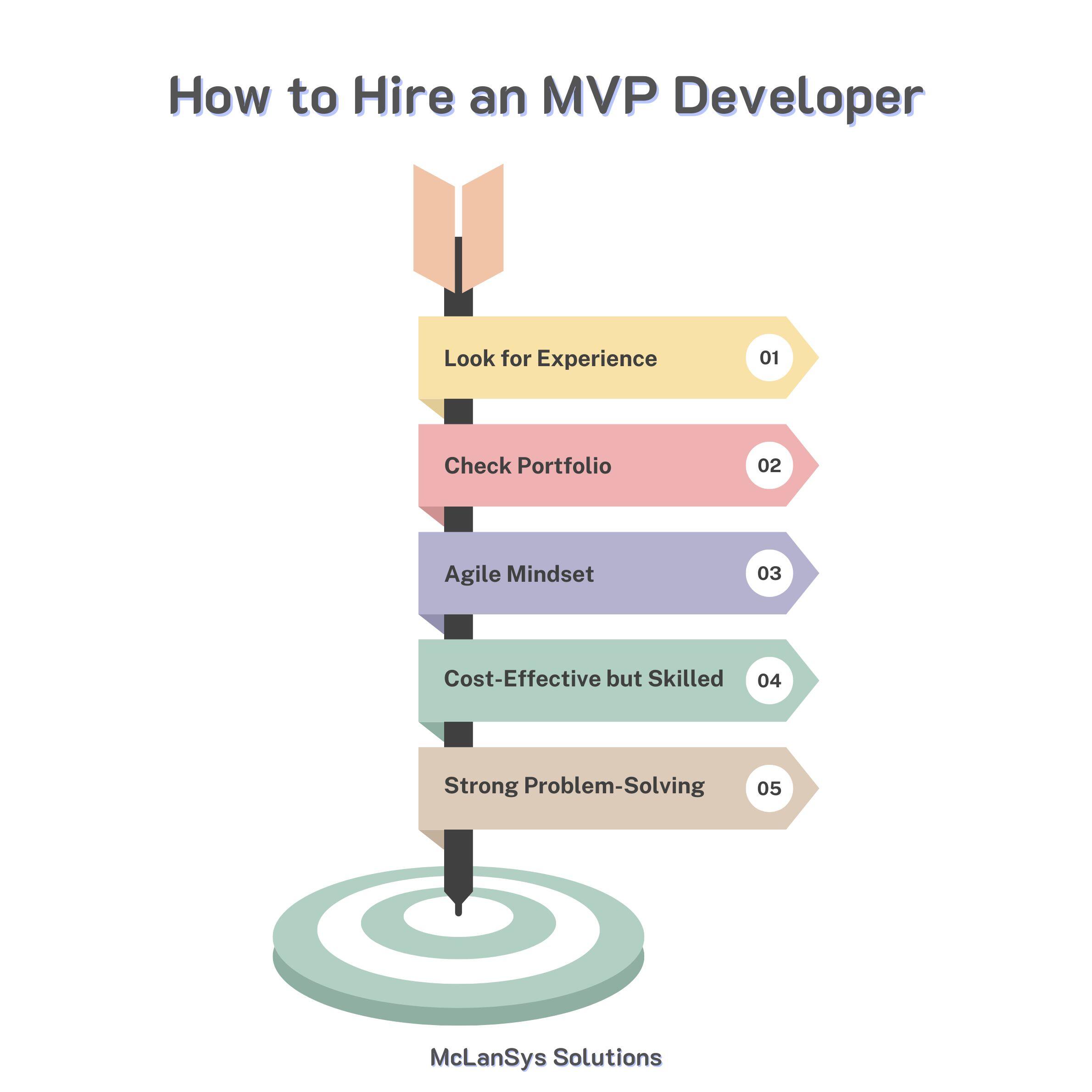
Turning your startup dreams into reality hinges on snagging the right team, especially when it come to crafting your Minimum Viable Product (MVP). Finding a skilled AI developer can make or break your project. So, let’s cut through the noise on qualifications, skills, and how to hire the best talent!
What to Look For?
Before diving into the hiring process, you’ll want to make sure your potential MVP developer ticks certain boxes. Here’s a handy checklist:
- Educational Background: Ideally, a degree in Computer Science, Artificial Intelligence, or something close.
- Certifications: Additional credentials in AI, machine learning, and data science show they have gone the extra mile
- Experience: Prior work in mvp development and knowledge of AI technologies is a must
Essential Skills
It’s not just about what’s on paper; the right skills are a game-changer. Here’s what to watch for:
| Skill | Why It Matters |
|---|---|
| Programming Languages | Fluency in Python, R, Java, or C++ is non-negotiable for AI and MVP programming. |
| Machine Learning | They should know their way around algorithms and frameworks like TensorFlow and PyTorch. |
| Data Analysis | Being able to handle large datasets and make sense of the data is crucial. |
| Problem-Solving | The ability to untangle complicated issues efficiently is gold. (Idea Usher Blog) |
| Communication | Good communication with team members and stakeholders keeps everyone on the same page. |
| Project Management | Familiarity with Agile and Scrum methodologies helps in mvp agile development. |
Contract vs Full-Time Developers
Deciding between contract developers and full-time hires comes down to what your startup needs right now. Each has its own perks and pitfalls:
Contract Developers
| Pros | Cons |
|---|---|
| Flexible hiring, perfect for uncertain times. | Might lack experience in big projects. (Idea Usher Blog) |
| Cost-effective for short gigs. | Availability could be hit or miss. |
| No need for a long-term commitment. | Less likely to gel with your company culture. |
Full-Time Developers
| Pros | Cons |
|---|---|
| Always around and part of the team. | Higher expenses for salaries and benefits. |
| Likely to have deep experience in software development mvp. | Harder to scale down in tough times. |
| Better grasp of your company’s vibe and goals. | More time and effort needed to hire and commit. |
When making the call, think about your project’s timeline, budget, and the expertise you need. Contract developers might suit short-term MVPs, while full-time folks ar
e better for ongoing work!
Choosing the right AI developer, whether its a short-term contract or a full-time role, is key to turning your startup idea into a hit! Make sure you carefully weigh the qualifications, skills, and hiring options to make an informed choice that fit your startup’s needs.
FAQs
1. What is MVP in a startup?
An MVP, or Minimum Viable Product, is a version of a product with just enough features to satisfy early users and provide feedback for future development. It’s an essential strategy for startups to test ideas before fully committing resources. For more insights, check out “Your Path to Success: How to Launch Your Minimum Viable Product App in 2024?”
2. What is the difference between MVP and Lean Startup?
MVP is a key component of the Lean Startup methodology. While an MVP is the simplest product you can build to test an idea, the Lean Startup is a broader framework that emphasize rapid testing, iterating, and learning to find a sustainable business model.
3. What does MVP mean in a company?
In a company, an MVP (Minimum Viable Product) represent the initial product offering that focus on delivering core features. It allows the company to gather user feedback and refine the product based on actual needs, reducing the risk of failure.
Discover how MVPs can shape product development in our article: “Elevate Your Startup: How an MVP Can Propel You Forward”.
4. What is an example of an MVP?
One of the best examples of a MVP is Airbnb. Initially, the founders built a basic website to rent out a room in their apartment. This helped validate the demand for such a service before expanding into the platform we know today!